


Think HIPAA is just paperwork?
Think again. Stolen devices cause 45% of healthcare breaches and weak technical controls are often to blame.
This post cuts through the legal language and shows the technical safeguards HIPAA requires: unique user IDs, encryption, audit logs, multi-factor authentication, session timeouts, and secure transmission.
If you handle patient records, these aren’t optional. They’re practical steps that help prevent breaches and fines.
Read on for a clear, practical checklist you can start using today.
Core Breakdown of HIPAA Cybersecurity Requirements for Immediate Compliance
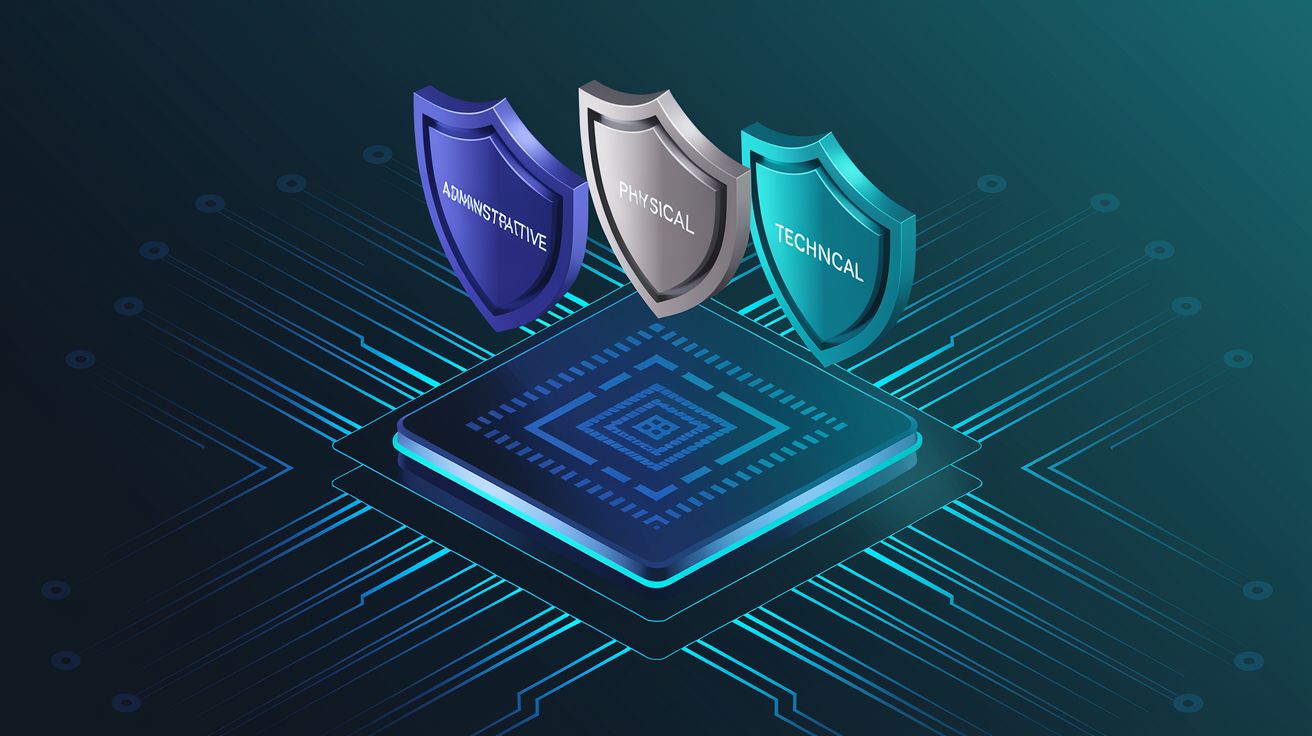
The HIPAA Security Rule exists to protect electronic protected health information from unauthorized access, breaches, and cyber threats. It’s part of the Health Insurance Portability and Accountability Act of 1996, and it requires covered entities and business associates to put administrative, physical, and technical safeguards in place. These safeguards turn into real cybersecurity tasks: encrypting devices and network traffic, training staff to spot phishing attempts, locking down workstations so they don’t get stolen.
You’ve got three buckets of safeguards. Administrative ones cover documented risk assessments, written security policies, workforce training programs, assigned security officials, and sanction policies for people who break the rules. Physical safeguards handle facility access controls, workstation security, device and media handling, and secure disposal of hardware. Technical safeguards require unique user IDs, authentication mechanisms (multi-factor authentication when it makes sense), encryption for data sitting still and data moving around, audit controls that log what’s happening in your systems, automatic session timeouts, integrity controls to catch unauthorized changes, and transmission security protocols for electronic communications.
Encryption is “addressable” under HIPAA. That doesn’t mean optional. It means if you’re not encrypting, you better have equivalent alternative safeguards and solid documentation explaining why. Stolen devices account for 45 percent of healthcare data breaches, so device encryption isn’t just a checkbox. The Breach Notification Rule says you’ve got 60 days from discovery to notify affected individuals, the Department of Health and Human Services, and sometimes the media when unsecured PHI gets breached. Risk assessments need to happen at least annually and after significant changes. Document everything: what vulnerabilities you found, how likely and how bad they are, what you’re doing to fix them, and when.
Core HIPAA cybersecurity obligations:
- Conduct and document annual risk assessments covering all ePHI assets and systems
- Encrypt data at rest (AES-256 is the standard) and in transit (TLS 1.2 or higher)
- Enforce unique user IDs, role-based access control, least-privilege policies, and multi-factor authentication
- Deploy audit controls and centralized logging that can record and examine system activity
- Maintain a documented incident response plan with breach notification timelines and recipient lists
- Execute signed Business Associate Agreements with all vendors that create, receive, maintain, or transmit ePHI
- Retain all policies, risk assessments, and related documentation for at least 6 years
Understanding HIPAA Safeguards for Cybersecurity Protection

Administrative safeguards set the framework for managing cybersecurity risk across a healthcare organization. HIPAA wants a documented risk analysis that identifies threats and vulnerabilities to ePHI, scored by likelihood and potential impact. Then you need a documented risk management program to address those risks. A designated security official handles developing and implementing security policies. All workforce members get security awareness and training: password procedures, phishing identification, device handling, insider threat prevention. Organizations maintain documented policies and procedures for all safeguards, enforce sanctions for policy violations, and implement contingency planning that includes data backup, disaster recovery, emergency access procedures, and business continuity protocols.
Physical safeguards protect the places where ePHI is stored and accessed. Facility access controls limit physical access to electronic information systems and the buildings they’re in: badge readers, visitor logs, surveillance cameras, secure server rooms. Workstation security policies define where and how devices can be used to access ePHI. Maybe you prohibit unattended sessions or require privacy screens in public areas. Device and media controls govern how hardware moves, gets disposed of, and gets reused. You’re mandating secure data wiping or physical destruction of hard drives, tapes, and mobile devices before disposal or repurposing, and you’re maintaining logs of device assignments, returns, and sanitization procedures.
Technical safeguards are the cybersecurity controls that protect ePHI in digital form. Access control mechanisms include unique user identifiers for every individual with system access, emergency access procedures that let authorized users retrieve ePHI during a crisis, automatic logoff to terminate sessions after a defined period of inactivity, and encryption and decryption when it’s appropriate. Authentication requirements verify that individuals attempting to access ePHI are who they claim to be, typically through multi-factor authentication combining passwords with tokens, biometrics, or one-time codes. Audit controls must record and examine activity in systems containing ePHI: login attempts, data access events, modifications, deletions. Integrity controls use mechanisms like hashing or checksums to verify ePHI hasn’t been improperly altered or destroyed. Transmission security safeguards protect ePHI during electronic transmission over open networks using encryption protocols like TLS 1.2 or higher.
HIPAA Risk Assessment Requirements and Cybersecurity Impact

HIPAA Security Rule sections 164.308(a)(1)(ii)(A) and 164.308(a)(1)(ii)(B) require covered entities and business associates to conduct an accurate and thorough assessment of potential risks and vulnerabilities to the confidentiality, integrity, and availability of ePHI. You also have to implement security measures sufficient to reduce identified risks and vulnerabilities to a reasonable and appropriate level. These assessments must be documented, repeatable, and updated whenever significant environmental or operational changes occur. At minimum annually, but also after adopting new technologies, expanding into telehealth, migrating to cloud platforms, or experiencing security incidents.
The risk assessment process starts with creating and maintaining a comprehensive inventory of all systems, applications, devices, and storage locations where ePHI resides or transits. Electronic health record systems, email servers, file shares, backup repositories, workstations, laptops, mobile devices, third-party cloud services, network infrastructure. For each asset, identify potential threats (ransomware, phishing, insider misuse, physical theft, natural disasters) and vulnerabilities (unpatched software, weak passwords, missing encryption, inadequate access controls). Score likelihood and impact for each threat-vulnerability pair. Simple low, medium, high scale or a numeric risk matrix. The output is a prioritized remediation plan listing controls to implement, who’s responsible, target completion dates, and acceptance criteria.
Vulnerability scanning and penetration testing help validate risk assessments and discover weaknesses proactively. Automated vulnerability scanners identify missing patches, misconfigurations, and known software flaws across servers, workstations, and network devices. Penetration tests simulate real-world attack scenarios: phishing campaigns, credential stuffing, SQL injection, privilege escalation. They uncover exploitable gaps in defenses. Both should happen at least annually and whenever significant infrastructure changes occur, with findings fed back into the risk management process for remediation tracking.
Documentation is the cornerstone of HIPAA risk management. Every risk assessment must be written, version-controlled, and retained for at least 6 years. The documentation should include the assessment methodology, scope and boundaries, asset inventory, identified risks and their scores, selected controls and implementation status, risk acceptance decisions with business justification, and evidence of ongoing monitoring and reassessment. During audits or breach investigations, the Office for Civil Rights will request this documentation as proof that you understood your risks and took reasonable steps to address them.
Five-step HIPAA risk assessment workflow:
- Inventory all ePHI locations: catalog systems, devices, applications, cloud services, network segments, and physical media where ePHI is created, stored, transmitted, or accessed.
- Identify threats and vulnerabilities: list potential threat sources (ransomware, insiders, device theft, natural disasters) and corresponding weaknesses (missing encryption, outdated software, weak authentication, inadequate training).
- Score likelihood and impact: assign risk ratings to each threat-vulnerability pair using a consistent framework (low, medium, high or numeric scales) to reflect probability of occurrence and potential harm to confidentiality, integrity, or availability.
- Develop remediation plan: prioritize controls to address high and critical risks first, assign ownership, set deadlines, and define success metrics (e.g., “deploy MFA on all privileged accounts by Q2”).
- Monitor, test, and update: schedule periodic vulnerability scans, penetration tests, and control audits; reassess risks annually and after major changes; document all updates and maintain records for 6 years.
Technical Controls Required for HIPAA Cybersecurity Compliance

Encryption protects ePHI from unauthorized disclosure during storage and transmission. HIPAA lists encryption as an “addressable” specification rather than mandatory, but OCR guidance strongly encourages it because encrypted data is considered “secured” under the Breach Notification Rule. A lost or stolen encrypted device may not trigger breach reporting if encryption keys remain protected. For data at rest, industry best practice is AES-256 encryption applied to full disk volumes, databases, file shares, backups, and removable media. For data in transit, enforce TLS 1.2 or higher for web applications, email, and API communications. Disable legacy protocols like SSL 3.0 and TLS 1.0. FIPS 140-2 or 140-3 validated cryptographic modules provide additional assurance for regulated environments.
Access controls prevent unauthorized users from viewing, modifying, or deleting ePHI. HIPAA requires unique user identifiers for every person with system access, ensuring accountability and auditability. Role-based access control assigns permissions based on job function. Clinicians see clinical data, billing staff see payment records, but neither group has blanket access to all systems. Least-privilege principles limit each user’s permissions to the minimum necessary to perform their duties, reducing the attack surface if credentials are compromised. Multi-factor authentication adds a second verification step beyond passwords: a one-time code sent to a mobile device, a hardware token, or biometric scan. MFA is recommended for all remote access, privileged accounts, and cloud-based EHR systems. Automatic logoff terminates inactive sessions after a defined timeout period, preventing unauthorized access if a workstation is left unattended.
Audit logging and centralized monitoring provide visibility into who accessed ePHI, when, and what actions they performed. HIPAA audit controls must record login attempts, data access events, modifications, deletions, privilege escalations, and configuration changes. Logs should be tamper-resistant or immutable to preserve forensic integrity during investigations. Security Information and Event Management platforms aggregate logs from servers, applications, endpoints, and network devices into a centralized dashboard with automated alerting for suspicious patterns: failed login spikes, unusual data transfers, off-hours access from privileged accounts, or access from unfamiliar locations. HIPAA requires retaining policies and related documentation for at least 6 years. Many organizations retain audit logs for 1 year online and archive them for the full 6-year period to support breach investigations and compliance audits.
| Control | Purpose |
|---|---|
| Encryption (AES-256 at rest, TLS 1.2+ in transit) | Protects ePHI confidentiality during storage and transmission; mitigates breach notification obligations for lost or stolen devices |
| Unique user IDs and authentication | Ensures accountability by linking every system action to an individual; enables audit trails and access reviews |
| Role-Based Access Control (RBAC) and least privilege | Limits permissions to minimum necessary for job function, reducing insider risk and lateral movement during breaches |
| Multi-Factor Authentication (MFA) | Adds second verification factor beyond passwords, blocking credential-based attacks and unauthorized remote access |
| Audit controls and centralized logging (SIEM) | Records and examines system activity to detect anomalies, support forensic investigations, and demonstrate compliance |
| Automatic logoff and session timeouts | Terminates inactive sessions to prevent unauthorized access from unattended workstations or devices |
Cybersecurity Requirements for Business Associates and Third Parties Under HIPAA

A Business Associate Agreement is a written contract required under HIPAA whenever a covered entity shares ePHI with a third party that will create, receive, maintain, or transmit that data on the entity’s behalf. Business associates include cloud storage providers, EHR vendors, billing companies, IT managed service providers, email hosting services, transcription firms, and legal consultants who handle patient records. The BAA must specify the permitted uses and disclosures of ePHI, require the business associate to implement appropriate safeguards (administrative, physical, and technical), mandate prompt breach reporting to the covered entity, prohibit unauthorized use or disclosure, require return or destruction of ePHI at contract termination, and include flow-down provisions requiring subcontractors to agree to the same restrictions.
Covered entities remain liable for the privacy and security of ePHI even when it’s held by a business associate. Healthcare organizations must perform vendor risk assessments before signing contracts, evaluating the business associate’s security posture through questionnaires, third-party audits (SOC 2, HITRUST), and documentation of controls. Ongoing oversight includes periodic compliance checks, incident reporting reviews, breach notification drills, and contract audits to verify the business associate maintains the required safeguards. Cloud providers that store or process ePHI typically qualify as business associates and should provide a signed BAA along with documentation of their security controls, certifications, and data-handling practices.
Five vendor evaluation criteria for HIPAA compliance:
- Signed BAA with explicit safeguards, breach notification timelines, and subcontractor flow-down language
- Security certifications or third-party attestations (SOC 2 Type II, HITRUST, ISO 27001) documenting controls
- Evidence of encryption at rest and in transit, MFA for administrative access, and access logging
- Incident response and breach notification procedures aligned with the 60-day HIPAA timeline
- Regular vulnerability assessments, penetration tests, and documented remediation for identified risks
Incident Response, Breach Notification, and Forensic Obligations Under HIPAA

HIPAA’s Breach Notification Rule requires covered entities and business associates to notify affected individuals, HHS, and sometimes the media following a breach of unsecured PHI. A breach is an impermissible use or disclosure that compromises the security or privacy of PHI and poses a significant risk of financial, reputational, or other harm to individuals. Notification to affected individuals must occur without unreasonable delay and no later than 60 days after discovery of the breach. For breaches affecting 500 or more individuals, the covered entity must also notify HHS within 60 days and provide notice to prominent media outlets serving the affected region. Breaches affecting fewer than 500 individuals can be reported to HHS annually, within 60 days after the end of the calendar year.
An effective incident response plan defines roles and responsibilities, detection and containment procedures, evidence collection and preservation steps, communication protocols, and recovery workflows. The plan should identify a response team including IT security, legal, compliance, communications, and executive leadership. Containment steps vary by incident type: isolating infected systems during ransomware attacks, disabling compromised user accounts, blocking malicious IP addresses, or physically securing stolen devices. Forensic readiness requires maintaining tamper-evident audit logs with sufficient retention to reconstruct the timeline, scope, and root cause of an incident. Document every step taken during response: time stamps, actions performed, personnel involved, evidence gathered. This supports breach risk assessments and regulatory reporting.
Breach risk assessments determine whether an incident qualifies as a reportable breach under HIPAA. The assessment evaluates four factors specified in HHS guidance: the nature and extent of PHI involved (diagnosis codes, full medical records, financial information), the unauthorized person who accessed or received the PHI (another patient, a hacker, an untrained employee), whether PHI was actually acquired or viewed, and the extent to which risk has been mitigated (was the data encrypted, was it recovered before being viewed). If the assessment concludes there’s a low probability that PHI was compromised, the incident may not require breach notification. But the risk assessment and its rationale must be documented and retained for 6 years.
Mandatory HIPAA Breach Notification Elements
Notifications to affected individuals must include a brief description of what happened and when the breach occurred, the types of unsecured PHI involved (names, Social Security numbers, medical record numbers, diagnoses), steps individuals should take to protect themselves (credit monitoring, account password changes), what the covered entity is doing to investigate and prevent future breaches, and contact information for individuals to ask questions or learn more. The notification must be written in plain language, delivered by first-class mail or email if the individual agreed to electronic communication, and posted on the organization’s website or through major print or broadcast media if contact information for 10 or more individuals is insufficient or out of date. HHS notification is submitted through the online breach reporting portal on the OCR website. Media notification must reach outlets serving the geographic area where affected individuals reside.
HIPAA Disaster Recovery, Continuity, and Backup Requirements for Cybersecurity

HIPAA’s contingency planning requirements say covered entities and business associates have to establish and implement procedures for responding to emergencies or other occurrences that damage systems containing ePHI. A disaster recovery plan defines technical recovery steps: data restoration from backups, rebuilding or replacing damaged infrastructure, and verifying system integrity before resuming operations. A business continuity plan addresses organizational processes like activating alternate work sites, rerouting patient communications, notifying staff and vendors, and maintaining critical clinical and administrative functions during extended outages.
Daily backups are recommended for critical systems like EHRs, practice management platforms, and billing databases. Backups must be encrypted and stored in geographically separate locations to protect against site-wide disasters like fires, floods, or ransomware that spreads across on-premises infrastructure. Immutable or air-gapped backups that can’t be modified or deleted by attackers provide additional protection against ransomware encryption of backup repositories. Recovery time objectives and recovery point objectives should be defined based on clinical risk. An emergency department EHR might target an RTO of 4 hours and RPO of 1 hour, while a scheduling system might tolerate 24-hour RTO and 24-hour RPO.
Restoration testing validates that backups are complete, accessible, and usable during an actual disaster. Conduct full or partial restore drills at least quarterly for high-criticality systems and annually for all others. Document the test date, systems involved, data sets restored, time required, and any issues encountered. These drills also serve as training exercises for IT staff and provide evidence of compliance during audits. Disaster recovery and business continuity plans must be reviewed and updated annually and after significant changes to infrastructure, staffing, or business processes, with all versions retained for at least 6 years.
Access Management, Authentication, and Privileged Security Controls Under HIPAA

Identity and access management under HIPAA begins with unique user identifiers for every individual who accesses ePHI. Shared accounts, generic logins, and default passwords are prohibited because they prevent accurate audit trails and accountability. Role-based access control groups users by job function (physicians, nurses, billing clerks, IT administrators) and assigns permissions that align with the minimum necessary standard. Least-privilege principles ensure users can only access the specific data and systems required to perform their assigned duties, reducing the risk of accidental exposure or intentional misuse.
Multi-factor authentication is strongly recommended for all privileged accounts (administrators, database managers, security staff) and remote access to ePHI systems. MFA combines something the user knows (password), something the user has (mobile app token, hardware key), or something the user is (fingerprint, facial recognition). This layered approach blocks credential-stuffing attacks, phishing-harvested passwords, and brute-force login attempts. Automatic logoff terminates sessions after a defined period of inactivity, typically 10 to 15 minutes for high-risk systems and 30 minutes for lower-risk environments. Privileged account management includes monitoring administrative access in real time, logging all privileged actions, restricting the number of users with elevated permissions, and periodically reviewing and recertifying access rights.
Four best practices for access management under HIPAA:
- Implement MFA on all remote access, cloud EHR logins, and privileged administrator accounts
- Enforce RBAC with documented role definitions, permission matrices, and regular access reviews (quarterly for privileged accounts, annually for standard users)
- Require automatic logoff after 10 to 15 minutes of inactivity on workstations and mobile devices accessing ePHI
- Monitor and log all privileged activities, flagging anomalies such as after-hours access, bulk data downloads, or permission changes
Access reviews should follow a defined schedule, with managers or security teams verifying that each user’s permissions remain appropriate for their current role and employment status. Terminated employees and contractors must have access revoked immediately. Users who change roles should have permissions adjusted to reflect their new responsibilities. Documentation of access provisioning, modifications, and revocations should be retained for audit purposes and to demonstrate ongoing compliance with HIPAA’s access control requirements.
Logging, Monitoring, and Documentation Retention for HIPAA Cybersecurity Compliance

HIPAA audit controls require covered entities and business associates to implement hardware, software, and procedural mechanisms that record and examine activity in information systems containing ePHI. Audit logs must capture user login and logout events, data access (viewing, copying, printing), modifications and deletions, privilege escalations, configuration changes, and security policy updates. Logs should include enough detail to reconstruct who did what, when, from which device or location, and whether the action succeeded or failed. Tamper-resistant or immutable logging prevents attackers or insiders from covering their tracks by deleting or altering log entries.
Centralized logging through SIEM or log management platforms aggregates events from servers, workstations, network devices, cloud services, and security tools into a unified timeline with search, correlation, and alerting capabilities. Automated alerts flag suspicious patterns: multiple failed login attempts, access from blacklisted IP addresses, large file transfers to external destinations, privilege escalation outside normal change windows, or access to ePHI by users whose roles shouldn’t require it. Review frequency depends on system criticality and risk level. High-risk systems (EHR, email, remote access gateways) should be reviewed daily, medium-risk systems weekly, and lower-risk systems monthly.
HIPAA requires covered entities to retain all policies, procedures, and documentation related to compliance for at least 6 years from the date of creation or the date when last in effect, whichever is later. This retention requirement applies to risk assessments, security policies, training records, Business Associate Agreements, incident reports, breach notifications, access logs, and audit trails. Many organizations retain online logs for 1 year to support active investigations and monitoring, then archive logs for an additional 5 years to meet the 6-year requirement and provide long-term forensic capability for delayed breach discoveries or retrospective compliance audits.
| Log Type | Required Retention | Review Frequency |
|---|---|---|
| Authentication logs (login, logout, failed attempts) | 1 year online, 6 years archived | Daily for privileged accounts, weekly for standard users |
| Data access logs (ePHI views, copies, modifications) | 1 year online, 6 years archived | Daily for high-risk systems, weekly for others |
| Configuration and security policy changes | 1 year online, 6 years archived | Weekly or upon automated alert |
| Incident response and breach investigation records | 6 years from incident closure | Reviewed during incident and post-incident analysis |
Emerging HIPAA Cybersecurity Trends and Future Considerations for Healthcare Providers

Telehealth adoption accelerated during 2020 and remains a core service delivery channel, expanding the attack surface with video conferencing platforms, remote patient monitoring devices, and mobile health applications that transmit ePHI outside traditional facility networks. OCR has issued guidance emphasizing that telehealth platforms must be HIPAA compliant, including signed BAAs with video vendors, end-to-end encryption for sessions, access controls to prevent unauthorized participants from joining consultations, and audit logging of session details. Healthcare organizations should evaluate whether consumer-grade video tools meet HIPAA standards or if dedicated healthcare-grade platforms with built-in compliance features are necessary.
The Internet of Medical Things introduces connected medical devices: infusion pumps, patient monitors, imaging systems, wearable sensors. They generate and transmit ePHI in real time. Many legacy medical devices lack basic security controls like authentication, encryption, or patch management capabilities, creating vulnerabilities that attackers can exploit to access hospital networks or disrupt patient care. FDA guidance and HIPAA expectations require healthcare organizations to inventory all connected devices, assess their security posture, segment IoMT traffic from general IT networks, monitor device communications for anomalies, and work with manufacturers to apply security patches or compensating controls. Cloud migration continues as healthcare organizations move EHR systems, imaging archives, and data analytics platforms to public and hybrid cloud environments. Cloud providers that handle ePHI must sign BAAs and implement shared-responsibility security models where the provider secures infrastructure and the healthcare organization secures applications, data, and user access.
Enforcement activity by OCR has intensified, with penalties increasing for willful neglect and failure to conduct risk assessments. In 2024, healthcare data breaches reached record levels, driven by ransomware attacks, business email compromise, insider theft, and unpatched vulnerabilities. Organizations that can’t demonstrate documented risk assessments, implemented safeguards, and timely breach responses face civil monetary penalties ranging from hundreds of thousands to millions of dollars, along with mandatory corrective action plans and multi-year monitoring. Future trends point toward greater regulatory scrutiny of emerging technologies, mandatory security baselines for medical devices, expanded breach notification requirements that include ransomware attacks even when data isn’t exfiltrated, and closer alignment between HIPAA and international frameworks like GDPR for cross-border health data sharing.
Final Words
In the action, this guide walked through the Security Rule basics, administrative, physical, and technical safeguards, risk-assessment steps, core technical controls, business-associate duties, incident response, backup plans, and monitoring needs. You’ve got the must-do items and when to document or notify.
Treat this as a checklist: run a documented risk assessment, tighten access and encryption, test backups, and verify vendor BAAs. Following these hipaa cybersecurity requirements reduces exposure and keeps care running. You’ll have a clear path to build on.
FAQ
Q: What is the HIPAA law for cybersecurity?
A: The HIPAA law for cybersecurity is mainly the Security Rule, which requires covered entities and business associates to apply administrative, physical, and technical safeguards to protect electronic protected health information and report breaches.
Q: What are the requirements for the HIPAA Security Rule?
A: The requirements for the HIPAA Security Rule are administrative, physical, and technical safeguards: documented risk assessments, access controls (unique IDs, MFA, least privilege), audit controls, addressable encryption, training, and contingency planning.
Q: Does HIPAA require SOC 2 compliance?
A: HIPAA does not require SOC 2 compliance; SOC 2 is an independent audit standard that can show strong controls and help meet HIPAA expectations, but it’s optional, not legally mandated.
Q: What are the 5 main HIPAA rules?
A: The five main HIPAA rules are the Privacy Rule (PHI use/disclosure), Security Rule (ePHI safeguards), Breach Notification Rule (reporting breaches), Enforcement Rule (penalties), and Omnibus Rule (business associate updates).