


Was the iPhone really the first modern smartphone, or did that honor belong to a 1994 device most people forgot?
The IBM Simon shipped August 16, 1994, and merged a touchscreen, email, fax, calendar, and third-party apps with cellular calling.
It sold about 50,000 units in six months and proved the idea worked, even with a monochrome screen and short battery life.
Thesis: Simon earns the technical “first” for uniting phone and PDA functions in one commercial product, while the iPhone redefined the experience and made the model global.
Identifying the First Modern Smartphone

IBM Simon Personal Communicator holds the title as the first modern smartphone. Released commercially on August 16, 1994.
IBM and BellSouth manufactured it, priced at roughly $899. It was the first mass-market device to merge cellular telephony with advanced computing functions in one package. Before the Simon, no other commercial device successfully integrated phone capabilities with touchscreen computing, email, and application support.
The Simon earned its “first modern smartphone” designation through features that defined the category: a touchscreen interface you could operate with a stylus or finger, built-in applications like an address book, calendar, calculator, notepad, and appointment scheduler. Plus you could send and receive emails and faxes. The device sold about 50,000 units in its first six months and worked across 15 U.S. states. This proved both technical viability and market demand for converged devices. Its monochrome LCD display and roughly one hour battery life were limiting factors, but the feature set established the blueprint for what became the modern smartphone.
No device before 1994 combined these capabilities in a commercially available package. Early mobile phones existed and personal digital assistants offered computing functions, sure. But the IBM Simon was the first to unify telephony, messaging, application support, and touchscreen interaction into one consumer product. Devices released earlier either lacked computing capabilities entirely or required separate hardware to get similar functionality. That’s why the Simon remains the technical and historical answer to “first modern smartphone.”
What Defines a Modern Smartphone?
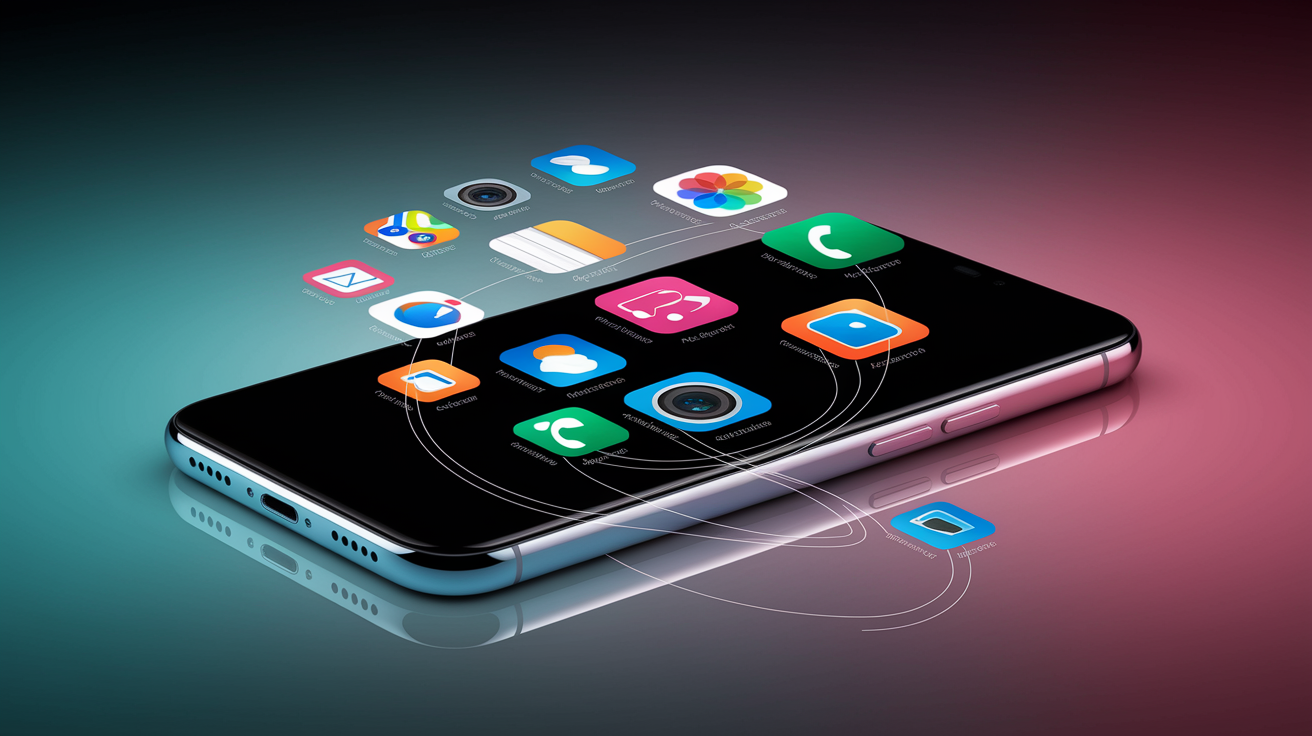
A modern smartphone integrates cellular telephony with a computing platform that can run software applications, managed through a touchscreen interface and supported by internet connectivity. The defining characteristic is convergence. The combination of communication tools (phone, messaging, email), personal information management (calendar, contacts, notes), media capabilities (camera, audio, video), and a software ecosystem that lets third party developers or users extend functionality through apps. This integration replaced the need for separate devices like PDAs, MP3 players, digital cameras, and portable gaming consoles.
The core qualifying features include:
| Feature | Purpose |
|---|---|
| Touchscreen interface | Direct manipulation of on-screen content without physical keyboard dependency |
| Mobile operating system | Platform for multitasking and running native or third-party applications |
| Internet and messaging | Email, web browsing, and real-time communication over cellular or Wi-Fi networks |
| Application support | Ability to install, update, and run software beyond factory defaults |
The distinction between a feature phone and a smartphone rests on software extensibility and computing power. Feature phones offered calling, texting, and sometimes basic games or tools. But they lacked robust operating systems or app frameworks. Modern smartphones function as pocket computers with phone capabilities, not phones with limited computing features. The shift from hardware defined functionality to software defined experiences is what separates early mobile devices from true smartphones.
Historical Context Leading to IBM Simon
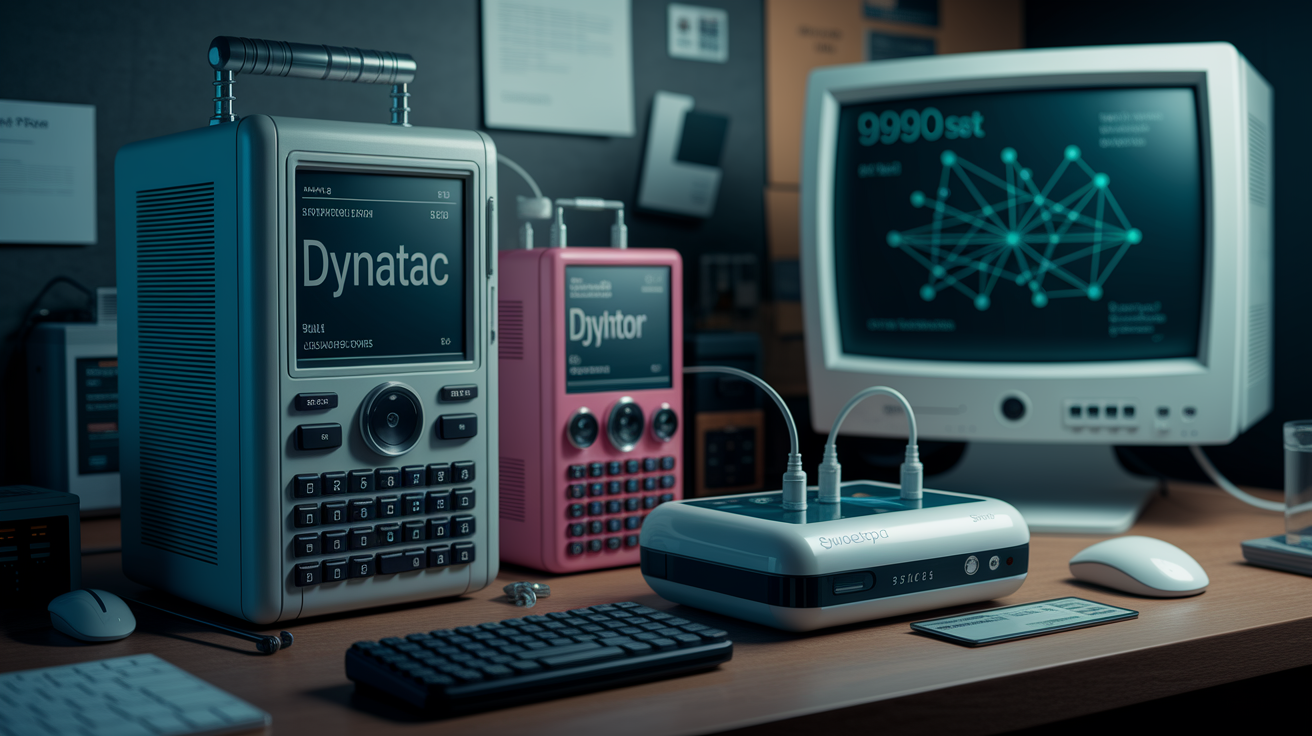
Mobile phones in the late 1980s and early 1990s were large, expensive, and designed exclusively for voice communication. The Motorola DynaTAC 8000X received FCC approval in 1983. It weighed nearly two pounds, offered roughly 30 minutes of battery life, and cost $3,995 at launch. By the early 1990s, phones were shrinking and costs were falling. But functionality remained limited to making calls. The introduction of 2G networks in 1991 (GSM standard in Finland) enabled digital voice transmission and set the stage for data services. Commercialization of lithium ion batteries by Sony and Asahi Kasei the same year made smaller, longer lasting devices feasible.
Personal digital assistants emerged as a separate category. They offered electronic calendars, contact management, note taking, and sometimes basic productivity software. But no telephony. Devices like the Apple Newton MessagePad (1993) and early Palm Pilot models (mid 1990s) required users to carry a separate mobile phone for calls. PDAs used stylus based touchscreens and proprietary operating systems. While some models could sync data with desktop computers, they lacked wireless communication beyond infrared beaming. The separation of computing and communication meant users carried multiple devices, each with its own battery, charger, and interface.
IBM’s engineering team, led by Frank Canova, demonstrated a prototype codenamed “Sweetspot” in 1992. It combined a cellular phone with PDA functions and a touchscreen. This prototype addressed the inconvenience of carrying separate devices by integrating BellSouth’s cellular radio technology with IBM’s computing and software capabilities. The convergence was enabled by advances in battery technology, miniaturization of cellular radios, and the availability of 2G networks capable of transmitting data alongside voice. When the Simon reached the market in August 1994, it was the first device to deliver this integrated experience to consumers.
Why Some People Consider the 2007 iPhone the First Modern Smartphone
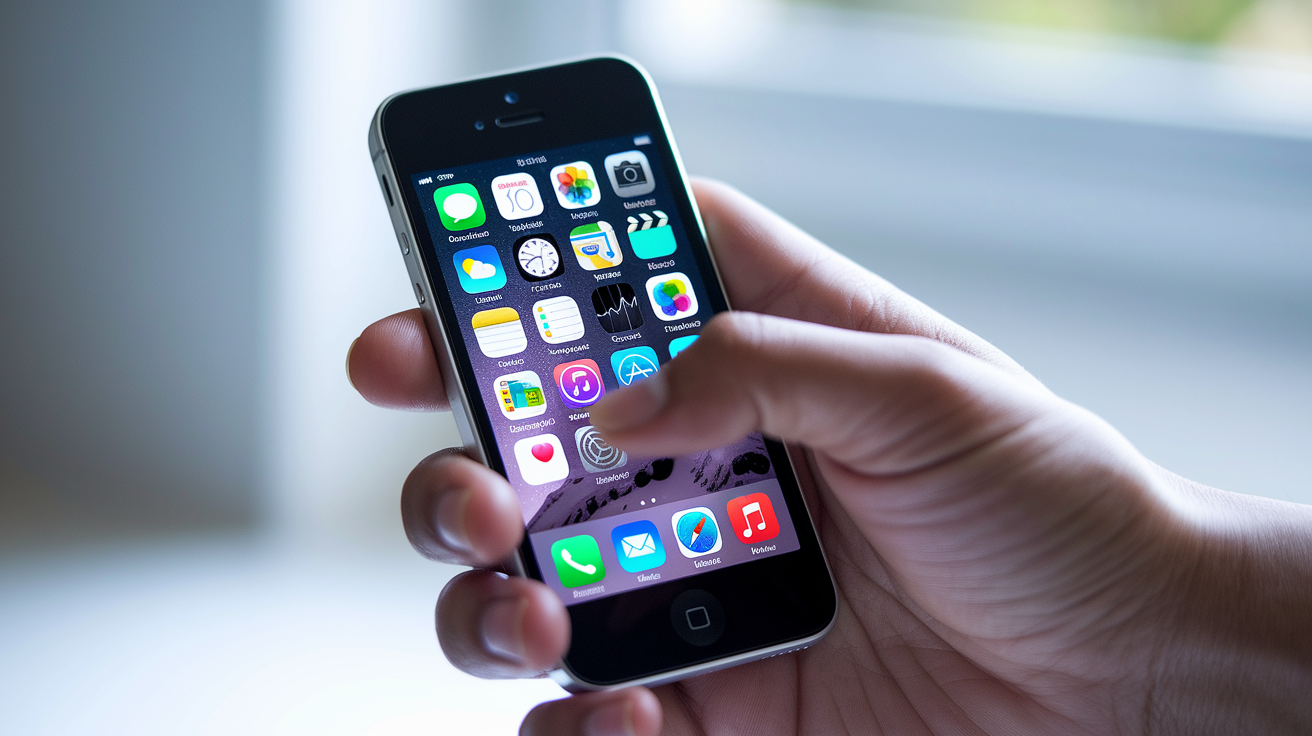
The original iPhone was announced January 9, 2007 and released June 29, 2007. It redefined user expectations for smartphones through its capacitive multi touch display, desktop class mobile browser (Safari), and tightly integrated hardware software design. Apple sold the device in two configurations. 4 GB for $499 and 8 GB for $599. They moved approximately 1.4 million units in the first year, growing to 11.6 million by 2008. The iPhone’s influence stemmed from user experience rather than technical firsts. It eliminated the stylus and physical keyboard in favor of finger based multitouch gestures, made mobile web browsing practical with full HTML rendering and pinch to zoom, and integrated iPod media playback with phone and internet functions in a single interface.
The launch of the App Store on July 10, 2008 completed the modern smartphone model. It created a centralized, scalable distribution platform for third party native applications. Before the App Store, most smartphones required users to download software from carrier portals, manufacturer sites, or third party app stores with inconsistent quality and security. Apple’s model (vetted apps, one click installation, automatic updates, and developer revenue sharing) became the standard architecture copied by competitors. This ecosystem shift, combined with the iPhone’s responsiveness (enabled by its custom ARM based processor and accelerometer driven interface) and design language, is why many people perceive the iPhone as the first “real” smartphone. Especially those who entered the smartphone market after 2007.
The distinction between IBM Simon and the iPhone lies in scope of impact and capability ceiling. The Simon introduced the concept but remained a niche product with a small software library and limited hardware performance. The iPhone and its successors established the template for what smartphones would become. App driven platforms with regular software updates, advanced sensors (GPS, accelerometer), high resolution displays, and integration with cloud services. Debate over which device counts as “first” typically reflects whether the question prioritizes technical precedence (Simon, 1994) or the product that popularized and standardized the category (iPhone, 2007).
Timeline of Key Milestones in Smartphone Evolution
| Year | Device / Event | Notable Features |
|---|---|---|
| 1994 | IBM Simon Personal Communicator | First commercial smartphone; touchscreen, email, fax, calendar, third-party apps; $899; 50,000 units sold in six months |
| 1999 | BlackBerry 850 & Kyocera Visual Phone VP-210 | BlackBerry introduced push email; VP-210 was first camera phone (front-facing, Japan only) |
| 2000 | Sharp J-SH04 | First mass-market phone with rear-facing camera (0.11 MP) and instant photo transmission over carrier networks (Japan) |
| 2002 | Handspring Treo 180 / 270 | Integrated Palm OS PDA with phone; full QWERTY keyboard and app ecosystem |
| 2007 | Apple iPhone | Capacitive multitouch, Safari browser, iPod integration; 4GB $499 / 8GB $599; sold 1.4M first year |
| 2008 | HTC Dream (T-Mobile G1) & App Store launch | First Android smartphone (Android 1.0); Apple App Store opened July 10, 2008 |
| 2009 | 4G commercial networks | Telia Sonera launched 4G with speeds roughly 10× faster than 3G |
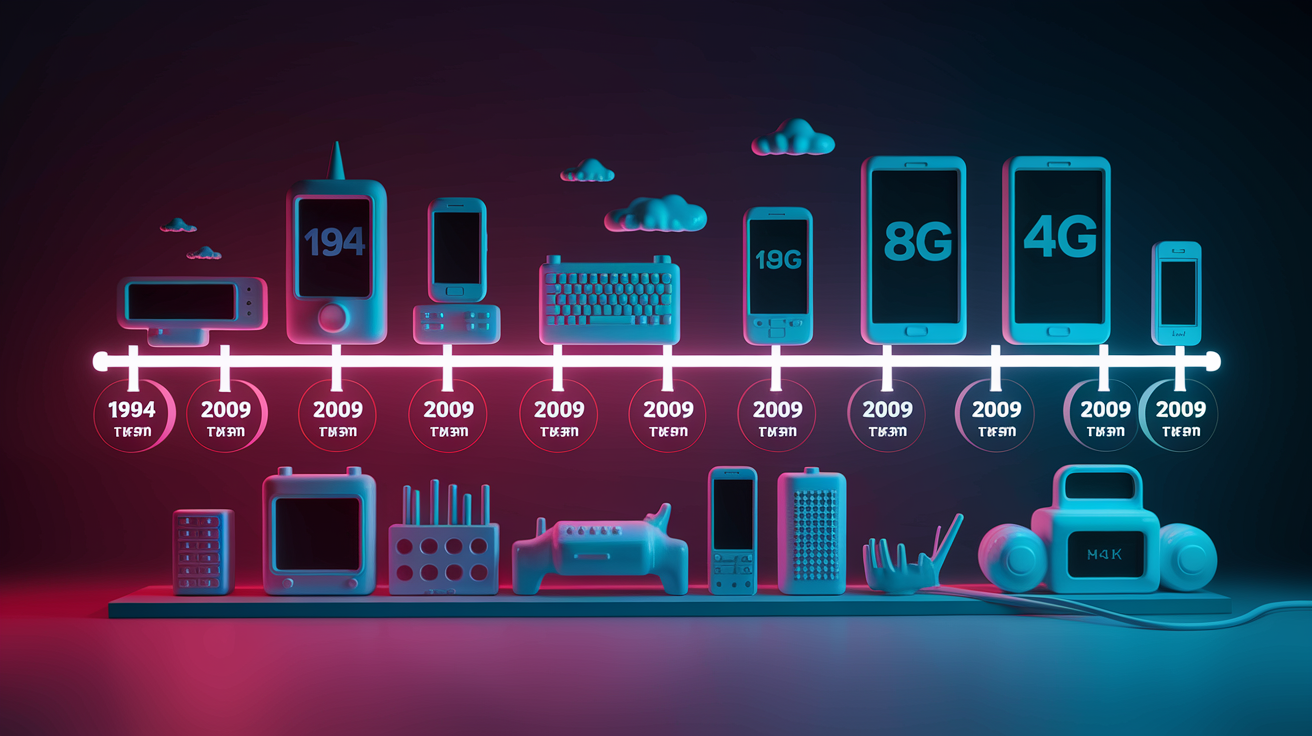
This timeline shows the evolution from single function mobile phones to app driven platforms. Each milestone built on earlier advances in battery technology (lithium ion, 1991), network standards (2G in 1991, 3G in 2001), and component miniaturization. The progression highlights how the smartphone category wasn’t invented in a single moment but developed through incremental integration of telephony, computing, internet access, multimedia, and third party software. Understanding these milestones clarifies why the “first modern smartphone” answer depends on which capabilities you prioritize and whether you measure by technical precedence or market defining impact.
Comparing IBM Simon to Later Smartphones

The IBM Simon combined a touchscreen (resistive, stylus or finger input), cellular voice calls, email and fax transmission, and built in applications (address book, calendar, calculator, notepad, appointment scheduler) with limited third party app support. It ran on a 16 MHz processor, used a small monochrome LCD display, and offered approximately one hour of battery life. The device weighed about one pound, operated on 2G networks where available, and cost $899 at commercial release. Its software wasn’t updateable over the air, and the app library remained small because distribution required physical media or direct upload. No centralized app marketplace.
Smartphones from the 2000s onward added capacitive multitouch displays (eliminating stylus dependency), full color high resolution screens, cameras (starting at 0.11 megapixels in 2000, reaching 48 megapixels by 2022), GPS and accelerometer sensors, mobile internet via 3G/4G/5G, desktop class web browsers, and centralized app stores with millions of applications. Processing power increased from megahertz to multi core gigahertz chips. Storage grew from kilobytes to hundreds of gigabytes. Battery life extended to all day use. Operating systems became updateable, enabling new features and security patches without hardware replacement. The shift from resistive to capacitive touch, from monochrome to OLED displays, and from closed to open app ecosystems represents the technological leap between the Simon’s proof of concept integration and the fully realized smartphone platforms that emerged after 2007.
Final Words
IBM Simon (1994) is the clear pick we named as the first modern smartphone. It combined a touchscreen, messaging, apps and phone features years before later hits.
We walked through the criteria that define a modern smartphone, the tech path that led to Simon, why the 2007 iPhone reset expectations, and a timeline of key milestones.
Understanding Simon’s place makes the evolution easier to spot. The first modern smartphone wasn’t a sudden switch but a steady build, and that’s reason to be optimistic about what comes next.
FAQ
Q: Did Apple invent the modern smartphone?
A: Apple did not invent the modern smartphone; IBM Simon (1994) is widely regarded as the first modern smartphone. Apple reshaped the category in 2007 with multitouch and a strong app ecosystem.
Q: Did smartphones exist in 2004?
A: Smartphones did exist in 2004: BlackBerry, Handspring Treo, and Windows Mobile devices offered email, calendars, and some apps, though they lacked the multitouch UX and app stores popularized later.
Q: Who came out first, Android or iPhone?
A: The iPhone arrived first in 2007; Android’s first commercial phone shipped in 2008 (HTC Dream). Google developed Android earlier, but the platform reached consumers after the iPhone.
Q: Which phone is safest from hackers?
A: No phone is completely safe from hackers; iPhones (iOS) are generally safer because of strict app review and quicker updates. Maximize safety by installing updates, using strong passwords, two-factor authentication, and cautious app choices.