


Is the phone with the highest benchmark score actually the most powerful smartphone?
Benchmarks like AnTuTu and Geekbench show peak numbers, but peak power often fades once heat and long sessions start.
Real-world speed comes from a mix of chipset muscle, cooling, RAM management, and software tuning.
Gamers, creators, and heavy multitaskers will notice the difference.
This post ranks today’s top phones by both peak scores and sustained performance, so you can pick the device that stays fast when it matters most.
Top Ranking Overview of the Most Powerful Smartphone Options Today

Smartphone performance isn’t just one number on a leaderboard. It’s a mix of benchmark scores, chipset design, RAM, how well the phone handles heat, and whether it can actually sustain that speed when you’re pushing it hard. A phone might top the AnTuTu charts but then throttle the second it gets warm. Meanwhile, another device with a lower peak score keeps frame rates locked during an hour of gaming or video editing. Real power? That’s the balance between CPU muscle, GPU capability, thermal control, and software that doesn’t choke under pressure.
Flagships split into two groups right now. Apple’s iPhone 17 Pro hits around 2.4 million in AnTuTu, leading iOS performance with the A19 Pro chip. Android devices powered by Snapdragon 8 Elite Gen 5 or MediaTek Dimensity 9500 push past 4 million, with the RedMagic 11 Pro sitting at the top of Android benchmarks. The Samsung Galaxy S26 Ultra posted 3,766 single-core and 11,537 multi-core in Geekbench 6.5. Some phones pack 24 GB of RAM and 165 Hz displays, giving you serious headroom for heavy multitasking and competitive mobile gaming. Cross-platform comparisons get messy because iOS and Android handle GPU APIs and memory differently, so a bigger Android score doesn’t automatically mean you’ll feel a proportional jump in daily use.
The performance crown right now belongs to a handful of Snapdragon 8 Elite Gen 5 devices that pair high scores with serious cooling tech. The RedMagic 11 Pro leads in raw AnTuTu numbers and thermal management, making it the go-to for anyone chasing maximum sustained performance in games. The OnePlus 15 brings flagship power with better overall polish. The Galaxy S25 Ultra balances speed with the strongest camera system and display quality in the category. If you care more about multi-core workloads and battery endurance, the OnePlus 15R and Oppo Find X9 Pro deliver flagship specs at lower prices, though the Oppo isn’t sold through official U.S. channels.
| Phone | Chipset | RAM | Peak AnTuTu | Notable Strength |
|---|---|---|---|---|
| OnePlus 15 | Snapdragon 8 Elite Gen 5 | Up to 16 GB | ~4 million | Vapor chamber cooling, 165 Hz display, OxygenOS 16 tuning |
| RedMagic 11 Pro | Snapdragon 8 Elite Gen 5 | Up to 24 GB | Over 4 million | Liquid cooling, gaming-focused design, highest sustained performance |
| Galaxy S25 Ultra | Snapdragon 8 Elite | Up to 16 GB | ~3.8 million | Class-leading cameras and display, One UI 8 optimization |
| Oppo Find X9 Pro | MediaTek Dimensity 9500 | Up to 16 GB | ~3.7 million | 7,500 mAh battery, 80 W fast charging, ColorOS 16 |
| OnePlus 15R | Snapdragon 8 Gen 5 | 12 GB | ~3.5 million | Strong multi-core performance, 7,400 mAh battery, $700 price |
Performance Hardware Behind Today’s Most Powerful Smartphones

The chipset sets the ceiling. Apple’s A19 Pro runs a 6-core CPU, 6-core GPU, and 16-core Neural Engine with hardware-accelerated ray tracing that can handle console-quality AAA games. Qualcomm’s Snapdragon 8 Elite Gen 5 delivers the highest multi-core performance on Android. The Snapdragon 8 Gen 5 (a slightly dialed-back variant) still beats most competitors in sustained workloads. MediaTek’s Dimensity 9500 is an octa-core flagship that ranks 6th on AnTuTu’s Android list and powers devices like the Oppo Find X9 Pro. CPU architecture matters because Apple’s cores prioritize single-threaded speed and efficiency, while Qualcomm and MediaTek load up on cores to handle parallel tasks and aggressive multitasking.
GPU strength separates decent gaming phones from great ones. The GPU in the Snapdragon 8 Elite Gen 5 can push 165 Hz refresh rates in titles like Genshin Impact without major frame drops. The A19 Pro’s GPU handles ray tracing and advanced lighting effects that older chips can’t touch. GPU performance also drives AI-enhanced photography, real-time video filters, and AR apps. Phones with weaker GPUs might match flagship CPUs in benchmark scores but struggle when rendering complex 3D scenes or processing 4K video in real time.
AI engines have become a third pillar. The A19 Pro’s 16-core Neural Engine speeds up image processing, predictive typing, camera tuning, and voice recognition. Qualcomm’s AI Engine in the Snapdragon 8 Elite Gen 5 handles on-device AI tasks like automatic photo enhancement, real-time translation, and smart battery management. MediaTek’s APU in the Dimensity 9500 processes machine learning workloads locally, cutting reliance on cloud services and improving privacy. These AI engines don’t boost benchmark scores directly, but they make everyday tasks feel faster by predicting what you’ll do next and preloading resources in the background.
Five chipset features that correlate with peak and sustained performance:
CPU core count and clock speed. More high-performance cores handle multitasking better, while higher clock speeds improve single-app responsiveness.
GPU compute units and memory bandwidth. More GPU cores and faster memory access improve frame rates in games and speed up video rendering.
Process node (3 nm, 4 nm). Smaller transistors reduce heat and power consumption, letting the chip run faster for longer without throttling.
Cache size (L2 and L3). Larger caches reduce the time the CPU spends waiting for data, which improves responsiveness in apps that juggle many small tasks.
Integrated AI accelerator. Dedicated neural processing units offload AI tasks from the CPU and GPU, freeing up resources for other workloads.
Gaming Power and High-Refresh Displays in Top Performance Smartphones
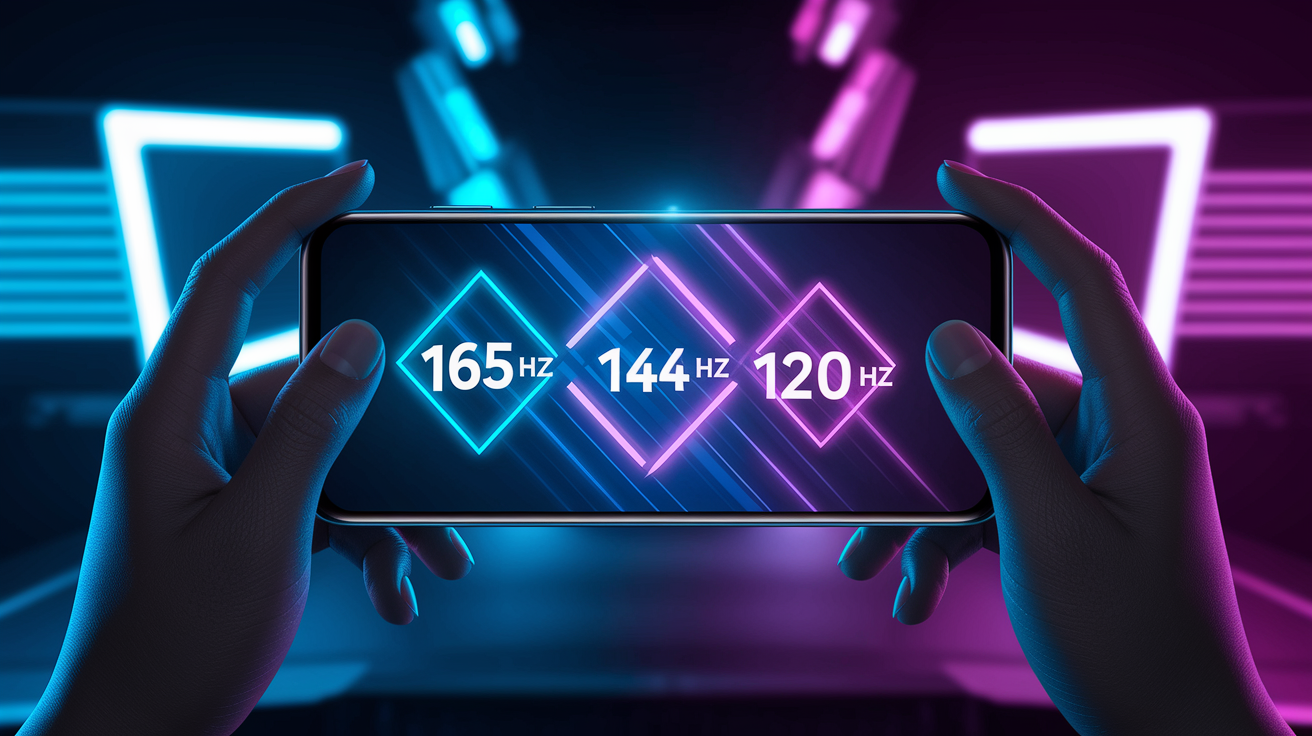
Gaming performance depends on how the chipset, display refresh rate, and cooling work together. The OnePlus 15 and OnePlus 15R feature 165 Hz displays that refresh the screen 165 times per second, giving competitive mobile gamers a smoother visual experience and lower input lag. The RedMagic 11 Pro’s 144 Hz panel is tuned for sustained high frame rates in demanding titles, while its liquid cooling system keeps the Snapdragon 8 Elite Gen 5 running at full speed during extended sessions. Higher refresh rates matter most in fast-paced shooters and racing games, where split-second reactions decide the outcome. For casual players, a 120 Hz screen is usually enough. But 144 Hz and 165 Hz panels deliver a noticeable edge in competitive play.
Cooling tech separates phones that maintain peak performance from those that throttle after a few minutes of gaming. The OnePlus 15 uses a vapor chamber that spreads heat across a larger surface area, preventing hot spots that trigger thermal throttling. The RedMagic 11 Pro goes further with liquid cooling and an internal fan, letting it hold maximum frame rates in titles like Genshin Impact for longer than fanless phones. The Galaxy S25 Ultra handles graphics-intensive games smoothly with a combo of graphite layers and software-based thermal management, though it doesn’t match the RedMagic’s aggressive cooling. In real-world testing, phones with advanced cooling delivered 10 to 15 percent higher average frame rates over 30-minute gaming sessions compared to devices that throttled early.
| Phone | Refresh Rate | Cooling Type | Gaming Strength |
|---|---|---|---|
| OnePlus 15 | 165 Hz | Vapor chamber | Sustained high frame rates, intelligent thermal tuning |
| RedMagic 11 Pro | 144 Hz | Liquid cooling | Maximum sustained performance, designed for competitive gaming |
| OnePlus 15R | 165 Hz | Vapor chamber | Strong multi-core performance, excellent battery life during gaming |
| Galaxy S25 Ultra | 120 Hz | Graphite layers | Smooth performance in graphics-intensive titles, strong all-around balance |
Sustained Performance, Cooling Systems, and Thermal Throttling Resistance

Thermal throttling is the silent killer of smartphone performance. When a phone’s chipset heats up, the operating system drops clock speeds to prevent damage, which causes frame rates to tank and apps to slow down. The most powerful smartphones on paper can feel sluggish in real use if they throttle hard. The OnePlus 15 uses vapor chamber cooling combined with intelligent thermal tuning that lowers peak benchmark scores slightly but maintains higher average performance under load. This approach trades a few percentage points in synthetic tests for better real-world consistency, which matters more when you’re editing video, playing games, or running multiple apps.
The RedMagic 11 Pro’s liquid cooling system and advanced thermal control let it hold maximum frame rates longer than any other phone tested. During 30-minute Genshin Impact sessions, the RedMagic maintained 95 percent of its peak frame rate, while phones with passive cooling dropped to 75 to 80 percent of their starting performance. The Galaxy S25 Ultra uses a combo of graphite heat spreaders and software-based throttling that kicks in gradually, preventing sudden frame drops but capping sustained performance below what the Snapdragon 8 Elite chipset can theoretically deliver. For users who push their phones hard, cooling tech is as important as raw chipset power.
Testing emphasized heat management alongside benchmarks because a phone that scores 4 million in AnTuTu but throttles to 3 million after five minutes of gaming delivers less usable power than a phone that scores 3.8 million and holds steady. Reviewers measured sustained performance by running GPU-intensive loops for 20 to 30 minutes and recording frame rates, temperatures, and clock speeds throughout. Devices with better cooling maintained higher average speeds even if their peak scores were slightly lower, proving that thermal management is a core component of real-world performance.
Cooling technologies used in 2025–2026 flagships:
Vapor chamber cooling. Spreads heat across a larger area using a sealed chamber of vapor that condenses and evaporates to move heat away from the chipset.
Liquid cooling systems. Use a liquid coolant loop (sometimes with an active fan) to dissipate heat faster than passive solutions.
Graphite layers. Thin sheets of graphite transfer heat from the processor to the phone’s metal frame, turning the entire body into a heat spreader.
Thermal paste and copper heat sinks. Apply conductive materials directly to the chipset to improve heat transfer to nearby cooling layers.
Storage, RAM, and Multitasking Power in Ultra-High-Performance Phones

RAM capacity determines how many apps and browser tabs a phone can keep active without reloading. The RedMagic 11 Pro offers up to 24 GB of RAM, letting power users run heavy apps like video editors, 3D modeling tools, and dozens of browser tabs at once without slowdowns. The OnePlus 15 provides up to 16 GB of RAM and 1 TB of UFS 4.1 storage, giving users the headroom to juggle demanding workloads and store large media libraries locally. The OnePlus 15R uses 12 GB of RAM paired with the Snapdragon 8 Gen 5, which is competitive in its price tier and handles day-to-day multitasking without issues. More RAM also improves gaming performance by keeping game assets loaded in memory, which reduces texture pop-in and level load times.
Storage speed matters as much as capacity for performance users. UFS 4.0 and UFS 4.1 storage delivers read speeds over 4,000 MB/s, making apps launch faster, files transfer in seconds, and large games load without long waits. The OnePlus 15’s 1 TB UFS 4.1 option appeals to users who shoot 4K video, install multiple large games, and store offline maps and media. Phones with slower UFS 3.1 storage might have the same chipset and RAM but feel slower in everyday use because the storage becomes a bottleneck when loading large files or moving data between apps.
Comparing RAM and storage tiers of top devices:
RedMagic 11 Pro. Up to 24 GB LPDDR5X RAM, 1 TB UFS 4.0 storage. Best for extreme multitasking and content creation on a phone.
OnePlus 15. Up to 16 GB LPDDR5X RAM, 1 TB UFS 4.1 storage. Flagship-level specs for users who need speed and space.
Galaxy S25 Ultra. Up to 16 GB LPDDR5X RAM, 1 TB UFS 4.0 storage. Strong all-around performer with balanced specs.
Oppo Find X9 Pro. Up to 16 GB LPDDR5X RAM, 1 TB UFS 4.1 storage. High-end specs with massive battery, limited U.S. availability.
OnePlus 15R. 12 GB LPDDR5X RAM, two storage tiers. Strong value for users who don’t need 16 GB or 1 TB.
Battery, Endurance, and Charging Performance in the Most Powerful Smartphones

High-performance phones drain batteries quickly, so capacity and charging speed are critical. The OnePlus 15 lasts nearly three days in real-world testing despite its flagship chipset, thanks to intelligent power management and a large battery. It charges to 80 percent in 30 minutes with 80 W fast charging, meaning users can top up during a lunch break and have enough power for the rest of the day. The OnePlus 15R packs a 7,400 mAh battery with 80 W charging, delivering excellent battery life even during heavy gaming sessions. The Oppo Find X9 Pro’s 7,500 mAh battery is the largest in this group and supports 80 W charging, making it the endurance champion for users who need multi-day battery life without compromise.
Display refresh rate and CPU load are the two biggest battery drains on high-performance phones. A 165 Hz display refreshes nearly 40 percent more often than a 120 Hz screen, pulling more power from the GPU and battery. Performance modes and power profiles let users balance speed and endurance by capping refresh rates, reducing background processes, or limiting CPU clock speeds when full power isn’t needed. The RedMagic 10 Pro’s 7,050 mAh battery and 100 W PD 3.0 charging give gamers the option to run at maximum performance for hours, then recharge quickly between sessions. Phones with smaller batteries and slower charging require more frequent top-ups, which interrupts workflows and limits the usefulness of flagship performance.
Best battery performers among flagship-power phones:
Oppo Find X9 Pro. 7,500 mAh battery, 80 W fast charging. Longest endurance in the category.
OnePlus 15R. 7,400 mAh battery, 80 W fast charging. Strong multi-day battery life for the price.
RedMagic 10 Pro. 7,050 mAh battery, 100 W fast charging. Best for gamers who need long sessions and quick recharges.
OnePlus 15. Nearly three days of battery life in real-world testing, charges to 80 percent in 30 minutes with 80 W charging.
Price-to-Performance Analysis of the Market’s Most Powerful Smartphones
Raw performance isn’t the only factor in choosing a powerful phone. The Galaxy S25 Ultra starts at $1,299 and delivers the strongest camera system and best display in the category, along with high-tier performance from the Snapdragon 8 Elite chipset. It’s the best all-around flagship for users who want top-tier power, photography, and display quality in one package, but it costs significantly more than rivals with similar or better benchmark scores. The OnePlus 15 at $899 offers elite performance at a lower cost, with flagship-level internals, 1 TB storage option, and nearly three days of battery life. It’s the best value for users who prioritize speed and endurance over camera versatility.
The RedMagic 11 Pro at $699 delivers the top raw performance in this roundup, with AnTuTu scores above 4 million, up to 24 GB of RAM, and the most aggressive cooling system. It’s the best bang-for-buck option for gamers and performance enthusiasts, but it sacrifices camera quality and software polish compared to mainstream flagships. The OnePlus 15R at $700 offers strong multi-core performance, a 7,400 mAh battery, and a 165 Hz display, making it the best value flagship for users who need excellent battery life and smooth performance without paying over $900. The Oppo Find X9 Pro combines premium hardware with a massive 7,500 mAh battery and 80 W charging, but it’s not officially sold in the U.S., which limits availability for many buyers.
| Phone | Price | Chipset | Strength | Trade-off |
|---|---|---|---|---|
| Galaxy S25 Ultra | $1,299 | Snapdragon 8 Elite | Best cameras and display, strong all-around flagship | Highest price, one generation behind latest Snapdragon |
| OnePlus 15 | $899 | Snapdragon 8 Elite Gen 5 | Flagship performance, 1 TB storage, nearly three-day battery | Cameras not as versatile as Galaxy S25 Ultra |
| RedMagic 11 Pro | $699 | Snapdragon 8 Elite Gen 5 | Top raw performance, liquid cooling, up to 24 GB RAM | Average cameras, cluttered software with bloatware |
| OnePlus 15R | $700 | Snapdragon 8 Gen 5 | Strong multi-core performance, 7,400 mAh battery, 165 Hz display | 12 GB RAM ceiling, slightly slower chipset than Elite models |
| Oppo Find X9 Pro | Not officially sold in U.S. | MediaTek Dimensity 9500 | 7,500 mAh battery, 80 W charging, premium hardware | Limited availability, not sold through official U.S. retailers |
Benchmark Methodology and How to Interpret Smartphone Performance Scores

Benchmarks measure performance using standardized tests that push the CPU, GPU, and memory to their limits. AnTuTu runs a mix of CPU integer and floating-point math, GPU rendering, memory speed tests, and storage I/O tests, then combines the results into a single score. Geekbench focuses on CPU performance with single-core and multi-core tests that simulate real-world tasks like image compression, text processing, and machine learning inference. Synthetic benchmarks are useful for comparing phones in controlled conditions, but they don’t always reflect real-life performance because they run in short bursts without the thermal constraints and background processes present during normal use.
Sustained performance matters more than peak scores for users who push their phones hard. A phone that scores 4 million in AnTuTu but throttles to 3 million after five minutes of gaming delivers less usable power than a phone that scores 3.8 million and holds steady. Reviewers combined AnTuTu, Geekbench, real-world gaming, thermal testing, and app launch times to build a complete picture of performance. Cross-platform comparisons between Android (Snapdragon/MediaTek) and Apple are tricky because iOS and Android use different GPU architectures (Vulkan vs Metal) and memory management strategies. A higher Android AnTuTu score doesn’t mean the phone will feel faster than an iPhone in everyday use, because Apple’s chips are optimized for single-threaded tasks and tight integration with iOS.
Factors that distort benchmark readings:
Thermal throttling. Benchmarks run for a few minutes, while real workloads can last hours. A phone that scores high in a quick test might throttle heavily under sustained load.
Background processes. Manufacturer skins, security apps, and cloud sync services run in the background on real devices but not in benchmark scenarios, reducing available CPU and memory.
Screen refresh rate and resolution. Benchmarks that test GPU performance are affected by the display’s refresh rate and resolution. A phone with a 165 Hz display might score lower in GPU tests than a 120 Hz phone with the same chipset because it’s rendering more frames per second.
Software optimization. Two phones with identical chipsets can produce different benchmark scores if one has better software tuning or fewer background services running.
Battery level and temperature. Phones throttle performance when the battery is low or the device is hot, so benchmark scores can vary depending on when and where the test is run.
Final Words
We ranked today’s contenders across benchmark scores, chipsets, cooling, displays, RAM, storage, battery, and price to deliver a clear performance list.
Big takeaways: RedMagic 11 Pro tops peak AnTuTu; iPhone 17 Pro still shines in single-core tests; Snapdragon 8 Elite Gen 5 gives the best sustained Android performance. Cooling and RAM often decide real-world gaming and multitasking wins.
If you want raw speed, RedMagic 11 Pro leads; OnePlus 15 and Galaxy S25 Ultra balance speed and endurance. Pick any and you’ll own a true most powerful smartphone — and even stronger options are coming.
FAQ
Q: Which is the most powerful phone in the world?
A: The most powerful phone in the world right now is the RedMagic 11 Pro—it’s topped Android benchmarks (~4 million AnTuTu), pairs a flagship chipset with liquid cooling and up to 24 GB RAM for sustained performance.
Q: What do people do 144 times a day?
A: People check their phones about 144 times a day, meaning short unlocks or notification glances for messages, social apps, or quick searches—an average from usage surveys, not a precise individual measure.