
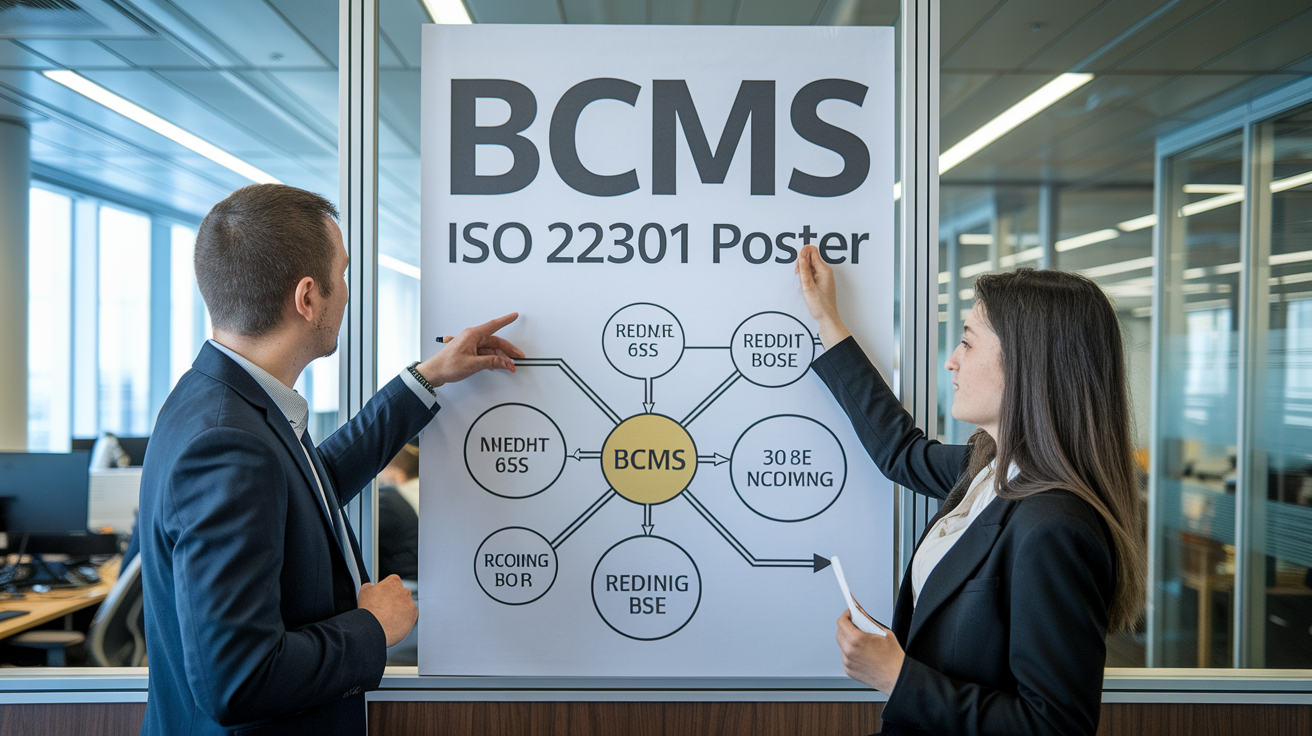

Nearly 75% of organizations without a continuity plan fail within three years of a major disruption.
That stat shows why a Business Continuity Management System (BCMS) matters now.
A BCMS is a living, organization-wide framework that protects people, processes, facilities, technology, and suppliers so critical services keep running during cyberattacks, outages, or natural disasters.
This post explains what a BCMS does, how standards like ISO 22301 guide it, and practical steps to build one so your company can move from firefighting to proven readiness.
Comprehensive Overview of a Business Continuity Management System
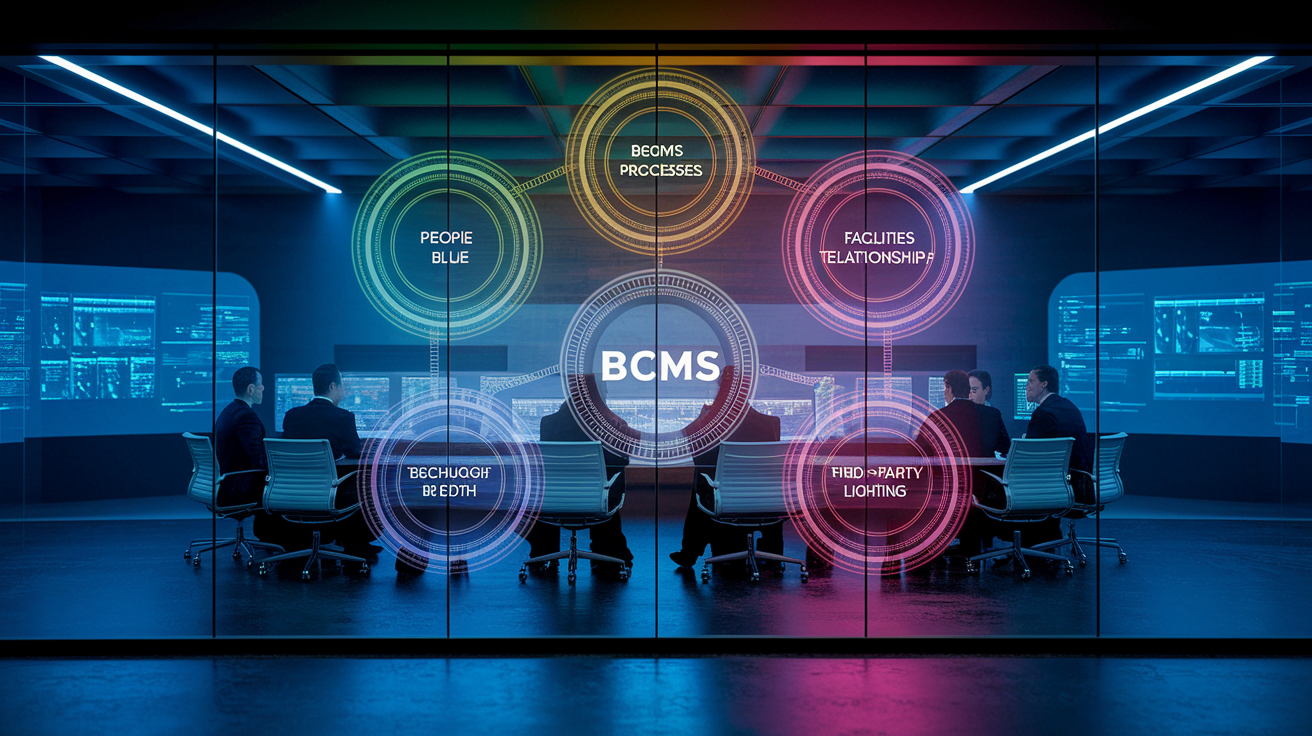
A business continuity management system is a living, organization-wide framework that covers five domains: people, processes, facilities, technologies, and third-party relationships. It exists to keep essential services running during and after disruptive incidents. BCMS isn’t a document you file away. It’s a dynamic management system built to prepare organizations for crises ranging from cyberattacks and IT outages to natural disasters, supply chain failures, and large-scale economic shocks. The core objective? Keep critical functions running when something goes wrong.
ISO 22301:2019 is the international standard for BCMS. It provides a structured set of requirements for planning, establishing, implementing, operating, monitoring, reviewing, maintaining, and improving an organization’s ability to continue operations. The Business Continuity Institute published its Good Practice Guidelines in 2018, which break the BCM lifecycle into six key stages and serve as a practical companion to ISO 22301. In the United States, FEMA’s Continuity Guidance Circular (2018) sets out national planning expectations for federal agencies and critical infrastructure operators. Together, these frameworks give BCMS both global consistency and sector-specific adaptability.
Organizations adopt BCMS for five core benefits: operational resilience, reputation preservation, regulatory compliance, financial protection through reduced downtime and losses, and governance oversight that reassures boards, investors, and regulators. A structured BCMS helps you avoid becoming part of the 75 percent of organizations without continuity planning that fail within three years of a major disruption. The system transforms reactive firefighting into deliberate, tested readiness. It turns “what if” scenarios into “we’re ready” responses.
Core Components Within a Business Continuity Management System

A robust BCMS is built on five foundational components. Each one is designed to move your organization from awareness to action:
Risk assessment and business impact analysis (BIA): You identify internal and external threats, map dependencies, quantify financial and operational impact, and prioritize critical processes based on acceptable downtime thresholds.
Continuity strategy development: You define realistic recovery approaches such as alternate work locations, backup IT infrastructure, redundant systems, manual workarounds, and contingency supplier agreements.
Business continuity plan (BCP) implementation: You document emergency response actions, stakeholder communication protocols, backup and data recovery procedures, and escalation pathways in step-by-step playbooks.
Regular testing and training: You validate plans through tabletop exercises, simulations, and full-scale drills. You train staff on roles and responses. You remediate gaps identified during exercises.
Continuous monitoring and improvement: You update plans for new threats, changing organizational structures, and lessons from post-incident reviews. You maintain regulatory compliance through iterative cycles.
Business impact analysis sits at the heart of a BCMS. It identifies which functions are truly mission-critical and defines two key metrics: recovery time objective (RTO), which is how quickly a process must resume, and recovery point objective (RPO), which is how much data loss is acceptable. For example, a customer-facing payment system might have an RTO of one hour and an RPO of 15 minutes. A monthly reconciliation process might tolerate a 24-hour RTO and a one-day RPO. These thresholds inform every subsequent decision about technology, staffing, and budget.
Risk assessment feeds directly into strategy development. Threats are categorized as external (natural disasters, supply chain failures, regulatory sanctions) or internal (data breaches, key staff unavailability, equipment failure). Horizon scanning captures emerging risks like climate volatility and political instability. Recovery strategies must be cost-effective and integrated with crisis management and IT disaster recovery plans. Manual workarounds may suffice for low-frequency scenarios, while high-availability architectures are justified for processes with very tight RTOs.
Once strategies are set, the BCP implementation phase translates them into executable checklists with clear ownership, escalation triggers, and predefined communication templates for customers, regulators, and media. Testing then proves whether the documented plans work in practice. Continuous improvement ensures the BCMS evolves as the organization and its risk landscape change. The cycle never stops: plan, test, measure, improve.
Standards and Framework Alignment for a Strong Business Continuity Management System
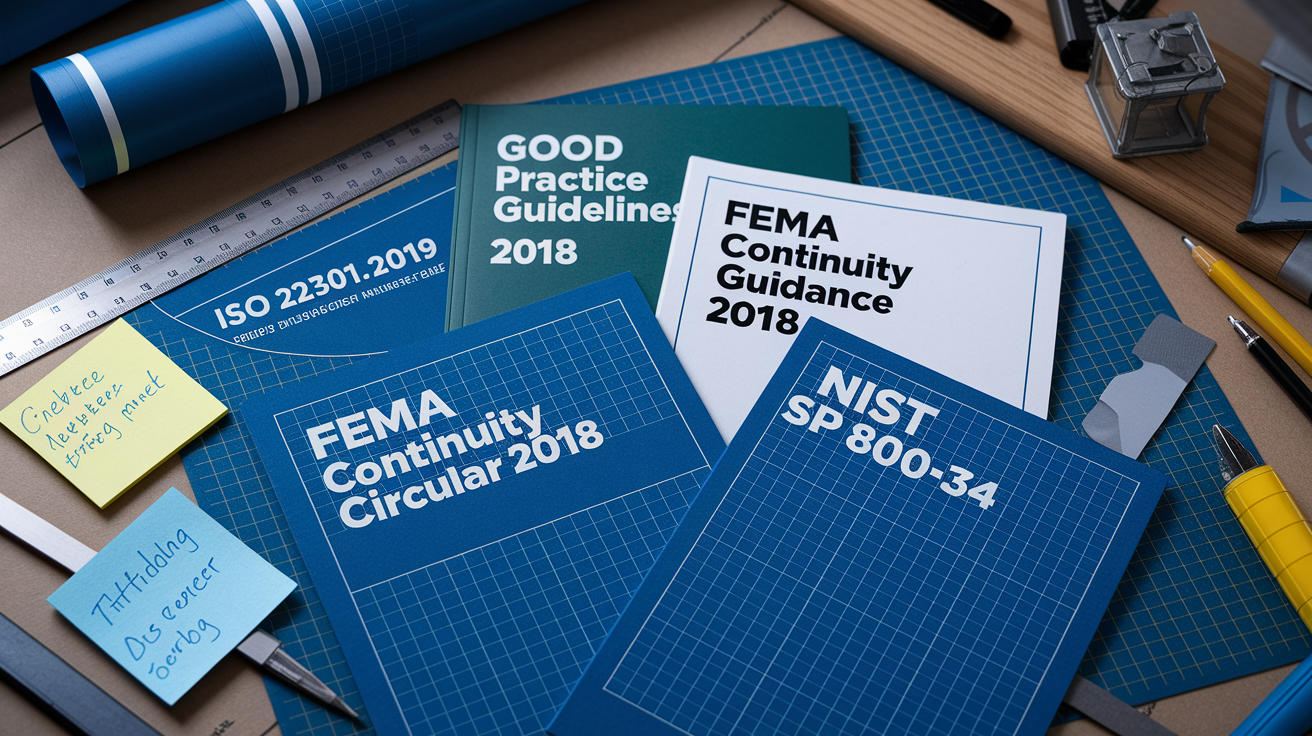
Four primary standards and frameworks guide BCMS design and implementation:
ISO 22301:2019 is the global BCMS standard that defines requirements for establishing, implementing, and certifying a management system. Certification demonstrates operational resilience to customers, regulators, and investors.
BCI Good Practice Guidelines 2018 Edition offers practitioner-focused guidance from the Business Continuity Institute. It outlines six BCM lifecycle stages and provides implementation tools that complement ISO 22301.
FEMA Continuity Guidance Circular (CGC) 2018 is U.S. national guidance for federal agencies and critical infrastructure. It emphasizes essential functions, orders of succession, and delegation of authority.
NIST SP 800-34 focuses on IT contingency planning for information systems. It’s often integrated with broader BCMS programs in technology-heavy organizations.
ISO 22301:2019 is the most widely recognized certification standard. Achieving certification typically involves a gap analysis to identify missing controls, BCMS implementation across the organization, an internal audit to test readiness, a management review of audit findings, and finally an external audit by an accredited certification body. Certification timelines range from about three months for small, well-prepared organizations to twelve months or more for large, complex enterprises with multiple sites and regulatory obligations.
Many organizations also align with sector-specific frameworks. Financial institutions reference FFIEC guidance. Healthcare providers incorporate HIPAA continuity requirements. Technology service providers often map BCMS controls to ITIL, ISO 27001, SOC 2, and PCI DSS. National frameworks add another layer. Examples include Japan’s Cabinet Office guidance (shaped by frequent natural disasters) and regional prudential standards like APRA CPS 230 in Australia. Aligning with multiple frameworks simultaneously is common, and cross-standard mapping reduces duplicated effort and documentation sprawl.
Developing and Implementing a Business Continuity Management System

Practical BCMS implementation follows five sequential steps that transform frameworks into operational readiness:
Identify critical business functions via BIA: You map dependencies, define acceptable downtime thresholds, and prioritize what must recover first. You can’t recover everything at once.
Assess risks and threats: Include external hazards (natural disasters, supply chain failures, regulatory sanctions) and internal vulnerabilities (data breaches, key staff unavailability, equipment failure). Use horizon scanning for emerging risks like climate events and geopolitical volatility.
Define recovery strategies: Choose from manual workarounds, alternate suppliers and delivery channels, relocation of teams or services, and redundancy in systems or personnel. Strategies must be realistic, cost-effective, and integrated with crisis and IT disaster recovery plans.
Establish communication protocols: Build internal escalation and decision chains. Assign communication roles. Draft pre-approved messages for customers, regulators, and media. Set up redundant communication channels.
Train, test, and continuously improve: Conduct awareness sessions and role-specific briefings. Run tabletop exercises and full simulations. Use post-incident reviews to update plans.
| Step | Objective | Key Outputs |
|---|---|---|
| 1. BIA and prioritization | Identify mission-critical processes and dependencies | Prioritized function list, RTOs, RPOs, dependency map |
| 2. Risk assessment | Catalog threats and quantify likelihood and impact | Risk register, threat scenarios, horizon-scan findings |
| 3. Strategy selection | Choose recovery approaches aligned to RTOs and budget | Documented strategies, cost-benefit analyses, integration points |
| 4. Communication planning | Ensure timely, accurate messaging during incidents | Escalation matrix, pre-drafted messages, backup contact methods |
| 5. Testing and training | Validate plans and build organizational muscle memory | Exercise reports, training records, remediation action plans |
Implementation begins with a gap analysis against ISO 22301 or the chosen framework, mapping current capabilities to required controls. Governance is established early. A dedicated BCMS steering committee defines scope, assigns roles, and secures executive sponsorship. Policy development formalizes commitments, and a roles and responsibilities matrix ensures every critical function has an owner and a backup.
The project plan for BCMS rollout typically includes pilot testing in one business unit, lessons-learned reviews, and then full deployment. Documentation is centralized, whether in spreadsheets for small organizations or dedicated BCM software for larger ones. Version control is enforced. Training programs are tiered: all-staff awareness, role-specific playbooks for recovery teams, and executive crisis-management briefings. Regular audits, both internal and external, verify that the BCMS remains current and audit-ready.
Recovery Strategies & IT Disaster Recovery Integration in a Business Continuity Management System

Recovery strategies define how an organization will resume operations when normal capabilities are lost. Four common approaches illustrate the range of options: manual workarounds (like paper-based order processing when systems are offline), alternate sites (relocating staff to backup offices or enabling remote work), redundant systems (failover infrastructure that activates automatically), and alternate delivery channels (switching from digital to phone-based customer service). The right mix depends on RTO requirements, budget constraints, and the nature of the disruption.
IT disaster recovery (ITDR) is a critical subset of BCMS. Synchronizing business-side RTOs with infrastructure recovery capabilities eliminates gaps. If a sales process must resume within two hours but the supporting CRM system takes four hours to restore, the BCP will fail. Joint testing of business processes and IT infrastructure is essential, using shared prioritization frameworks that align recovery sequences. Cloud resilience strategies have become central to ITDR, with organizations using multi-region replication, automated failover, and infrastructure-as-code to accelerate recovery.
Alternate site options represent varying levels of readiness and cost:
Hot site: Fully equipped, continuously synchronized duplicate facility that can take over in minutes. Highest cost, shortest RTO.
Warm site: Partially equipped facility with hardware and connectivity in place but data lagging by hours or days. Moderate cost and RTO.
Cold site: Empty space with power and network access but no pre-installed systems. Lowest cost, longest RTO, suitable for non-critical functions.
Cyber continuity planning adds another layer. Organizations must plan for alternative access methods during IT outages (like secure VPNs, mobile hotspots, offline credential lists), workarounds for key digital processes (manual invoice approval, phone-based inventory checks), predefined responses for data integrity and privacy breaches, and coordination protocols with cybersecurity and incident response teams. Data backup and restore procedures are tested not just for speed but for integrity. Corrupted backups discovered during an incident render RTOs meaningless.
Testing, Exercising and Improving the Business Continuity Management System

BCMS testing validates plans, identifies gaps, and builds organizational muscle memory. Four primary test formats vary in scope and realism:
Tabletop exercises: Facilitated discussion of a scenario. Participants walk through their roles without executing actions. Low cost, high learning value.
Walkthroughs: Step-by-step review of procedures with the people responsible for them. Catches documentation errors and unclear assignments.
Drills: Execution of a single recovery task (like restoring a database from backup, relocating to an alternate site). Proves technical readiness.
Full-scale simulations: End-to-end test involving all recovery teams, communication protocols, and IT failover. Closest to a real incident.
Testing schedules depend on risk profile and regulatory requirements. High-impact scenarios (like ransomware, natural disaster) typically require annual full-scale exercises. Lower-tier risks may be tested on a two or three-year cycle. Tabletop exercises can be run quarterly to keep plans fresh. After major organizational changes (mergers, new product launches, office relocations), targeted walkthroughs ensure BCPs remain aligned.
Continuous improvement is driven by post-exercise and post-incident reviews. After-action reports capture what worked, what failed, and why. Common continuity testing pitfalls include outdated assumptions (like contact lists with departed staff, reliance on discontinued software), insufficient cross-functional involvement (recovery teams working in silos), and failure to test dependencies (assuming a third-party supplier will be available when they’re equally affected by the event). Lessons learned feed directly into plan updates, and remediation actions are tracked to closure. The BCI’s six-stage lifecycle model embeds this cycle: understand the organization, determine strategy, develop response, implement and embed, exercise and validate, review and improve. BCMS is iterative, not static. What was sufficient five years ago may be wholly inadequate today.
Third‑Party, Supplier, and Supply Chain Continuity Within a Business Continuity Management System

A robust BCMS extends beyond organizational boundaries to include third-party dependencies. Critical suppliers, service providers, and partners must be mapped in the BIA, with high-risk dependencies flagged for deeper assessment. Supplier continuity questionnaires ask vendors about their own BCPs, RTOs, alternate sourcing, and recent test results. Service level agreements (SLAs) are aligned with internal RTOs so contractual commitments match operational needs. If your RTO is four hours, a supplier SLA promising 24-hour restoration creates a gap.
Scenario testing should include third-party failure modes. For example, if a logistics provider’s warehouse floods, can you reroute shipments through an alternate carrier? If a SaaS vendor experiences an outage, do you have offline workarounds or a secondary platform? Alternate supplier planning is particularly important for single-source dependencies. Sole-source contracts carry high continuity risk unless the supplier’s resilience is thoroughly vetted and contractually guaranteed.
Supply chain risk mitigation strategies include geographic diversification (avoiding concentration in a single region vulnerable to natural disasters or political instability), buffer inventory for critical components, and pre-negotiated agreements with backup suppliers that can be activated on short notice. Regular reviews of third-party risk are built into the BCMS maintenance cycle, with annual reassessments of high-criticality vendors and event-driven reviews when a supplier changes ownership, relocates operations, or experiences a significant incident. Treating third parties as extensions of your own continuity planning transforms abstract supply chain risk into managed, testable resilience.
Business Continuity Management System Software and Automation Approaches

Enterprise BCM software platforms reduce manual effort. Five core capabilities are standard across leading tools:
Centralized plan documentation and access: Single repository for all BCPs, contact lists, and recovery procedures. Version control and role-based permissions ensure teams see current, relevant information during an incident.
Cross-functional collaboration: Shared workflows for plan development, review, and approval. Notification and task assignment features keep distributed teams aligned.
Automated risk assessments and plan updates: Scheduled prompts for owners to review and refresh content. Integration with enterprise risk management (ERM) platforms to flag new threats.
Compliance tracking: Built-in mappings to ISO 22301, NIST, FFIEC, and other frameworks. Audit trails and evidence libraries simplify external certification and regulatory reviews.
Dashboards and reporting for oversight: Real-time compliance status, exercise completion rates, open remediation actions, and executive summaries for board reporting.
Automation helps maintain BCMS currency. Manual spreadsheets and document libraries quickly become outdated as staff turn over and processes change. Platforms with integrated scenario testing features allow organizations to simulate exercises digitally, capturing decisions and timings without the logistical overhead of a full physical drill. Vendor evaluation criteria should include support for third-party dependency mapping, integration with ITDR and cyber incident response systems, mobile accessibility (plans must be reachable when offices are inaccessible), and scalability across multiple sites or business units.
Pricing models vary. SaaS subscriptions are common, with costs based on user count, module selection, and data storage. Perpetual licensing is less frequent but still offered by some vendors. Total cost includes not just licenses but implementation effort (data migration, training, initial plan authoring) and ongoing testing. For small organizations, pre-approved templates and checklists within the platform accelerate deployment. Examples include incident response procedures, risk assessment forms, and BIA worksheets aligned to ISO 22301. Larger enterprises benefit from workflow automation that routes draft plans through legal, compliance, and IT security for review before publication.
Sector‑Specific Applications of a Business Continuity Management System
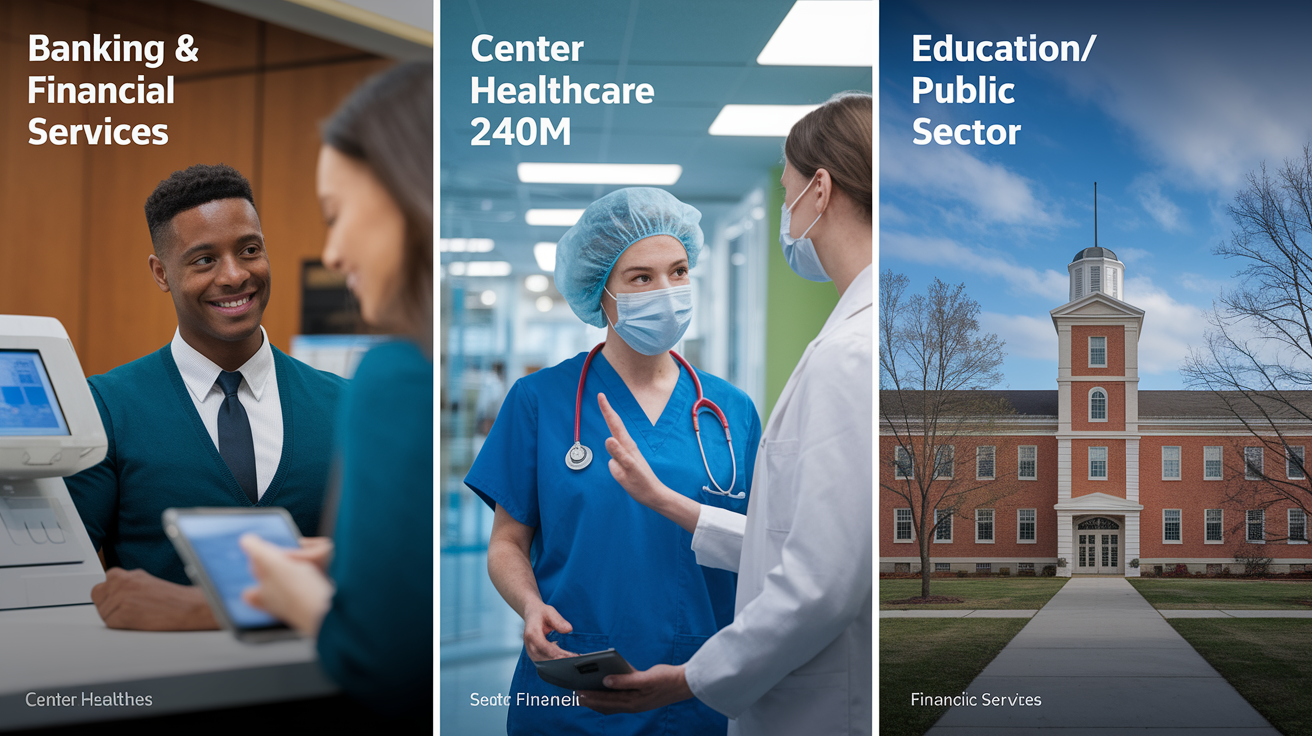
BCMS requirements and priorities vary significantly by industry. Three high-stakes sectors illustrate the range:
Banking and financial services: Even short disruptions risk consumer trust, regulatory penalties, and liquidity impacts. Plans must address uptime, data integrity, and the ability to process payments and settlements under stress.
Healthcare: Life-critical services require uninterrupted patient care, medical logistics (oxygen, medications, blood supply), and digital infrastructure (electronic health records, imaging systems). Continuity planning includes clinical protocols and staff safety.
Education and public sector: Hybrid learning continuity became urgent during the 2019–2020 pandemic. Public-sector agencies face scrutiny over essential service delivery, emergency communications, and transparent governance during crises.
Remote and hybrid work has reshaped continuity assumptions across all sectors. Secure remote access, hardware provisioning for off-site employees (laptops, monitors, VPN tokens), remote-focused cybersecurity controls (multi-factor authentication, secure collaboration platforms), and employee well-being during long-duration remote responses are now standard BCMS considerations. Organizations that treated remote work as a temporary accommodation discovered that flexible work is also a resilience capability. Distributed teams are inherently less vulnerable to single-site disruptions.
Japan’s high-preparedness model offers a geographic case study. Frequent severe natural disasters (earthquakes, tsunamis, typhoons) have driven decentralized recovery strategies, comprehensive scenario testing, and all-staff drills into national business culture. Japanese organizations routinely test evacuation, alternate-site activation, and cross-regional coordination, treating continuity as operational hygiene rather than a compliance checkbox. This approach yields measurably higher survival rates when disasters strike. Organizational resilience is cultural as much as procedural.
Metrics, KPIs and Maturity Evaluation Inside a Business Continuity Management System

Measuring BCMS effectiveness requires a mix of readiness indicators, exercise performance, and incident outcomes. Recovery time objective (RTO) and recovery point objective (RPO) are foundational metrics, but organizations also track exercise completion rates, plan update frequency, third-party assessment coverage, and post-incident downtime. Continuous monitoring tools alert teams to configuration drift (systems diverging from documented recovery states) and control gaps before they become incident vulnerabilities.
| Metric | Purpose | Example Value |
|---|---|---|
| Actual recovery time (incident) | Compare real performance to RTO target | 3.2 hours vs 4-hour RTO (within target) |
| Exercise pass rate | Measure plan effectiveness during testing | 85% of objectives met in Q2 tabletop |
| Plan review currency | Ensure documents reflect current state | 92% of BCPs reviewed within past 12 months |
| Training coverage | Track staff readiness and role awareness | 78% of recovery team trained in current year |
Maturity models evaluate program robustness on a staged scale. Typical levels range from ad hoc (plans exist but are untested) through defined (documented, assigned, and exercised) to optimized (integrated with enterprise risk, continuously improved, and validated by external audits). Organizations use maturity assessments to prioritize investment. Moving from ad hoc to defined delivers the highest risk reduction, while optimized-level capabilities support competitive differentiation and regulatory leadership.
Climate-informed metrics are increasingly common. Organizations map asset exposures to flood zones, wildfire risk areas, and coastal storm surge, then include climate scenarios (prolonged grid failures, multi-week evacuations) in risk registers and exercise programs. Synchronized RTOs for interdependent processes eliminate recovery gaps. If a warehouse relies on a transportation management system, both must share the same RTO. Post-exercise reviews generate quantitative feedback: time to activate alternate site, accuracy of contact lists, completeness of predefined communication messages. These data points drive the iterative improvement that keeps BCMS aligned to evolving threats.
Cost, Budgeting and ROI Considerations in a Business Continuity Management System
BCMS budgets should prioritize spending on capabilities that directly enable recovery for mission-critical processes. Four common budget priorities illustrate effective allocation:
Remote access infrastructure (secure VPNs, multi-factor authentication, collaboration platforms).
Redundant hardware and off-site backups (failover servers, cloud replication, tape archives stored separately).
Alternate site arrangements (contracts for hot, warm, or cold sites; co-working memberships for distributed teams).
Testing and training programs (exercise facilitation, simulation software, staff time for drills and after-action reviews).
Return on investment is difficult to quantify in advance but becomes clear after an incident. Downtime costs vary by industry. Financial services may lose millions per hour, while manufacturing downtime cascades into missed shipments and contract penalties. Regulatory fines for inadequate continuity can reach tens of millions, and reputational damage erodes customer trust and market value. Studies suggest that 75 percent of organizations without a BCM system fail within three years of a major disruption, meaning the primary ROI of BCMS is survival.
Cost-benefit analysis compares continuity investment against probable loss scenarios. For example, spending $200,000 annually on cloud failover infrastructure may seem high until modeled against a ransomware event that would cause $5 million in downtime and recovery costs. Organizations often use a risk-adjusted ROI calculation: (probability of event × cost of downtime without BCMS) minus (probability of event × cost of downtime with BCMS) minus annual BCMS cost. When the result is positive, the investment is justified.
Funding and resource allocation extend beyond capital expenditure. Staff time for BIA workshops, plan authoring, and exercise participation represents a significant recurring cost, as does ongoing vendor management and third-party assessments. Mature BCMS programs embed continuity roles into job descriptions and performance reviews, treating resilience work as core rather than extra. Executive sponsorship ensures continuity budgets survive annual cost reviews, particularly when no recent incident has occurred. Continuity is insurance, and insurance feels expensive until it pays out.
Final Words
We walked through what a business continuity management system does, the core components (BIA, risk and recovery planning), key standards like ISO 22301, and practical steps for implementation, testing and supplier alignment.
Treat BCMS as iterative: map critical processes, build simple recovery strategies, test regularly and include IT disaster recovery and vendors. Small, steady steps pay off.
With a clear plan and the right tools, your organization can protect operations, reduce downtime and keep customers confident with a business continuity management system.
FAQ
Q: What is a business continuity management system?
A: The business continuity management system is a proactive, organization-wide framework that keeps critical operations running during disruption, covering people, processes, facilities, technology and supplier relationships and aligned with ISO 22301.
Q: What are the 4 pillars of BCP?
A: The four pillars of BCP are people, processes, technology and facilities, which together protect personnel, core workflows, IT systems and work sites so operations can continue during outages.
Q: Which BCM platform is most reliable?
A: The most reliable BCM platform depends on your needs; look for vendors that centralize documentation, automate risk assessments, map third-party dependencies, support scenario testing and offer ISO 22301 alignment.
Q: What are the five key stages of BCMS?
A: The five key stages of BCMS are risk assessment, business impact analysis (BIA), continuity strategy development, plan implementation, and testing/training with continuous improvement.