


Which smartphone actually keeps your private data private?
Short answer: three different approaches win.
The iPhone 16 Pro Max locks down keys and biometrics with a Secure Enclave and fast global patches for users who want strong security that just works.
The Google Pixel 9 Pro pairs a Titan M2 security chip with a seven-year update promise for Android fans who need long-term fixes.
The Purism Librem 5 uses open source software and physical kill switches for people who demand full transparency and hardware control.
This guide compares security, trade-offs, and which phone fits your threat level.
Ranked Overview of the Most Secure Smartphones
The most secure smartphones in 2024 break down into three camps: Apple iPhone 16 Pro Max for everyday users who want solid security without thinking about it, Google Pixel 9 Pro for Android folks who need fast patches and proper hardware protections, and Purism Librem 5 for people who won’t touch a closed system and need to physically cut power to their sensors.
iPhone 16 Pro Max owns the consumer security space. A18 Pro chip, Secure Enclave, iOS 18’s end-to-end encryption covering your messages and stored data. Google Pixel 9 Pro sits right behind it with Tensor G4, Titan M2 security module, and a seven year security update promise that leaves every other Android device in the dust. Purism Librem 5 ranks highest if you refuse closed ecosystems—PureOS runs fully open-source Linux, and hardware kill switches physically disconnect your cellular modem, camera, and microphone.
Each device locks down differently. iPhone 16 Pro Max leans on tight hardware and software integration, pushing updates to hundreds of millions of devices within days of a vulnerability showing up. Face ID gets protected by the Secure Enclave, storing biometric data in a hardware zone that even Apple can’t touch. Google Pixel 9 Pro adds the Titan M2 coprocessor to verify boot integrity and protect lock screen PINs. Google’s AI scans for malware and phishing in real time, and that seven year update window means security patches arrive until 2031. Librem 5 takes a fundamentally different path: every layer of the software stack is open source and auditable, from kernel to apps. Those hardware kill switches are physical toggles that cut power to radios and sensors. No mainstream phone does that.
iPhone 16 Pro Max works for users who want strong security but still need app compatibility and ease of use. Professionals, families, anyone already in the Apple world. Pixel 9 Pro fits Android users who care about security but still need Google services, enterprise management, and long term support at a lower price than Apple. Librem 5 serves activists, journalists, security researchers, anyone facing nation state threats or who needs maximum transparency. Trade-offs include a smaller app ecosystem, modest performance, and battery life concerns noted by early adopters.
| Model | Security Strength | Ideal User |
|---|---|---|
| iPhone 16 Pro Max | Secure Enclave, rapid updates, app vetting | Mainstream users needing strong out-of-box security |
| Google Pixel 9 Pro | Titan M2 chip, 7-year updates, threat detection | Android users prioritizing long-term patching and enterprise tools |
| Purism Librem 5 | Open-source OS, hardware kill switches, baseband isolation | Privacy purists and high-risk individuals requiring full transparency |
Core Security Features That Define a Secure Smartphone
Modern smartphone security rests on three things: encryption protecting data at rest and in transit, dedicated hardware security modules isolating sensitive operations from the main processor, and rapid software updates closing vulnerabilities before attackers exploit them.
Full disk encryption is standard now. But the best secure smartphones go further. iPhone and Pixel encrypt not just local storage but cloud backups and inter-device sync too. Devices like Bittium Tough Mobile 2C use AES-256 encryption meeting NATO standards and separate confidential environments from personal data through dual boot configurations. End-to-end encryption for communications ensures even the device maker or carrier can’t decrypt messages. Apple’s iMessage, Google’s RCS on Pixel, and specialized apps like Silent Phone (bundled with Blackphone PRIVY 2.0) implement this protection by default.
Hardware security modules create a hardware root of trust separate from the main CPU. Apple’s Secure Enclave, Google’s Titan M2, Samsung’s Knox TPM. These isolated processors handle biometric data, cryptographic keys, and secure boot verification. If malware compromises the main OS, it still can’t extract fingerprint templates or encryption keys stored in the security module. Secure boot chains verify every stage of the boot process, from firmware to kernel, making sure no unsigned or tampered code runs. Devices like Katim R01 and Bittium Tough Mobile 2C include tamper detection circuits that automatically delete user keys if physical intrusion is detected. Critical for government and military deployments.
Update frequency separates secure phones from the rest. Google Pixel devices receive Android security patches on day zero, often before other manufacturers even begin testing. Apple pushes iOS updates globally within hours of release, covering devices up to five years old or more. Samsung’s Knox equipped flagships commit to four years of security updates. Fairphone 5 pledges at least five generations of patches, and Pixel 9 Pro extends that promise to seven full years. Slow or inconsistent updates leave known vulnerabilities open. A phone running software six months out of date is effectively unprotected against publicly disclosed exploits.
Critical features that distinguish highly secure smartphones:
Hardware root of trust (Secure Enclave, Titan M2, Knox TPM) isolating keys and biometrics from the main OS
Verified boot checking firmware and kernel signatures at every startup to prevent persistent malware
Full disk encryption with hardware backed key storage, making data unreadable if the device is stolen
Rapid, long term security updates delivered within days of vulnerability disclosure and sustained for five to seven years
App sandboxing and strict permissions limiting what each app can access, reducing attack surface
Hardware kill switches or baseband isolation (specialist devices) physically disconnecting radios, cameras, and microphones to prevent remote surveillance
iPhone Security Breakdown

iPhone security begins with the Secure Enclave, a dedicated coprocessor embedded in every A series and M series chip since the iPhone 5s. The Secure Enclave runs its own microkernel, isolated from iOS, and handles all cryptographic operations. Generating and storing encryption keys, processing Touch ID and Face ID data, managing secure boot.
When you unlock your iPhone 16 Pro Max with Face ID, the TrueDepth camera projects more than 30,000 invisible infrared dots onto your face to create a depth map. That map is hashed and compared against the stored template entirely within the Secure Enclave. Neither the image nor the hash ever leaves the chip or touches iCloud. Even if an attacker compromises iOS, they can’t extract biometric data or encryption keys because the Secure Enclave enforces a hardware boundary.
Apple’s update model is unmatched in speed and reach. When a security vulnerability surfaces, Apple ships a patch to every supported iPhone worldwide within days, often within hours. iOS 18 brought additional hardening, including end-to-end encryption for iCloud backups, on-device processing for Apple Intelligence features via Private Cloud Compute (keeping sensitive data local rather than sending it to cloud servers), and per-app biometric locks requiring Face ID or Touch ID to open individual apps.
iOS also enforces a strict app review process. Every app in the App Store gets vetted by Apple. Apps run inside sandboxes that limit access to contacts, location, camera, and microphone unless the user explicitly grants permission. This closed ecosystem reduces malware exposure. Zero day exploits exist, but large scale malware campaigns targeting iPhones are rare compared to Android.
Third party app installation is restricted by design. iOS doesn’t permit sideloading apps outside the App Store in most regions. Even enterprise or developer installed apps must be signed with Apple issued certificates that can be revoked remotely. Regular security patches cover not just iOS but also the baseband processor (the chip handling cellular communication), the Secure Enclave firmware, and WebKit (Safari’s browser engine). iPhone 15 and 16 series devices will receive security updates well into the late 2020s, based on Apple’s historical support timeline.
Limitations of iPhone Security
The closed ecosystem that strengthens iPhone security also limits user control. You can’t audit the iOS source code, replace core system apps with open source alternatives, or install custom firmware without jailbreaking. A process that disables critical security features like secure boot and voids Apple’s security guarantees.
Advanced users and privacy purists who demand transparency or need to run specialized security tools will find iOS restrictive. Apple holds the encryption keys for some iCloud data categories (though end-to-end encrypted categories are expanding), meaning Apple can technically access certain cloud stored information if compelled by law enforcement. A trade-off that high risk users may find unacceptable.
Google Pixel Security Breakdown

Google Pixel phones integrate the Titan M2 security chip, a custom designed coprocessor functioning as a hardware root of trust. Titan M2 verifies the integrity of the bootloader and operating system before Android even starts, protecting against firmware level attacks that persist across reboots. It also secures lock screen PINs and biometric data, rate limiting login attempts to thwart brute force attacks. If someone tries to guess your PIN repeatedly, Titan M2 enforces exponential delays. After enough failures, it can trigger a factory reset. Unlike a software only defense, Titan M2 can’t be bypassed by compromising Android. It operates independently and enforces policy even if the main OS is rooted or tampered with.
Pixel devices receive Android security patches on day one, often before Google’s own partners. When a critical vulnerability is disclosed, Google ships the fix to Pixel phones immediately and publishes the patch to the Android Open Source Project simultaneously. This speed advantage is significant. Many Android manufacturers take weeks or months to test and deploy the same patches. Pixel 9 Pro extends this advantage with a guaranteed seven years of security updates from launch, meaning devices sold in 2024 will continue receiving monthly patches through 2031. That update window exceeds even Apple’s typical five to six year support span and dwarfs the two to three year commitments common among other Android vendors.
Google layers AI powered threat detection on top of hardware protections. Pixel’s on-device machine learning scans for malware in real time, analyzing app behavior to detect anomalies without sending data to Google’s servers. Google Play Protect, integrated into every Android device but most effective on Pixels due to tighter hardware software integration, continuously checks installed apps against known malware signatures and flags suspicious activity. Pixel 9 Pro also includes a built in VPN (part of Google One on Pixel) that encrypts all network traffic and hides your IP address from apps and websites, and anti-phishing tools that warn users before entering credentials on spoofed sites.
Purism Librem 5 and Open-Source Security
Purism Librem 5 runs PureOS, a GNU/Linux distribution built from fully free and open source software. Every line of code, from the kernel to the user interface, can be inspected, audited, and modified. A transparency that closed source systems like iOS and mainstream Android can’t match.
Open source security means vulnerabilities are discoverable by independent researchers and the global community, not just the vendor. Fixes can be deployed without waiting for a corporate release cycle. For security professionals, activists, and anyone operating under nation state surveillance, auditability is non-negotiable. Librem 5’s open stack allows users to verify that no backdoors, tracking modules, or proprietary blobs compromise the system.
The hardware architecture isolates high risk components. The cellular baseband processor (the chip that connects to cell towers and is a common attack vector) runs on a separate system-on-module, physically segregated from the main CPU and application processor. This isolation prevents baseband exploits (like SS7 attacks or rogue cell tower interception) from compromising the OS or user data. If an attacker exploits the baseband, they gain access only to the modem’s limited functions, not the phone’s storage, apps, or encryption keys. Librem 5 also ships without binary blobs in the main CPU firmware, reducing the attack surface and ensuring the user controls every component.
Hardware kill switches give users physical control over sensors and radios:
Cellular modem kill switch cuts power to the baseband, disabling all cellular connectivity and preventing location tracking via cell towers
Wi-Fi and Bluetooth kill switch disconnects wireless radios, blocking network based attacks and wireless tracking
Camera and microphone kill switch physically disables both sensors, ensuring no app or malware can record audio or video without the user’s knowledge
“Lockdown mode” can activate all switches simultaneously, turning the device into an air gapped computer for maximum operational security
Comparison: iPhone vs Pixel vs Librem 5
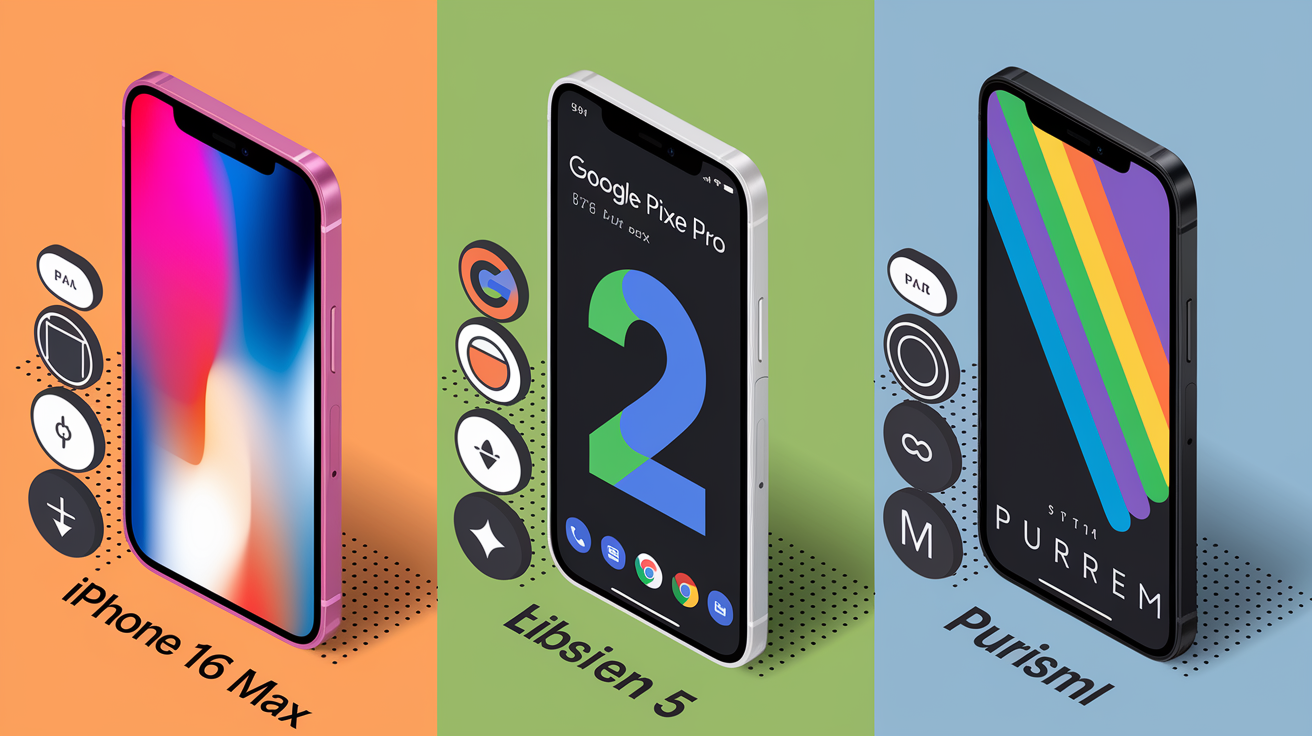
Apple iPhone 16 Pro Max dominates the mainstream secure phone market by integrating hardware and software into a locked down ecosystem that receives updates faster than any competitor and enforces strict app controls by default.
Google Pixel 9 Pro offers the best security within the Android ecosystem, combining the Titan M2 coprocessor with a seven year update guarantee and AI driven threat detection. Appeals to users who need Google services, enterprise management via Android Device Policy, and the flexibility of Android’s open app model.
Purism Librem 5 sacrifices mainstream convenience for maximum transparency and user control, running a fully open source OS with hardware kill switches that physically disconnect sensors and radios. A feature set no commercial phone offers.
The core differences come down to philosophy and trade-offs. iPhone prioritizes security through integration and curation. Apple controls the hardware, the OS, the App Store, and even the silicon design, creating a seamless but closed experience. Pixel balances openness and protection, offering Android’s flexibility while adding Google’s fastest patch cycle and custom security hardware. Librem 5 rejects closed systems entirely, empowering users to audit every component and physically disable surveillance vectors. But at the cost of app compatibility (no Google Play, no mainstream banking apps without workarounds), modest performance (the hardware is functional but not flagship level), and battery life concerns noted in early reviews.
| Device | Strengths | Weaknesses |
|---|---|---|
| iPhone 16 Pro Max | Secure Enclave, rapid global updates, strict app vetting, biometric protection, long support (5+ years) | Closed source, limited customization, higher price ($1,199+), Apple holds some iCloud encryption keys |
| Google Pixel 9 Pro | Titan M2 chip, 7-year updates, day-one patches, AI threat detection, built-in VPN, lower cost ($999) | Privacy concerns over data sent to Google, less restrictive app ecosystem than iOS |
| Purism Librem 5 | Fully open-source OS, hardware kill switches, baseband isolation, auditable code, maximum user control | Limited app ecosystem, modest performance, higher niche cost (~$799–$1,999 depending on variant), battery life concerns |
Choose iPhone if you want robust security without technical overhead and you value a polished user experience over customization. Families, professionals, and anyone already in the Apple ecosystem will find it the best balance of security and convenience.
Pick Pixel 9 Pro if you need Android flexibility, enterprise management tools, or the longest Android update window available. Especially if budget constraints make the seven year support and $999 starting price attractive.
Select Librem 5 only if you require open source auditability, face nation state threats, or operate in environments where surveillance is a primary risk and you can tolerate a smaller app library and less refined hardware.
Pricing and Value Analysis of Secure Smartphones
Secure smartphones span a wide price range. Apple iPhone 16 Pro Max launched at $1,199 for the base 256 GB model, positioning it in the premium tier. Older models like iPhone 15 or iPhone 14 remain available at lower prices ($699–$899 depending on configuration) and still receive rapid security updates, making them viable mid-range secure options.
Google Pixel 9 Pro starts at $999, undercutting Apple by $200 while delivering comparable security features and a longer update commitment. The standard Pixel 8, now often discounted below $699, offers much of the same security stack (Titan M2, frequent patches) at an even lower entry point.
Purism Librem 5 occupies the high assurance niche, with the standard model priced around $799 and the Librem 5 USA variant (manufactured in the United States with additional supply chain controls) previously listed near $1,999. Reflects the costs of low volume production, open source development, and hardware kill switches not found in mass market devices.
Value in a secure smartphone is measured not just by upfront cost but by the total cost of security over the device’s lifespan. A phone that receives five to seven years of updates spreads its purchase price across many more years of protected use than a budget Android device abandoned after two years of patches. Pixel 9 Pro’s seven year support window means the $999 initial cost amortizes to roughly $140 per year. An unsupported phone that must be replaced after two years effectively costs more per year even if the sticker price is lower.
iPhone’s historically long support (iPhone 8 from 2017 received iOS updates through 2022, five years) justifies the premium if you keep devices for their full support life. Librem 5’s higher price reflects its specialized market. Users facing nation state surveillance or requiring full transparency are willing to pay for hardware kill switches, baseband isolation, and an auditable OS that no mainstream phone provides.
Enterprise buyers should also weigh management and breach mitigation costs. Samsung Galaxy flagships with Knox (prices typically $799–$1,199 depending on model) integrate with enterprise mobility management consoles, enabling remote wipe, policy enforcement, and device separation at scale. The upfront device cost is often lower than breach remediation or compliance fines.
Bittium Tough Mobile 2C, designed for government and military use, includes tamper detection and dual boot separation (confidential environment isolated from personal use) and meets NATO standards, justifying its specialty pricing for regulated environments.
For most users, the sweet spot is Pixel 9 Pro. Strong security, long updates, and mainstream usability at a price $200–$400 below Apple’s flagship.
Choosing the Most Secure Smartphone for Your Needs
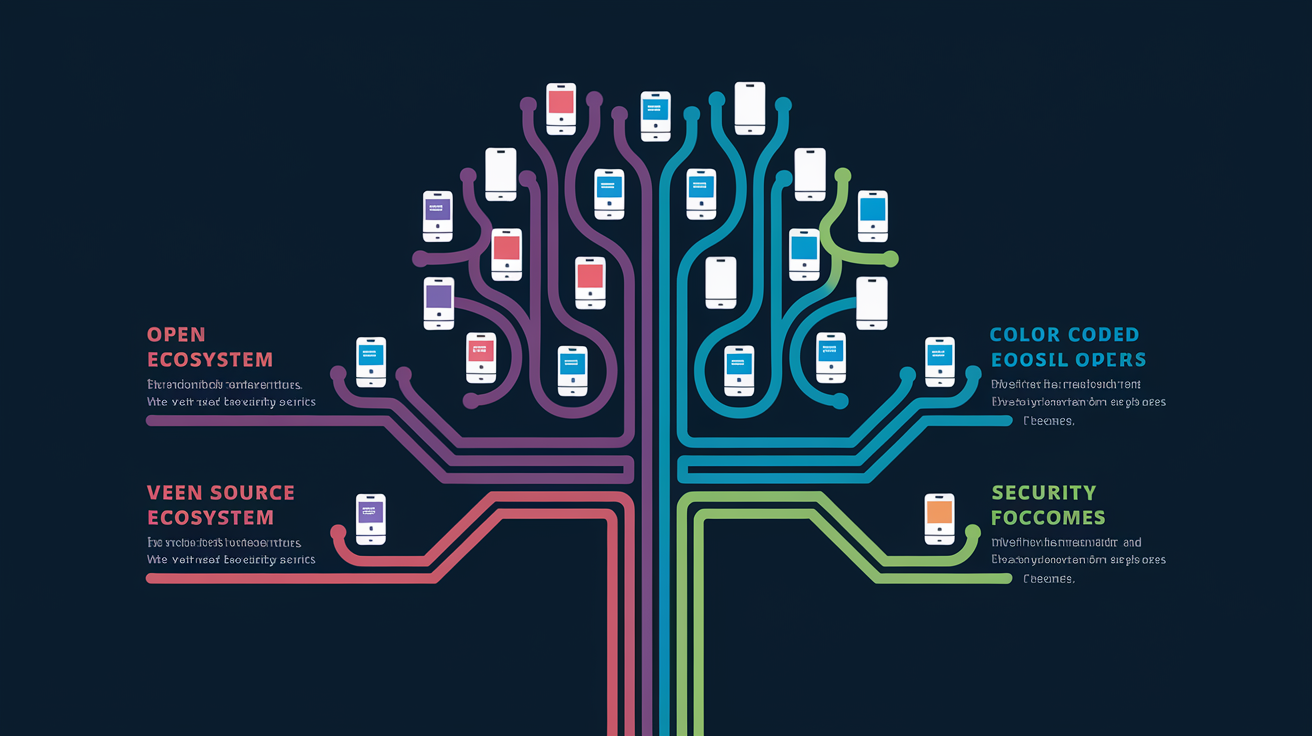
General users who want strong security without technical complexity should default to iPhone or Pixel. If you use a Mac, iPad, or other Apple devices, iPhone 16 Pro Max integrates seamlessly and delivers automatic encrypted backups, rapid updates, and biometric app locks with no configuration required.
If you prefer Android or need Google Workspace integration, Pixel 9 Pro offers comparable security. Titan M2, seven year updates, built in VPN, at a lower price. Both phones protect against the most common threats (malware, phishing, data theft) out of the box, and both receive patches fast enough to stay ahead of actively exploited vulnerabilities.
For families, iPhone’s Screen Time controls and Apple’s strict App Store vetting reduce risk from sketchy apps. Pixel’s Family Link and Play Protect provide similar protections on Android.
Enterprise users and organizations need devices that balance security with manageability. Samsung Galaxy flagships with Knox provide hardware backed encryption (AES-256 for data at rest), Knox Matrix for encrypted cross device sync, and integration with enterprise mobility management (EMM) platforms like Microsoft Intune, VMware Workspace ONE, and Samsung’s own Knox management console.
Four years of guaranteed security updates cover the typical enterprise refresh cycle. Features like secure folder (a separate encrypted environment for work apps) and remote wipe allow IT teams to enforce policy and respond to lost or stolen devices.
For regulated industries (finance, healthcare, government), Bittium Tough Mobile 2C offers tamper proof design, dual boot isolation (personal and confidential environments separated at the OS level), and NATO standard protections. The device auto deletes encryption keys if forced tampering is detected, meeting high assurance requirements.
High risk users (activists, journalists, researchers, anyone facing nation state surveillance) should prioritize transparency and physical control over convenience. Purism Librem 5’s fully open source OS allows independent audits to verify no backdoors exist. Its hardware kill switches physically disconnect the cellular modem, camera, microphone, and wireless radios. A capability no mainstream phone offers.
For secure communications without the full Linux learning curve, devices like Blackphone PRIVY 2.0 or K-iPhone layer proprietary encrypted voice systems onto more familiar platforms, though these rely on vendor claims (e.g., “no logging,” “cannot decrypt traffic”) that can’t be independently verified the way open source code can.
Murena 2 provides a middle ground. De-Googled Android (/e/OS) with two physical privacy switches (one for camera/mic, one to cut all connectivity) and tracker blocking, suitable for users who want hardware control but still need some Android app compatibility.
Best phone recommendations by user category:
-
Mainstream users (families, professionals, general privacy conscious individuals): iPhone 16 Pro Max or Google Pixel 9 Pro. Both deliver strong out of box security, rapid updates, and seamless user experiences with no technical setup required.
-
Enterprise and regulated organizations: Samsung Galaxy S24 Ultra with Knox for mainstream corporate deployments. Bittium Tough Mobile 2C for government, defense, or high assurance environments requiring tamper proof hardware and NATO standard protections.
-
High risk individuals (activists, journalists, researchers under surveillance): Purism Librem 5 for maximum transparency and hardware kill switches. Blackphone PRIVY 2.0 or K-iPhone for encrypted communications if open source auditing is less critical than ease of use.
Final Words
We put iPhone, Google Pixel, and Purism Librem 5 at the top of the list so you can get an answer fast.
Apple wins for a locked-down ecosystem and rapid global patches. Pixel brings Titan M2 and day-one Android fixes. Librem 5 gives open-source control and hardware kill switches.
Choose iPhone for easy, strong defaults. Pick Pixel if you want fast Android security at a lower price. Choose Librem 5 if you need maximal control.
Pick the most secure smartphone that matches your threat model. You’ll leave with better privacy and fewer surprises.
FAQ
Q: Which cell phone gets hacked the most?
A: The cell phone type hacked most often is Android phones, especially older or budget models that stop receiving security updates and run apps from unknown sources.
Q: Is there a phone that doesn’t spy on you?
A: A phone that doesn’t spy on you doesn’t truly exist, but open‑source devices like the Purism Librem 5 and phones with hardware kill switches offer much stronger privacy controls.
Q: Which phone is safest from hackers in the world?
A: The phone safest from hackers worldwide depends on the threat: mainstream users are best served by iPhone or Google Pixel for fast patches and secure hardware, while high‑risk users may prefer Librem 5.
Q: Which phone has the highest level of security?
A: The phone with the highest level of security varies: iPhone for a locked ecosystem, Pixel for fastest Android patches and Titan M2, and Librem 5 for maximum user control and open‑source auditing.