
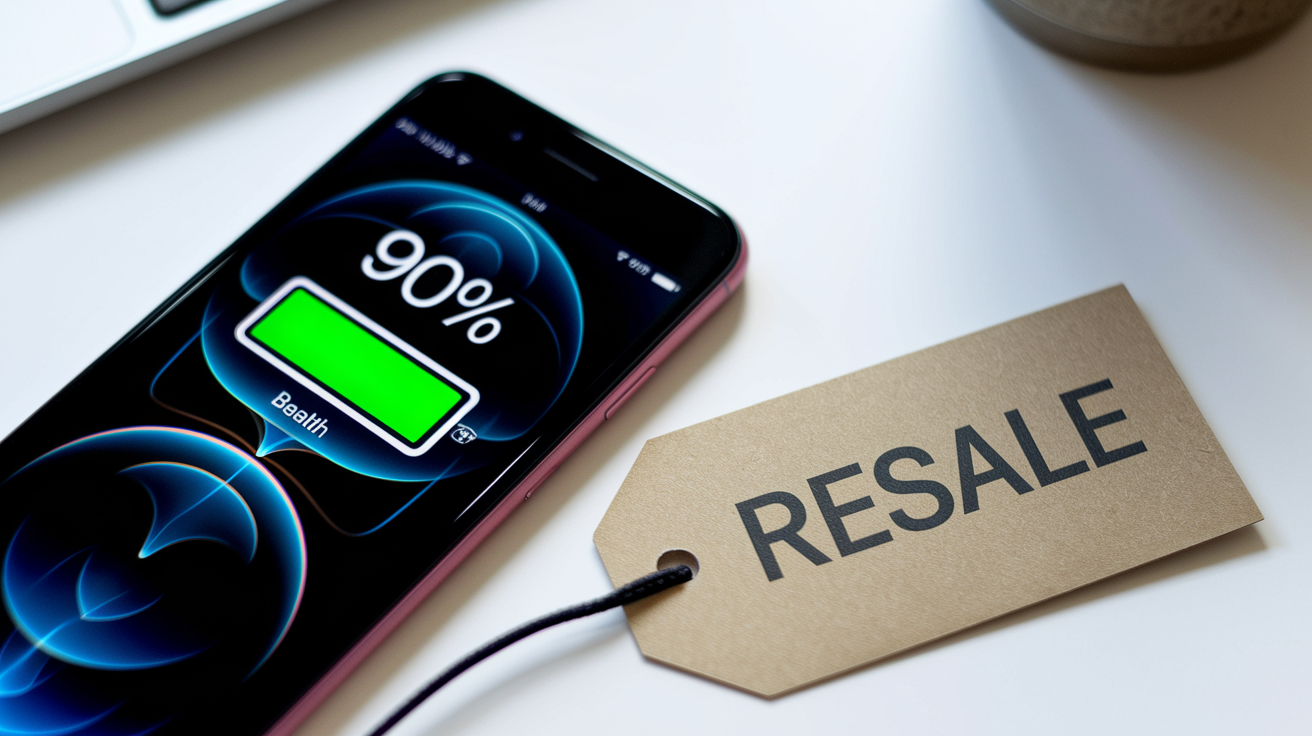

Controversial but true: your phone’s battery can shave hundreds off its resale price more than a scuff does.
Market data shows clear cutoffs: 90% battery cuts value by 5–8%, 85% by 10–15%, 80% by 20–25%, and under 70% often costs 35% or more.
That means a $1,000 phone at 85% health can sell for $100–$150 less before a buyer checks for scratches.
Thesis: battery health now drives buyer decisions, so this post explains how much it matters, which brands get hit hardest, and when replacing the battery makes financial sense.
How Battery Health Directly Influences Smartphone Resale Prices

A smartphone battery at 90% health cuts resale value by 5–8%. Drop to 85%? You’re looking at 10–15% less. Hit 80%, and the price falls 20–25%. Below 70%, you’ve lost 35% or more.
These aren’t guesses. They’re patterns you can see across major resale platforms, where battery capacity shows up first in condition reports. Take a phone that originally sold for $1,000. If the battery health goes from perfect to 85%, you just lost $100–$150 before anyone even checks for scratches. Works the same across brands, though some fall harder than others.
Buyers read battery degradation as a sign the phone’s been used hard. They expect problems. Sudden shutdowns. Throttled processing. That kind of thing. Most resale marketplaces put battery health right up front because it controls how long the phone stays useful. A device at 80% capacity might need charging twice a day, and that’s a dealbreaker for most people. Less demand means lower offers. Plus, buyers subtract the cost of a battery replacement from whatever they’re willing to pay. They treat the worn battery like debt.
Different brands react differently to battery wear. Apple devices see sharp drops once battery health falls below 90%, mainly because iOS shows the number directly in Settings. It’s visible. Standardized. Everyone can see it. Samsung and Google phones lose value too, but Android buyers don’t lean as hard on a single battery metric. A lot of them focus on usage history or cycle counts when those numbers get disclosed. So iPhones often lose 10% more value than similar Android devices when battery health dips below 85%. On premium models, that’s $80–$120.
| Battery Health % | Typical Price Reduction |
|---|---|
| 90% | 5–8% |
| 85% | 10–15% |
| 80% | 20–25% |
| 70% or below | 35%+ |
Key Battery Degradation Thresholds That Affect Buyer Perception
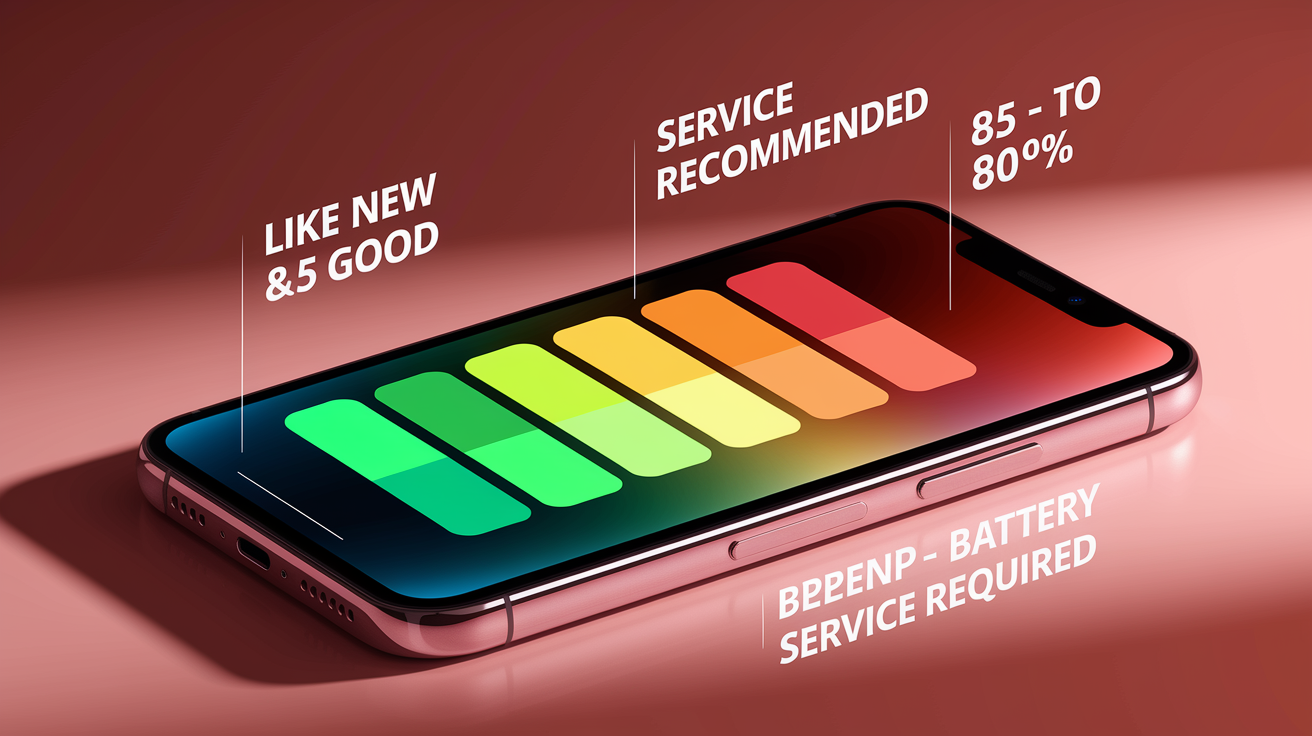
Anything above 90% looks healthy to buyers. No worries about usage time. No performance throttling concerns. Devices in this range get “Like New” or “Excellent” labels on most platforms, and sellers can recover close to fair market value. The battery number reassures buyers that the phone was barely used or well maintained. Less haggling. Faster sales.
The 85–89% range signals moderate wear. Buyers know the battery’s been through hundreds of charges, but most don’t think replacement is urgent yet. Phones here get “Good” or “Very Good” ratings and see price cuts of 10–15%. The market absorbs these devices pretty quickly, though buyers might ask for small discounts to account for the looming 80% threshold.
Between 80–84%, buyers start expecting a replacement within six months to a year, especially if they use the phone heavily. This range triggers “Service Recommended” warnings in iOS, and many marketplaces automatically flag the battery as degraded. Sellers see price cuts of 20–25%. Buyer interest shrinks to people willing to invest in a repair or live with shorter battery life. Devices at 82% health can sit unsold longer unless you price them aggressively.
Below 80%, the battery is widely seen as degraded. Some platforms won’t list devices in this range without a steep discount. Buyers often subtract the full cost of a battery replacement (usually $60–$100) from their offers. Sellers face longer listing periods and lower final prices, with cuts commonly hitting 35% or more. For entry-level or older models, the repair cost might exceed what the device is still worth, pushing sellers toward trade-in programs that accept devices in any condition.
Brand‑Specific Sensitivity to Battery Wear
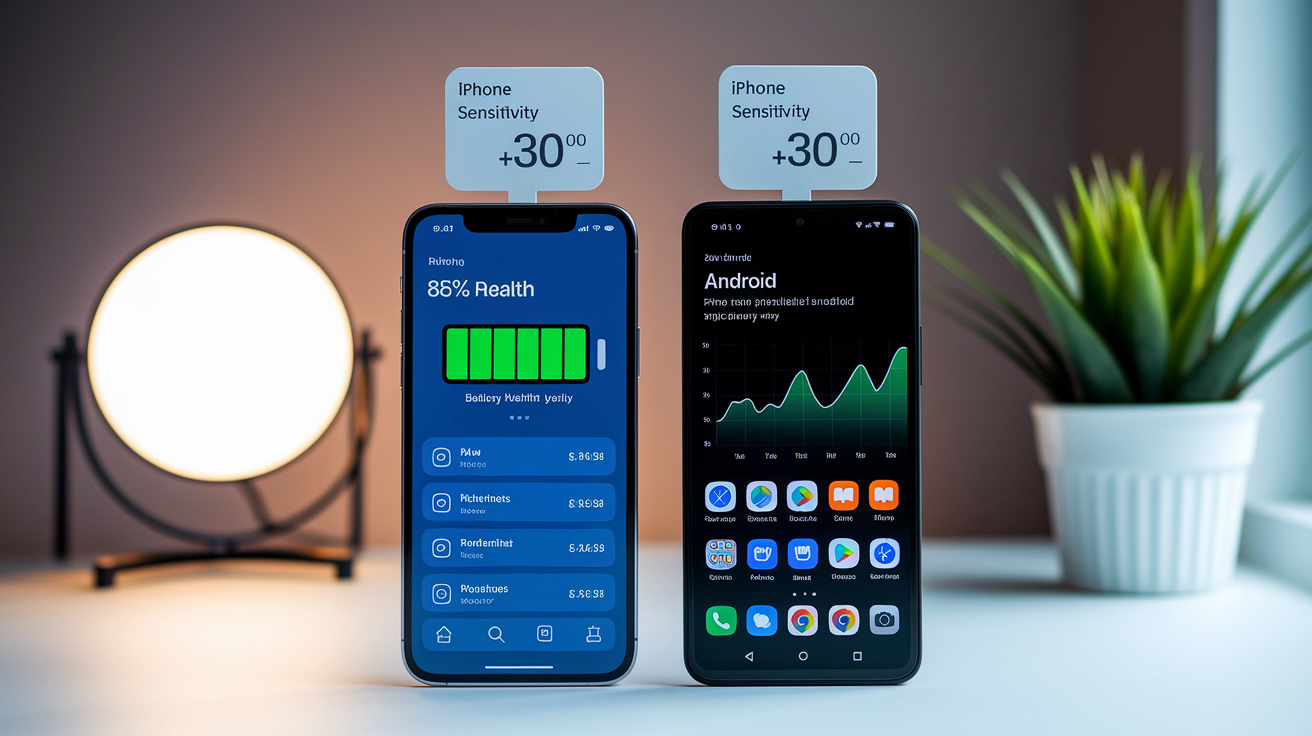
Apple devices get hit harder by battery degradation because iOS shows battery health as a simple percentage in Settings. It’s a standardized reference point buyers trust. When an iPhone’s battery health drops to 85%, buyers see the number immediately and factor it into offers, often cutting bids by 10–15% without further discussion. This visibility also means iPhones hold value longer when battery health stays above 90%, but lose it faster once the number falls below that line. Easy diagnostics plus high resale demand make battery condition a critical pricing factor for Apple devices.
Samsung and Google phones depreciate with battery wear too, but the impact is less consistent because Android doesn’t display a universal battery health percentage. Buyers of Galaxy or Pixel devices often rely on usage patterns, charge cycle counts when disclosed, or third-party diagnostic apps. None of these carry the same weight as the iOS metric. So a Galaxy S21 at 85% battery health might lose 8–12% of its value, while an iPhone 12 at the same level typically loses 12–15%. The gap narrows when both devices fall below 80%, where visible performance issues and “Service” warnings become common across platforms.
The visibility gap affects buyer confidence too. An iPhone buyer who sees “82% battery health” knows exactly what they’re getting and can compare that number across listings. A Samsung buyer might request a detailed history, check settings for battery usage graphs, or negotiate based on the device’s age rather than a specific capacity figure. This uncertainty often creates wider price spreads and longer negotiation times for Android devices, though premium models from Samsung and Google still command better resale prices than lesser-known brands when battery condition is disclosed clearly.
Real‑World Marketplace Examples of Battery‑Driven Price Differences
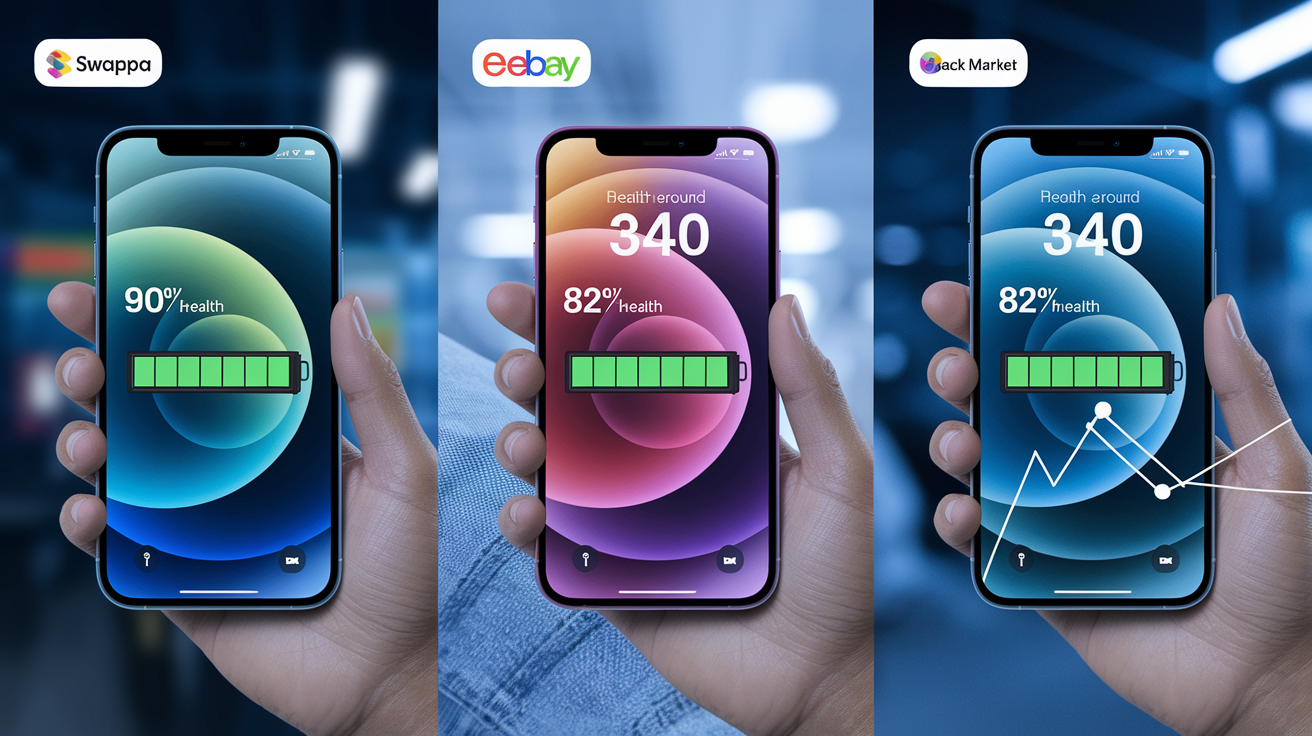
Platforms like Swappa, eBay, and Back Market show consistent pricing gaps tied to battery wear. iPhones at 80–84% health sell for 15–25% less than identical models at 90% or above. A recent Swappa listing for an iPhone 12 with 90% battery health closed at $420. A comparable model at 82% sold for $340. That’s an $80 difference almost entirely because of battery condition. You see similar patterns on eBay, where Galaxy S21 devices with disclosed battery health above 88% average $320, while units at 80–84% fetch $260–$280, a reduction of roughly 12–18%.
Certified refurbished models often include battery replacements, which bumps the price by 10–20% compared to devices sold as-is with degraded batteries. Back Market listings explicitly label battery status and adjust pricing accordingly. An iPhone 11 refurbished with a new battery typically lists at $310–$340, while the same model with 78% original battery health sells for $240–$270. Buyers willing to pay the premium view the replaced battery as both a performance boost and a warranty extension, making the device feel closer to new.
Marketplace condition labels translate directly into pricing tiers:
“Good” condition (battery health 85–90%) typically commands 90–92% of the “Like New” price.
“Fair” condition (battery health 75–84%) typically sells for 70–80% of the “Like New” price.
“Battery Service Recommended” (under 75%) often sells for 55–65% of the “Like New” price. Some platforms refuse to list devices below 70% unless priced at steep discounts.
Devices labeled “Refurbished with New Battery” can recover 95–100% of the “Like New” price, especially when the replacement is documented with an authorized service receipt.
Transparent battery disclosure speeds up sales and reduces buyer questions. Listings that include a screenshot of the battery health screen or a cycle count report often close faster than those with vague condition descriptions, even when battery health is below 85%. Buyers interpret disclosure as honest dealing, which can offset some of the price penalty tied to moderate degradation.
Cost‑Benefit Analysis of Replacing a Worn Battery Before Selling
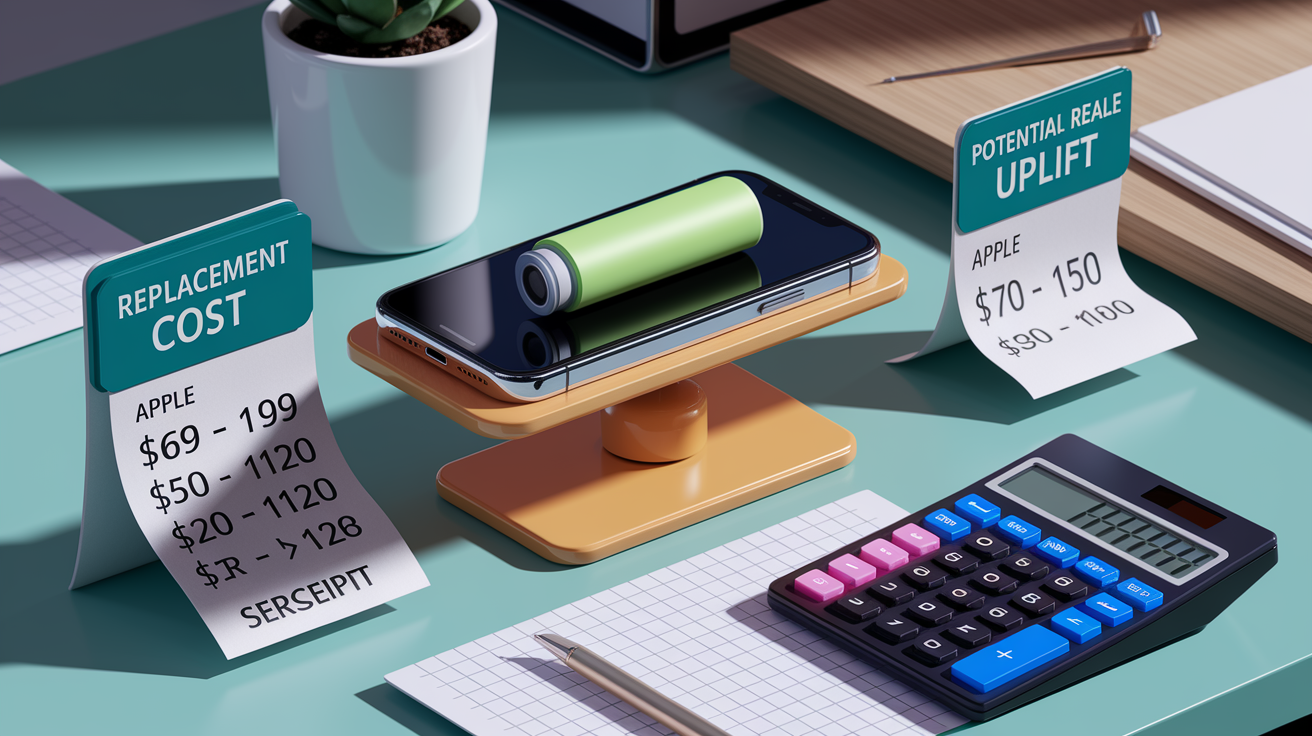
Battery replacement costs vary by brand and service provider. Apple charges $69–$99 for most models. Major Android brands range from $50–$120 depending on the device and region. Authorized service centers typically charge more than independent repair shops, but genuine parts and documented service history can boost resale value by $50–$150. The net financial gain depends on the model’s market demand, how degraded the battery is, and whether buyers in that segment care about official repairs.
For a high-demand model like the iPhone 13 Pro, replacing a battery that’s degraded to 78% health costs roughly $89 through Apple. The same device with a fresh battery typically sells for $120–$140 more than one at 78%, yielding a net gain of $30–$50 after accounting for the repair cost. But for a mid-tier or older Android device with lower resale demand, the uplift may only reach $50–$70, barely covering the replacement expense and leaving little profit after platform fees. Compare the replacement cost against the expected increase in sale price before committing to the repair.
Some buyers pay a premium for proof of authorized replacement. They view the new battery as a warranty extension and a signal that the device was maintained properly. Providing a service receipt and confirming the battery was replaced by an authorized provider can add another $20–$40 to the final sale price. On the other hand, third-party or unauthorized replacements, especially those using non-original parts, often reduce resale value because buyers worry about safety, compatibility, and future warranty claims.
Battery replacement pays off most when the device is a high-demand model (iPhone 12 or newer, Galaxy S21 or newer) with strong resale momentum, current battery health is below 85% and triggering visible price reductions of 15% or more, and the replacement cost is less than 60% of the expected price increase, leaving room for platform fees and effort.
Practical Tips for Sellers and Buyers Navigating Battery‑Affected Pricing
Seller transparency increases sale speed and reduces negotiation friction, especially when battery health is disclosed upfront with a screenshot or cycle count. Buyers who see clear battery data are more likely to make immediate offers. Vague condition descriptions often lead to lowball bids or extended back-and-forth. Optimal sale condition occurs when battery health is at or above 88%. This range avoids significant deductions while still signaling honest use. Devices with battery health below 80% should be priced with the full cost of replacement factored in, or sellers should consider trade-in programs that accept degraded devices without steep penalties.
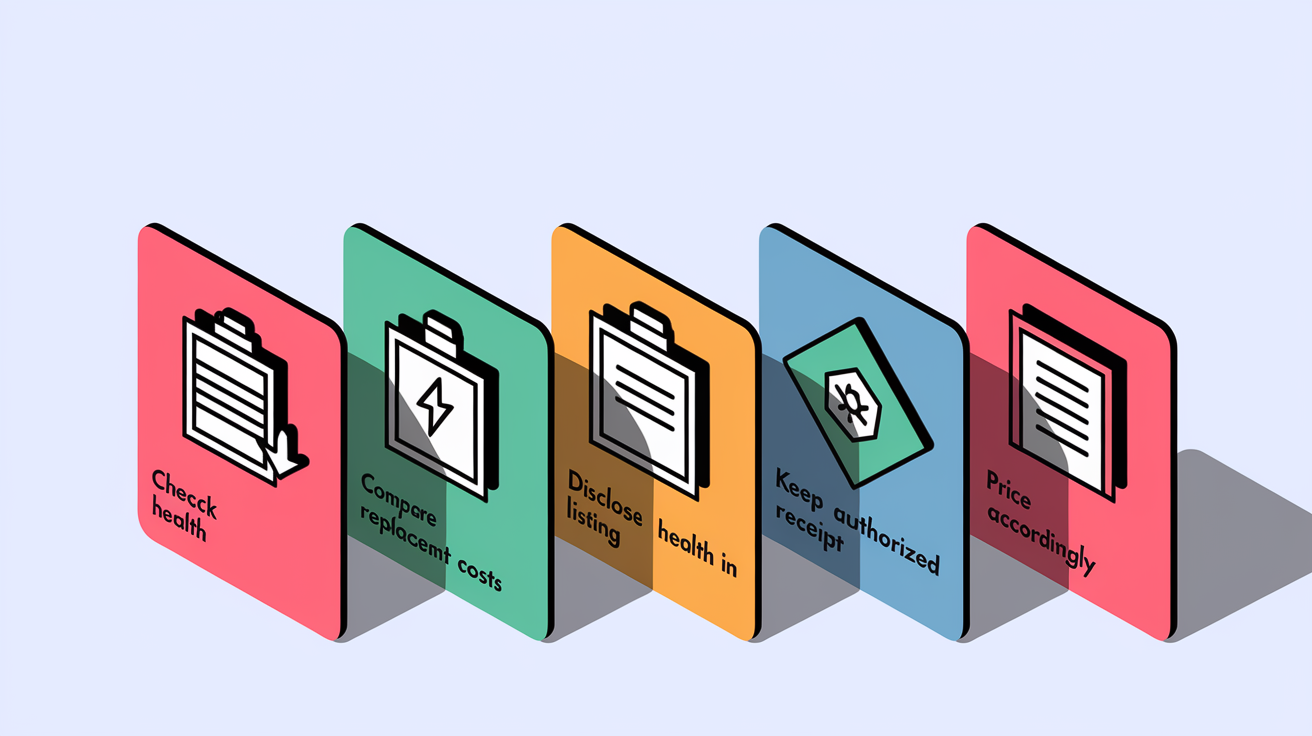
Sellers should follow these five steps to get the best resale value:
Check battery health 2–3 days before listing and take a clear screenshot showing the percentage and any service messages.
Compare replacement cost against expected price uplift for your specific model by checking recent sold listings on Swappa, eBay, or Back Market.
Disclose battery health prominently in the listing title or first line of the description to attract serious buyers and filter out those expecting perfect condition.
If replacing the battery, use an authorized service center and keep the receipt to prove genuine parts and quality work.
Price the device 10–15% below comparable listings if battery health is 80–84%, and 20–30% below if it’s under 80%, to ensure a quick sale.
Buyers should request battery cycle count when available. This number provides a more detailed view of wear than the health percentage alone. An iPhone with 300 cycles at 88% health is likely in better shape than one with 600 cycles at the same percentage. Always verify that any claimed battery replacement is documented with a service receipt. Be cautious of listings that mention third-party repairs without specifying parts quality or warranty coverage. Factor in the cost of a future battery replacement when evaluating offers for devices below 85% health, and negotiate accordingly to avoid overpaying for a phone that’ll need service within months.
Final Words
We laid out the hard numbers on how battery health cuts resale price, showed which health bands buyers watch, and compared Apple, Samsung, and others. Marketplace examples and a cost‑benefit look at replacements rounded out practical choices.
If you’re selling, be transparent and consider a swap on high‑demand models. If you’re buying, price devices with <80% accordingly.
Bottom line: the impact of smartphone battery degradation on resale value is real, but smart timing and small repairs can keep more cash in your pocket.
FAQ
Q: What are the 20/80 and 30/90 battery rules?
A: The 20/80 and 30/90 battery rules are simple charging guidelines: keep your battery between 20–80% (or 30–90% for a looser approach) to slow wear and extend usable lifespan.
Q: Can you trade in a phone with a degraded battery?
A: You can trade in a phone with a degraded battery, but trade-in value usually drops and some programs require minimum battery health; disclose condition, check policies, and compare offers before selling.
Q: What is the useful life of a cell phone for depreciation?
A: The useful life of a cell phone for depreciation is generally 2–3 years for rapid tech depreciation; for resale planning, assume 2–4 years depending on model, condition, and updates.