


Can you tell a great smartphone camera from a spec sheet alone?
Before a phone launches, specs are all you have.
You can judge a camera on paper — but only if you know which numbers matter.
Sensor size, pixel size, aperture, stabilization, and the image signal processor (ISP) work together to shape low-light shots, video steadiness, and color.
This piece shows which specs reliably predict real-world results, which claims to ignore, and quick checks to use before launch so marketing can’t fool you.
How to Judge Smartphone Camera Quality From Specs Alone

Before a phone launches, specs are all you’ve got. No hands-on reviews, no sample shots, just the numbers on paper. That’s when you need to know which specs actually matter and which ones are just there to look good in a press release.
You can judge a camera before touching it, but only if you focus on the right things. Sensor size, pixel dimensions, aperture width, stabilization type, and computational processing aren’t just bullet points. They work together to determine how well a phone handles low light, whether it can shoot stable video, and if those colors will look washed out or accurate. A big sensor with terrible stabilization won’t save your handheld video. A wide aperture paired with tiny pixels might give you noisy shadows. Context is everything.
Here’s what to check when all you have is a spec sheet:
- Sensor size and format: Physical dimensions matter. You’ll see fractions like 1/1.3″ or 1/1.7″. Bigger is better, and yes, 1/1.3″ is actually larger than 1/1.7″ (the math is backwards because of how sensor sizes are measured). Larger sensors capture more light and give you better dynamic range.
- Pixel size (µm): This tells you how big each individual pixel is. Anything above 1.0 µm is solid for low light. Below 0.7 µm and you’re probably dealing with heavy binning or software tricks to make up the difference.
- Aperture (f-number): Lower numbers mean more light. f/1.6 gathers way more light than f/2.2, which translates directly to better shots when it’s dark and more background blur when you want it.
- Stabilization: OIS (optical image stabilization) is hardware-based and beats EIS (electronic) for both photos and video. Hybrid systems that combine both are even better. EIS alone relies on cropping and gyro data, which works but isn’t as clean.
- Computational features: Look for specifics. Multi-frame HDR, named AI algorithms, advanced night modes, or mentions of the actual ISP (image signal processor). “AI-enhanced” without details doesn’t mean much. Named partnerships or processing pipelines do.
Understanding Sensor Architecture and Light Capture

Sensor size is the biggest deal in smartphone cameras. Larger sensors collect more photons, which means better dynamic range, less noise in the shadows, and smoother color transitions. Sensors are usually listed as fractional inches (like 1/1.56″ or 1/1.28″) or sometimes millimeters. The fraction thing is confusing. A 1/1.28″ sensor is physically larger than a 1/1.56″ sensor, even though the number looks smaller. If you’re comparing, convert to decimals or find the actual width and height in millimeters to avoid getting it backwards.
Pixel size (measured in micrometers, or µm) tells you how much light each tiny photosite can grab. Bigger pixels mean less noise because they’re averaging more photons per shot. A 1.4 µm pixel will usually outperform a 1.0 µm pixel when the lights go down, even if the smaller pixels add up to more megapixels total. A lot of manufacturers now use quad-pixel binning (merging four pixels into one bigger effective pixel) or even nine-pixel binning to get around the limitations of small pixels. Binning helps in low light by pooling the light data, but you lose resolution. A 50 MP sensor using 4-in-1 binning gives you 12.5 MP images in default mode.
Today’s phones juggle megapixels, sensor size, and pixel size through binning tricks. A phone with a 1/1.3″ sensor, 50 MP, and 1.0 µm native pixels might deliver better real-world shots than a 1/1.7″ sensor with 12 MP and 1.4 µm pixels, because the larger sensor area makes up for the smaller individual pixels through binning. Always cross-reference sensor size with pixel size and check if the spec sheet mentions binning modes.
Lens Quality, Aperture, and Optical Engineering Factors
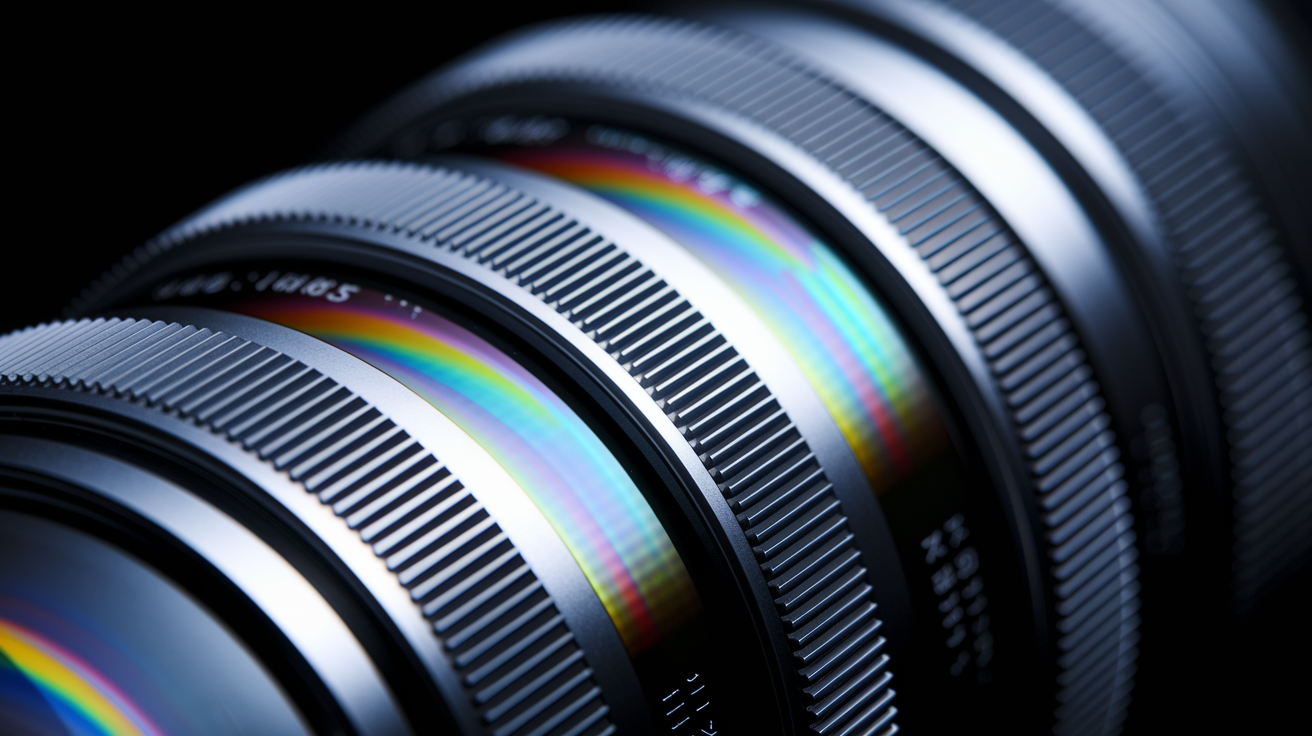
Aperture is written as an f-number. Smaller numbers mean wider openings and more light. An f/1.6 aperture lets in roughly twice as much light as f/2.2, which means you can shoot faster, use lower ISO, and keep noise down in dim scenes. Wider apertures also give you shallower depth of field, which is great for portraits when you want that blurred background. The downside? Very wide apertures can soften the edges and introduce optical weirdness, so the lens construction becomes really important once you’re past f/1.8.
Focal length on smartphones gets listed two ways: the actual measurement (like 6.8 mm) and the 35 mm equivalent (like 26 mm). The equivalent is what you care about, because it tells you the field of view. 26 mm is wide-angle, 50 mm looks natural, and 80 mm or longer is telephoto. Ultra-wide lenses (13–16 mm equivalent) give you huge framing but can warp the edges and lose sharpness in the corners. Multi-element lens designs and aspherical glass help control those distortions, but you rarely get element counts or glass types in consumer spec sheets. You’re left with aperture, focal length, and maybe mentions of coatings or corrective elements.
When you’re reading lens specs before launch, focus on these:
- Stated aperture range: f/1.6 to f/1.8 is excellent. f/2.0 to f/2.2 is acceptable. f/2.4 or narrower? You’re limited in low light.
- Focal length equivalent: The primary lens should sit between 23 mm and 28 mm equivalent for everyday versatility. Ultra-wide should be 13–16 mm. Telephoto 50 mm or longer.
- Multi-element construction: If they mention “X-element lens” or aspherical elements, it’s a sign they care about optical quality.
- Anti-reflective coatings: Cuts down flare and ghosting when you’re shooting into the light. Look for “multi-layer coating” or “nano-coating.”
Stabilization and Motion Performance Indicators

Optical image stabilization (OIS) physically moves the sensor or lens elements to cancel out hand shake. It helps both photos and video by letting you use longer exposures without blur and giving you smoother handheld footage. Electronic image stabilization (EIS) is software-based. It uses gyroscope data to crop and warp the image, reducing shake digitally. EIS can cause edge artifacts, rolling shutter issues, and slight softness, but recent versions (especially ones that combine gyro data with multi-frame alignment) have gotten pretty close to OIS performance.
Hybrid stabilization systems stack OIS and EIS to get the best of both. The optical layer handles bigger movements and slow drift. The electronic layer corrects tiny jitters and smooths frame by frame. If you see “OIS + EIS” or “hybrid stabilization” in the spec sheet, that’s a stronger system than EIS alone. For people who shoot a lot of video, stabilization is one of the most important specs. A phone with solid stabilization can produce usable footage while you’re walking or panning. A phone with only EIS might show judder or warping.
The three approaches break down like this:
- OIS (Optical Image Stabilization): Hardware-based. Moves the sensor or lens to compensate for shake. Best for low-light stills (you can use slower shutter speeds) and smooth video. Adds cost and thickness, so it’s usually limited to the primary and telephoto lenses.
- EIS (Electronic Image Stabilization): Software-based. Crops the frame and applies digital correction. Works well for video shake reduction but can introduce cropping, edge warping, and lower resolution. Cheap to implement.
- Hybrid OIS + EIS: Combines both. OIS handles big, slow movements. EIS refines smaller jitter and applies advanced frame alignment. When done right, this gives you the best stabilization, especially for handheld 4K video or higher.
Evaluating Computational Photography Features on Paper

The image signal processor (ISP) is what makes computational photography happen. Modern ISPs handle multi-frame capture, noise reduction, HDR merging, tone mapping, and real-time scene analysis. When a spec sheet mentions “advanced ISP” or names a specific processor (like “Google Tensor G3 ISP” or “Qualcomm Spectra 18-bit ISP”), that means the hardware can process huge amounts of raw image data quickly. The number of frames the ISP can merge per shot matters. Merging nine or more exposures in a fraction of a second gives you cleaner shadows and highlights than simple two- or three-frame HDR.
AI algorithms do things like improve portrait mode subject separation, optimize exposure based on the scene, reduce noise intelligently by telling texture apart from grain, and power night modes that stretch effective exposure across multiple seconds. It’s tough to evaluate this stuff on paper. Look for explicit claims backed by technical detail. “AI-driven semantic segmentation for portrait mode” is more credible than vague “AI-enhanced photos.” Check if the manufacturer mentions partnerships with imaging companies (Hasselblad, Leica, Zeiss usually means tuned color science and quality control). If the brand has a strong track record in computational photography (Google Pixel, Apple iPhone), you can assume they’ll keep it up even if they don’t spell out every detail.
Before launch, the credibility of computational claims depends on transparency. If a company publishes white papers, shares sample processing pipelines, or gives early media access with controlled samples, their claims are worth paying attention to. Vague marketing speak without supporting detail? Wait for independent reviews. ISP capabilities and AI features are real differentiators, but you need either proven software performance from past models or verifiable technical architecture to judge them from a spec sheet.
Identifying Marketing Hype vs Meaningful Camera Specs
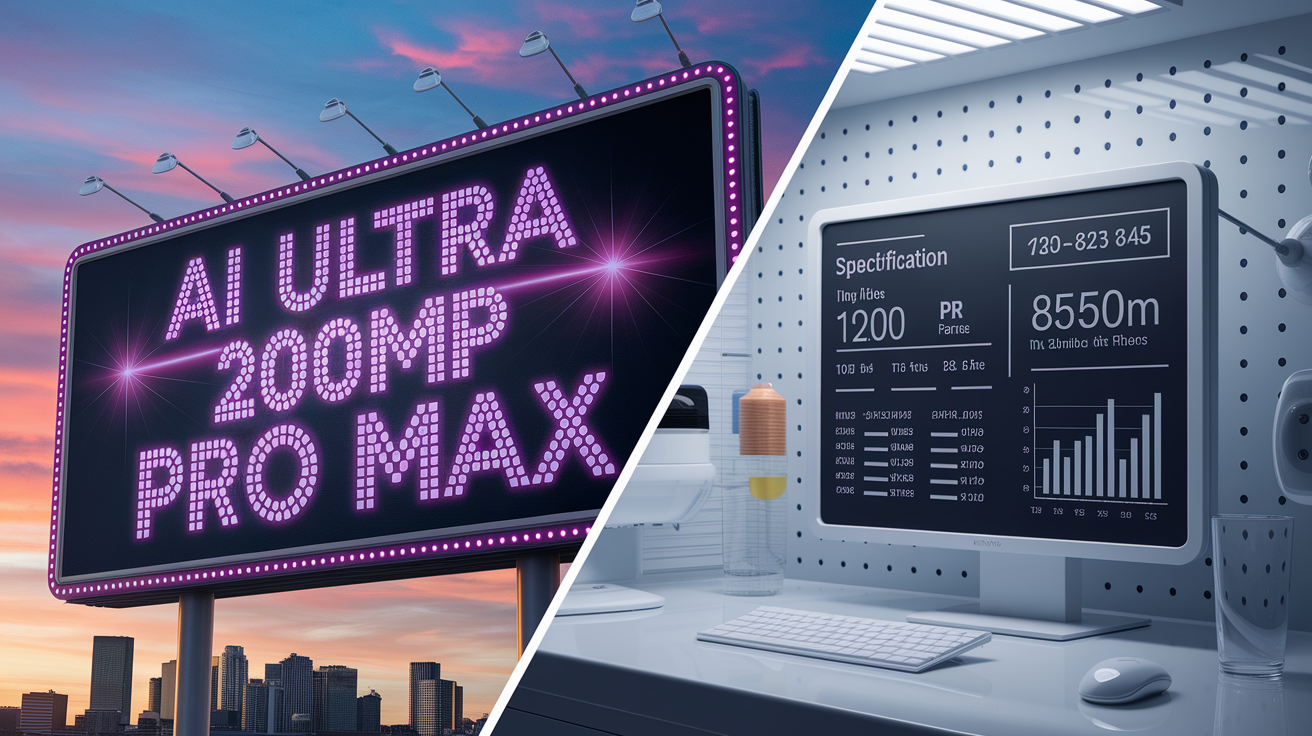
Marketing teams love numbers that sound impressive but don’t always translate to better photos. High megapixel counts are the classic example. 108 MP or 200 MP sensors can deliver sharp images when paired with large sensors and quality glass, but on small sensors with tiny pixels they often produce noisier results than a well-tuned 12 MP or 50 MP system. Phrases like “AI-enhanced” or “ultra clarity” are vague and could describe anything from basic scene detection to sophisticated multi-frame fusion. “Pro mode” might mean full manual controls or just a label slapped on an auto-exposure preset.
Red flags in spec sheets usually show up as isolated big numbers without context. A phone advertising “100x zoom” without clarifying how much is optical versus digital is relying on digital crop and interpolation for most of that range, which gives you pixelated, low-detail images. “Night mode” is standard on almost every modern smartphone now, so its presence alone doesn’t mean much. What matters is whether the phone specifies multi-frame capture duration, noise-reduction algorithms, or sensor/aperture specs that actually enable low-light capability.
Watch for these common red flags and marketing terms when evaluating pre-launch specs:
- “X MP ultra-resolution camera” (megapixel emphasis without sensor size or pixel size context)
- “XX× digital zoom” (large zoom multipliers without stated optical zoom range)
- “AI-powered photography” (generic claim without specific processing features or ISP architecture)
- “Professional-grade results” (subjective marketing language with no measurable spec backing)
How to Compare Camera Spec Sheets Before Launch

Comparing camera specs across brands means translating different naming conventions and measurement standards into equivalent terms. Sensor format codes (like “1/1.3-inch type”) need to be converted to actual diagonal or area measurements to compare accurately. Focal lengths should always be read as 35 mm equivalents rather than the physical millimeter values, since a 7 mm lens on one phone and a 6 mm lens on another can both represent roughly 26 mm equivalent depending on sensor crop factor. Stabilization systems vary in labeling. One brand might call it “gimbal stabilization” while another says “5-axis OIS,” but both describe similar optical correction ranges.
Pre-release specs are often incomplete or subject to change. Manufacturers might list preliminary specs and refine them closer to launch, or they might hold back certain details (like exact ISP pipeline steps or AI model versions) until the announcement event. When comparing spec sheets from different brands, stick to the parameters that are most consistently disclosed: sensor format, megapixels, aperture, focal length equivalents, and stabilization type. If a spec is marked “up to” or “expected,” treat it as tentative.
| Spec Category | Why It Matters | What to Compare |
|---|---|---|
| Sensor Size | Determines total light capture area and dynamic range | Convert fractional inches to decimals (1/1.3″ = 0.77″; 1/1.7″ = 0.59″); larger is better |
| Pixel Size (µm) | Affects per-pixel light collection and noise performance | Check native pixel size and any binning modes; 1.0 µm or larger is preferable |
| Aperture (f-number) | Controls light intake and depth of field | Smaller f-number = more light; f/1.6–f/1.8 is excellent, f/2.2+ limits low-light capability |
| Stabilization | Reduces motion blur and improves video smoothness | OIS is superior to EIS alone; hybrid OIS+EIS is best; check which lenses include OIS |
| Computational Features | Enhances final image through multi-frame processing and AI | Look for specific ISP names, frame-merge counts, night-mode duration, and AI features with technical detail |
Final Words
Start by scanning the spec sheet: sensor size, pixel size, aperture, stabilization, and computational features tell you most of what matters before samples exist.
The guide covered sensors, lens trade-offs, stabilization types, software claims, marketing red flags, and a simple comparison checklist.
To remember how to evaluate smartphone camera specs before launch, prioritize sensor and pixel size, aperture, OIS, and realistic computational claims. Do this and you’ll narrow down good cameras quickly.
FAQ
Q: How to check the camera quality of a smartphone before buying?
A: Checking the camera quality of a smartphone before buying means reading key specs: sensor size, pixel size, aperture, stabilization type, focal length, and computational features to predict low-light, detail, and video stability.
Q: Is a 50 MP camera better than 64MP?
A: A 50 MP camera is not automatically better than a 64MP camera; real image quality depends on sensor size, pixel size/binning, lens optics, and processing—higher MP helps only if hardware and software support it.