

Smartphone launches are often delayed not by flashy features but by missing parts.
When a chip, hinge, or battery doesn’t arrive on time, the whole schedule slips.
A week lost at a chip foundry can shave two weeks off the assembly window.
That compression forces engineers to rush testing or push the launch.
This post shows how shortages of processors, displays, batteries, camera modules and precision parts ripple through testing, manufacturing and shipping, and what product teams and shoppers should watch next.
Core Mechanisms Linking Supply Chain Issues to Smartphone Launch Delays

Supply chain issues delay smartphone launches because every component needs to show up on schedule for assembly, testing, and final certification. When upstream suppliers run into material shortages, production bottlenecks, or shipping delays, those disruptions cascade through multiple manufacturing stages. A single week lost at the chip foundry can compress the device assembly window by two weeks, then force engineers to rush validation testing that usually takes a month.
Timeline compression creates the biggest risk. Engineering Verification Testing (EVT) and Production Validation Testing (PVT) are built to catch hidden flaws before mass production starts. When component shortages push EVT into the window reserved for PVT, manufacturers lose the buffer they need to fix problems without postponing retail launch dates. A hinge supplier running three weeks late forces the device maker to choose: ship an undertested product or announce a delay.
Smartphone supply networks are tightly interconnected, so even small interruptions amplify fast. A battery cell factory in one region might depend on separator film from another continent and electrolyte chemicals from a third supplier. When any link breaks, the entire chain stalls. Manufacturers can’t simply swap in alternative parts because each component has to pass strict compatibility and safety tests that take weeks to complete.
The delay pathway follows a predictable chain:
- Upstream supplier misses delivery deadline for critical material or component
- Device assembly schedule slips because key parts aren’t available
- Testing phases compress or get pushed back entirely
- Retail launch postpones by weeks, months, or an entire product cycle
Component Shortages Affecting Smartphone Launch Timelines

Component shortages delay smartphone launches because modern devices need hundreds of specialized parts that can’t be substituted quickly. Semiconductors create the longest lead times. Advanced mobile processors and radio-frequency chips often require four to six months from order to delivery. When chip foundries allocate capacity to higher-margin AI server processors, smartphone orders move to the back of the queue. A foundry running at 95% capacity can’t just add another production line when demand spikes.
Display panel shortages hit devices that use custom screen sizes or new technologies like foldable OLED. Panel makers have to retool production lines and qualify new manufacturing processes for each unique display specification. Battery cell supply disruptions stem from both raw material constraints (lithium, cobalt, nickel) and the months-long curing and testing cycles required for new cell batches. Camera module lead times stretch when suppliers face shortages of precision optical glass, image sensors, or the tiny motors that control autofocus and stabilization.
Advanced materials create hidden bottlenecks that most consumers never see. Premium glass cloth used inside processor substrates comes from a limited number of qualified suppliers. When AI computing demand surges, glass fiber production capacity tightens, and smartphone chip orders compete directly with data center processor orders. Foldable device hinges depend on exotic materials like liquid metal alloys or 3D-printed titanium. Switching between material options forces suppliers to revalidate tooling, tolerances, and quality processes, adding months to the timeline.
Five smartphone components most vulnerable to supply shortages:
- Mobile application processors and 5G modem chips
- High-resolution OLED and foldable display panels
- Lithium-ion battery cells with specific energy density and form factors
- Multi-lens camera modules with advanced image sensors
- Precision mechanical components (hinges, structural frames, connector assemblies)
Manufacturing Constraints That Trigger Smartphone Launch Delays

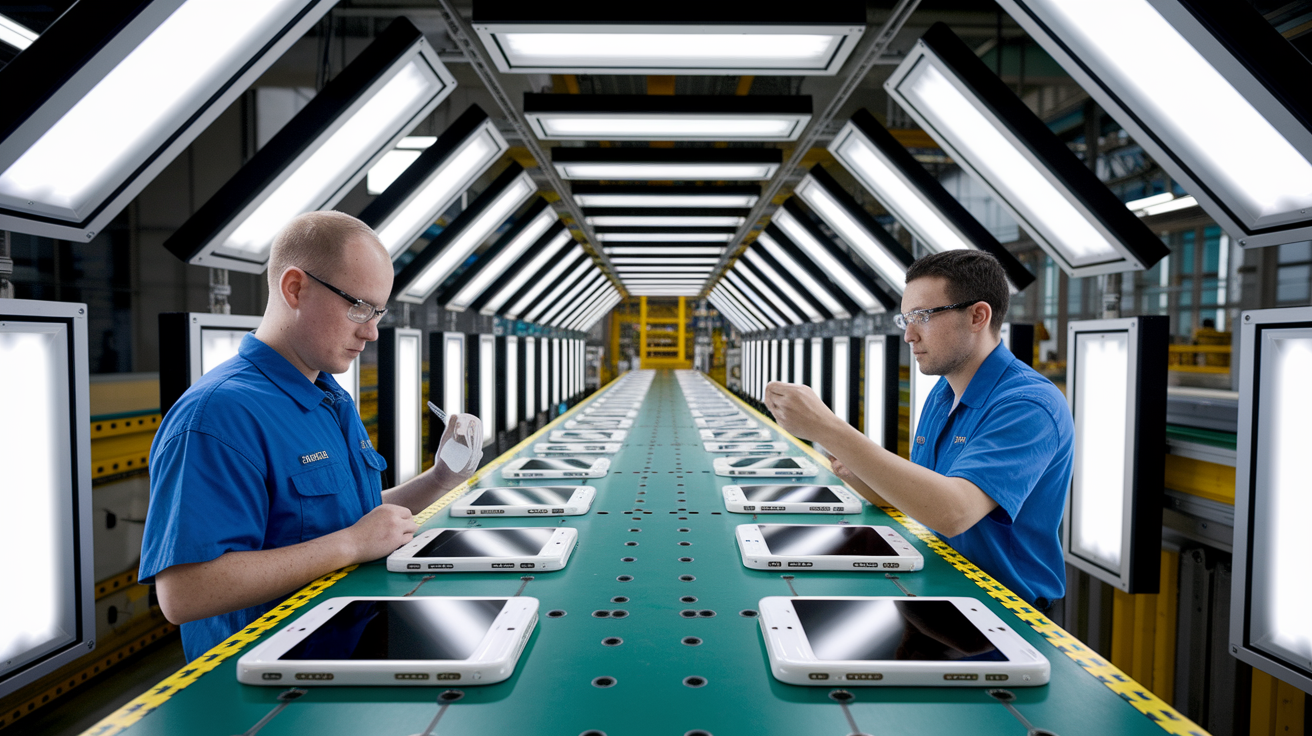
Factory shutdowns and capacity limits at contract manufacturers delay smartphone launches by removing the production bandwidth needed to ramp from pilot builds to millions of units per month. When a regional lockdown or labor shortage forces a Foxconn or Pegatron facility to operate at 60% staffing, assembly line output drops immediately. Manufacturers can’t recover lost volume by simply running longer shifts because smartphone assembly requires specialized workers trained on complex equipment. Hiring and training replacements takes weeks.
Engineering Verification Testing (EVT) problems create the most dangerous manufacturing delays because issues discovered at this stage require design changes that ripple through the entire production process. Unresolved hinge material decisions for foldable devices show how one late engineering choice compresses every downstream milestone. When suppliers receive formal notifications that production schedules “may need to move back,” it signals that EVT issues were severe enough to jeopardize the planned PVT window. A July–August PVT checkpoint that slips into September or October leaves no time for a fall manufacturing ramp. A small engineering setback turns into a months-long or year-long delay.
Production ramp-up failures occur when yields during early mass production fall below targets. A smartphone with 500 individual components assembled in 200 steps needs each step to achieve 99%+ yield to hit volume targets. When one supplier delivers battery modules with a 92% pass rate, the entire line slows down while workers manually inspect and rework defective units, cutting daily output by 30% or more.
| Phase | Risk Factor | Delay Outcome |
|---|---|---|
| EVT (Engineering Verification Testing) | Design flaws surface under production-like stress; late material decisions | Compressed PVT window; 2–6 month slip in validation timeline |
| PVT (Production Validation Testing) | Tooling/tolerance issues; supplier revalidation cycles; low yields | Postponed ramp decision; 1–4 month delay to mass production start |
| Assembly Ramp | Factory capacity limits; component quality failures; labor shortages | Constrained launch supply; 4–12 week delay to retail availability |
| Retail Launch | Insufficient inventory; regional certification delays; logistics backlog | Staggered market release; 2–8 week delay in key regions |
Global Logistics Disruptions Slowing Smartphone Time-to-Market

Shipping delays extend smartphone launch timelines by adding weeks between component delivery and final assembly, then again between factory output and retail shelves. Port congestion at major container hubs in Asia, Europe, and North America creates unpredictable transit times. A shipment that normally takes 18 days might stretch to 35 days when vessels wait offshore for berth availability. Container shortages force logistics teams to split shipments across multiple carriers or delay departures until containers become available, fragmenting inventory and complicating assembly schedules.
Air freight capacity limitations hit time-sensitive component shipments hardest. When smartphone manufacturers need to rush critical parts to meet a launch deadline, they compete for limited cargo space on passenger and dedicated freight flights. A sudden surge in air freight demand (like multiple product launches scheduled in the same quarter) drives up costs and forces some shipments onto slower sea routes, pushing assembly timelines back by two to four weeks.
Three major logistics choke points affecting smartphone launches:
- Ocean freight delays caused by port labor shortages, customs backlogs, and vessel scheduling disruptions that add 10–20 days to component delivery
- Air cargo capacity constraints during peak shipping seasons (Q3–Q4) that delay priority component shipments by 5–14 days
- Last-mile distribution bottlenecks in key markets where trucking shortages, warehouse staffing gaps, and regional customs clearance slow retail restocking by 1–3 weeks
How Supply Chain Risks Escalate Into Industry-Wide Smartphone Launch Delays

Single-supplier dependencies turn localized production problems into global launch delays because smartphone makers can’t instantly replace specialized components. When one company supplies the majority of advanced glass fiber used in high-performance processors, a capacity shortfall at that supplier immediately affects every device maker relying on chips built with that material. Alternative suppliers exist but can’t be qualified and ramped to volume production in less than six to nine months. Manufacturers have no short-term options except to delay launches or accept constrained supply.
Surge demand from adjacent industries amplifies smartphone component shortages by redirecting production capacity to higher-margin customers. AI data center growth drives chip foundries to prioritize server processors over mobile chips because data center orders deliver better profitability and longer production runs. Glass fiber producers face the same dynamic. AI computing requires the same premium materials used in smartphone processors, so a spike in AI infrastructure investment pulls supply away from consumer devices. Smartphone launch schedules become collateral damage when suppliers allocate scarce capacity to industrial and enterprise customers first.
Cross-industry competition for shared materials creates inventory shortages that propagate through multiple product categories simultaneously. Lithium for batteries, rare-earth elements for camera actuators, and high-purity chemicals for display manufacturing serve automotive, medical, and industrial sectors alongside consumer electronics. When electric vehicle production ramps faster than battery supply can grow, smartphone makers find themselves competing for the same lithium carbonate and battery-grade nickel. Lead times stretch from eight weeks to sixteen weeks and force launch delays across entire product portfolios.
Case Examples of Smartphone Launch Delays Caused by Supply Chain Issues

Foldable iPhone delays show how unresolved Engineering Verification Testing (EVT) issues cascade into year-long postponements. Early test-production runs in the April–May window revealed problems that suppliers couldn’t resolve quickly. This forced formal notifications that production schedules “may need to move back.” The manufacturer reportedly hadn’t finalized a choice between liquid metal and 3D-printed titanium alloy for the hinge mechanism, leaving suppliers unable to lock down tooling and quality processes. When the July–August Production Validation Testing (PVT) window compressed, analysts warned that smooth shipments might not occur until 2027 even if an announcement happened in late 2026. A device priced at $2,000–$2,500 facing constrained or low-quality initial supply carries enormous reputational and financial risk, so manufacturers often choose delay over a flawed launch.
Glass fiber shortages affecting processor substrates show how upstream material constraints ripple into consumer device timelines. Premium glass cloth used in chips like the A19 Pro comes primarily from a single supplier, Nitto Boseki. Rapid AI computing growth is tightening capacity. Manufacturers have approached alternative suppliers including smaller Chinese producers like Grace Fabric Technology, but qualification has been slow because the material has to meet strict quality standards for AI-capable chip performance. The shortage risk extends directly to devices like the iPhone 17 Pro and iPhone 18 because constrained glass-fiber supply limits advanced chip fabrication capacity, which slows chip deliveries and delays device assembly schedules.
Display panel shortages during the transition to OLED technology delayed several flagship smartphone launches by four to eight weeks when panel makers struggled to ramp yields on new production lines. Battery cell supply disruptions caused by raw material price spikes and factory quality issues postponed product availability in multiple regions, forcing manufacturers to launch with limited inventory and stagger market releases across quarters instead of weeks.
Four historical patterns that recur in smartphone launch delays:
- Single critical component (processor, display, battery) faces yield or supply issues during EVT or PVT, compressing validation timelines and pushing retail launch by 2–6 months
- Geopolitical trade restrictions or tariffs disrupt component flows mid-cycle, forcing manufacturers to requalify alternative suppliers and delay launches by 1–3 quarters
- Logistics bottlenecks during peak shipping seasons (Q3–Q4) create inventory shortages that force staggered regional rollouts instead of simultaneous global launches
- Unexpected demand surges from adjacent industries (AI, automotive electrification) redirect shared component capacity, leaving smartphone orders unfulfilled and pushing timelines by 3–9 months
Mitigation Strategies That Prevent Smartphone Launch Delays

Supplier diversification reduces single-point failure risk by qualifying multiple sources for critical components before production begins. Manufacturers engage alternative suppliers for semiconductors, displays, and battery cells across different geographic regions. A factory shutdown or capacity constraint at one vendor doesn’t halt the entire product line. Dual sourcing for high-risk parts like camera modules and RF components requires extra engineering effort to validate compatibility and quality, but it creates the flexibility to shift orders when one supplier faces delays.
Predictive analytics and AI-driven demand forecasting help manufacturers detect supply risks weeks or months before they become launch-blocking issues. Real-time tracking using IoT sensors and RFID tags provides end-to-end visibility into component shipments, factory output, and inventory levels. Logistics teams can reroute shipments or adjust assembly schedules before delays cascade. Safety stock and predetermined reorder points absorb short-term shortages and demand spikes, giving procurement teams time to activate backup suppliers or negotiate priority deliveries without immediately postponing launch dates.
Flexible manufacturing systems, robotics, and modular assembly processes let factories adapt quickly when component shortages force design changes or substitutions. Building stronger supplier relationships through regular engagement, shared demand forecasts, and long-term volume commitments gives manufacturers negotiating leverage for priority treatment during industry-wide shortages. Formal contingency planning identifies vulnerabilities in advance and prepares alternative actions (like redesigning around a constrained component or shifting production to a different facility) so teams can execute responses in days instead of weeks.
Six mitigation strategies that reduce smartphone launch delay risk:
- Diversify suppliers across multiple geographic regions and qualify backup sources before production begins
- Implement predictive analytics and machine-learning models to forecast component shortages and demand shifts 8–12 weeks in advance
- Maintain buffer stock for high-risk components with long lead times (semiconductors, displays, battery cells)
- Deploy IoT and RFID tracking for real-time supply chain visibility and early detection of shipping delays
- Adopt flexible manufacturing and modular assembly to accommodate component substitutions without full line retooling
- Build contingency playbooks that map supplier risks to specific mitigation actions, response owners, and decision timelines
Companies measure mitigation effectiveness using key performance indicators like reduction in unplanned downtime, improvement in on-time delivery rates, and inventory-turnover velocity. Case study data from manufacturers implementing these strategies report downtime reductions of 20–35%, improved customer satisfaction scores tied to product availability, and higher profitability from fewer expedited-freight charges and reduced safety-stock holding costs.
Final Words
We laid out how upstream hiccups ripple through assembly and testing, how component shortages and manufacturing constraints squeeze timelines, and how logistics and single-sourcing risks amplify delays.
We also covered real-world examples and practical fixes: diversify suppliers, hold safety stock, improve forecasting and visibility, and build flexible ramp-up plans.
Understanding how supply chain issues delay smartphone launches helps teams spot risks early and act. With clearer visibility and simple contingency plans, launches are much more likely to stay on schedule.
FAQ
Q: What are the top 3 causes of supply chain disruptions?
A: The top 3 causes of supply chain disruptions are component shortages (chips, batteries, displays), logistics bottlenecks (shipping, port congestion, container limits), and manufacturing interruptions (factory shutdowns, labor shortages).
Q: What are the 5 biggest supply chain challenges? / What are the 7 key issues of supply chain management?
A: The five biggest challenges and seven key issues overlap: demand forecasting errors, single-supplier risk, component shortages, logistics delays, production ramp-up problems, inventory visibility gaps, and quality/control failures.
Q: What is an example of a supply chain delay?
A: An example of a supply chain delay is a shipment stuck at a congested port that halts assembly lines for weeks and forces a product launch or delivery schedule to be pushed back.