
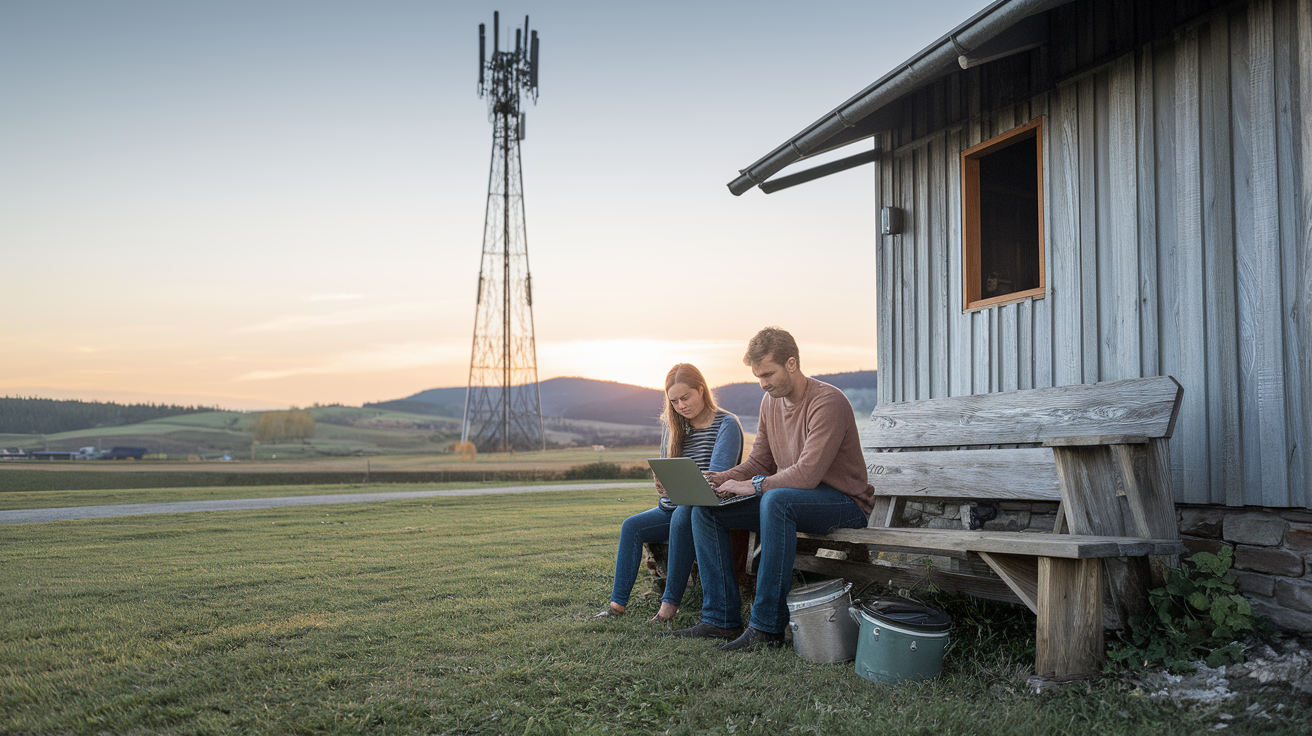

Fiber to every farm is a fantasy — low-band 5G is the realistic fix.
Running under 1 GHz, low-band 5G reaches 10–20 miles, punches through trees and walls, and usually delivers 50–250 Mbps with latency around 20–40 ms.
That mix of wide coverage, indoor signal, and decent speed means carriers can cover scattered homes and farms with far fewer towers and much lower per-household cost than fiber or dense mid-band cells.
Thesis: low-band 5G is the most practical, near-term way to bring reliable broadband to rural America and similar regions worldwide.
Rural Broadband Improvements Enabled by Low-Band 5G

Low-band 5G runs on radio spectrum below 1 GHz, usually 600 MHz, 700 MHz, or 850 MHz. These signals travel way farther than higher-frequency 5G bands and punch through buildings and trees better than DSL or satellite ever could. In rural areas where homes sit miles apart and the land’s all over the place, those long wavelengths bend around obstacles and keep signal strength usable across distances that would need dozens of mid-band or mmWave towers. Real-world numbers? Low-band 5G typically gives you 50 to 250 Mbps download, which crushes the old 25/3 Mbps broadband minimum and beats most satellite in both speed and latency.
Reliability’s a huge step up too. Geostationary satellite struggles with high latency (we’re talking hundreds of milliseconds) and falls apart in bad weather. Low-band 5G usually lands between 20 and 40 ms and stays solid through rain, snow, or storms that would wreck older wireless tech. If you’re relying on remote work, telehealth video calls, or precision agriculture sensors, that combo of steady speed and low latency actually makes your day-to-day work easier.
These traits solve the big rural problem: covering huge areas with scattered people without breaking the bank. One low-band 5G tower can reach households 10 or even 20 miles out in the right terrain. That slashes the number of sites you need and drops per-household costs way below what you’d spend running fiber to every door or blanketing an area with short-range mid-band cells.
Top advantages for rural environments:
- Wide coverage radius (up to 10–20 miles per site in flat terrain) cuts infrastructure footprint and per-household costs.
- Strong building and foliage penetration keeps indoor signal usable without exterior antennas in most cases.
- Broadband speeds (commonly 50–250 Mbps) handle streaming, video calls, and multi-device homes.
- Lower latency than satellite (typically 20–40 ms) lets you run real-time stuff like telemedicine and online classes.
Technical Characteristics of Low-Band 5G
Propagation Physics at Sub-1 GHz Frequencies
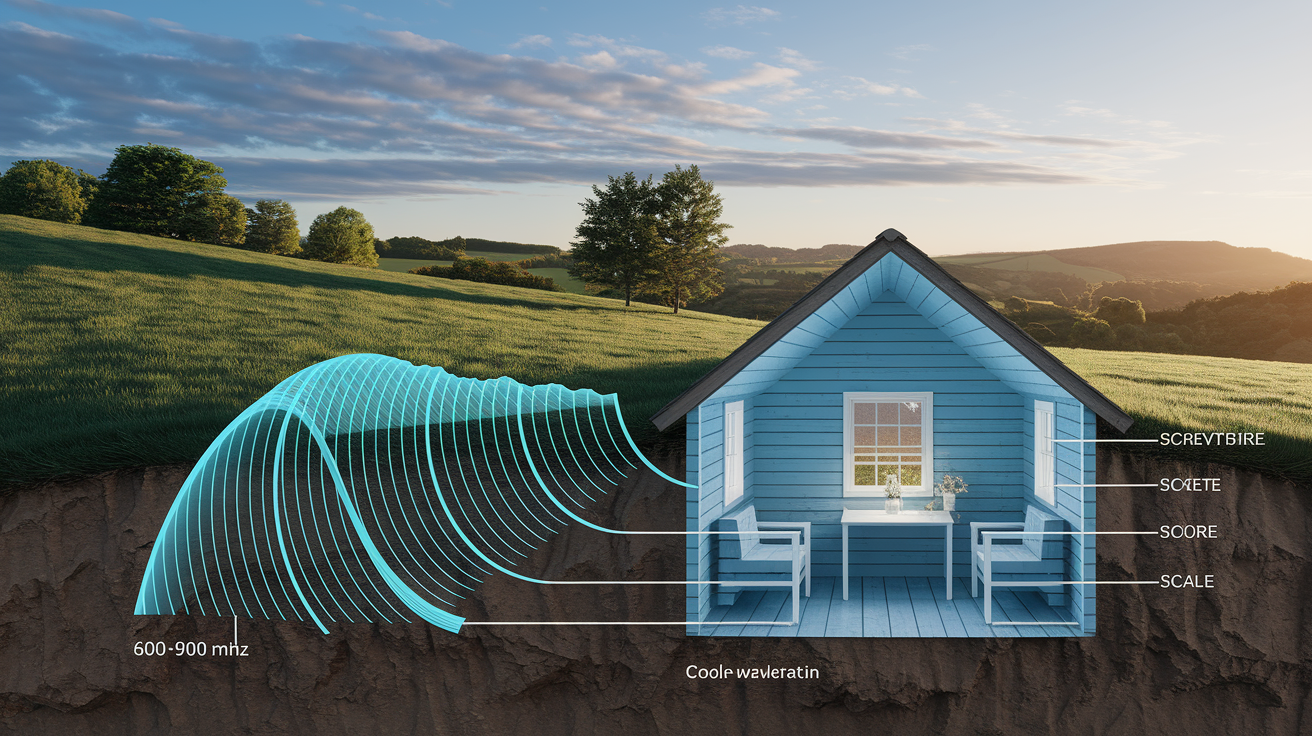
Radio waves below 1 GHz have long wavelengths, roughly 30 to 50 centimeters for the 600 to 900 MHz bands used in low-band 5G. Those long wavelengths interact with the world differently than the short wavelengths of mid-band (centimeter scale) or mmWave (millimeter scale). When a low-band signal hits a hill, building, or thick forest, it diffracts, bending around the obstacle instead of just stopping. Homes behind ridges or down in valleys can still get usable signal, while a mmWave signal would die at the first tree line.
Penetration through walls, roofs, and leaves matters just as much. Low-band 5G loses way less energy pushing through brick, wood, or foliage than higher frequencies. A 600 MHz wave might see only 5 to 10 dB of loss through a typical exterior wall. A 28 GHz mmWave signal can lose 30 dB or more, often killing indoor coverage unless you install outdoor gear. In rural settings where homes are spread out and people expect indoor connectivity without special antennas, that penetration edge is critical.
The payoff? A single low-band cell covers a much bigger area. In flat, open terrain, you can hit 10 to 15 miles. In rolling hills with moderate trees, reliable service still extends 5 to 10 miles from the tower. Mid-band cells typically cover 1 to 5 miles. mmWave cells struggle past a few hundred meters. For sparse rural populations, fewer towers mean lower capital costs, faster rollout, and cheaper ongoing maintenance.
Bandwidth Limitations and Capacity Tradeoffs
The same physics that make low-band 5G great for coverage also cap capacity. Low-band spectrum is scarce. Most carriers hold only 10 to 30 MHz of contiguous bandwidth in the 600 or 700 MHz bands. Mid-band operators might control 100 MHz or more in the 2.5 to 3.8 GHz range. mmWave operators can have hundreds of megahertz or even gigahertz-wide channels. Narrow channels mean lower peak speeds and fewer users per cell before things slow down.
In practice, a low-band 5G cell might handle 50 to 200 devices at broadband speeds before performance starts to sag. That’s usually fine in rural areas where population density is low and device counts per square mile are modest. But in small towns or near community hubs like schools, clinics, or ag centers, demand can spike. A single low-band cell may struggle to keep everyone above 50 Mbps during peak hours. Carriers typically overlay mid-band 5G in those spots, using low-band for wide-area baseline and mid-band for capacity.
The tradeoff’s fundamental. Low-band 5G prioritizes reach over raw speed, making it the right tool for connecting scattered homes and farms, but not the right tool for dense clusters needing gigabit speeds. Planners have to account for this, making sure backhaul capacity and spectrum allocations match realistic user density and usage patterns.
Comparison: Low-Band 5G vs. 4G LTE and Other 5G Bands
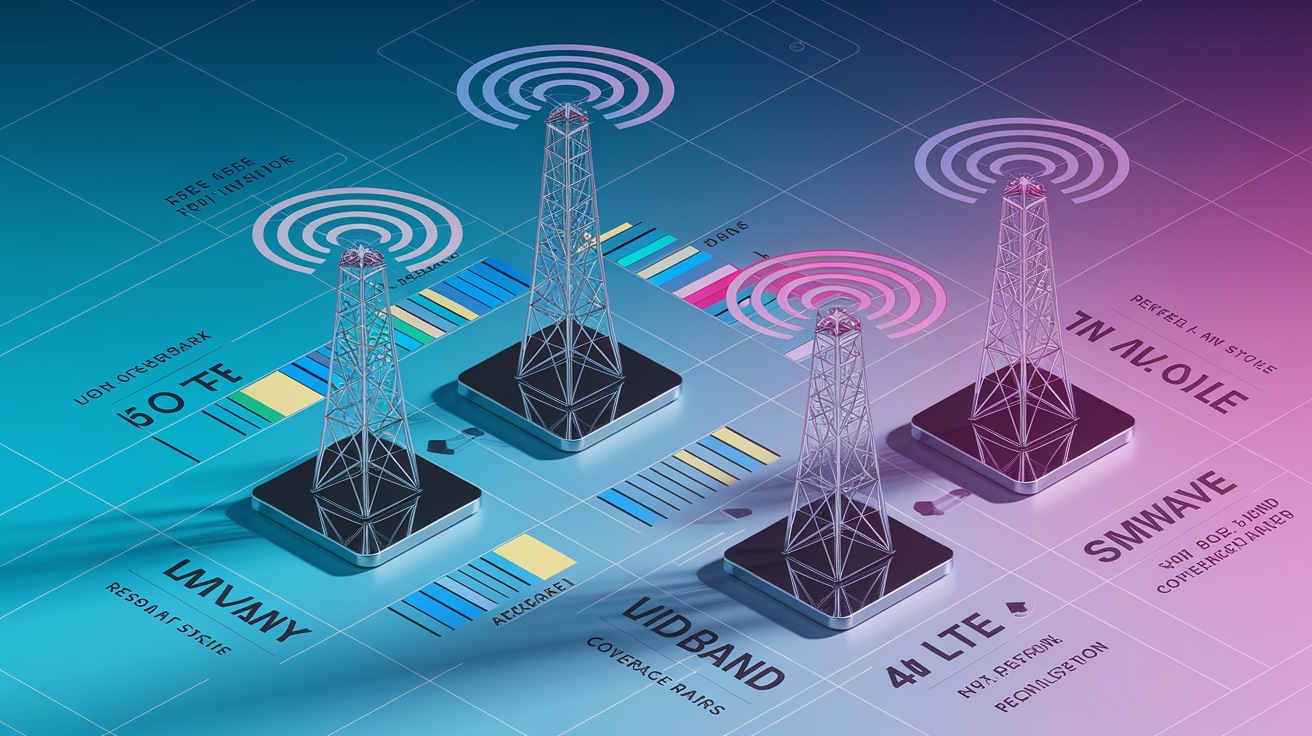
| Technology | Typical Speed | Coverage Range | Rural Suitability |
|---|---|---|---|
| 4G LTE | 20–100 Mbps download; peaks near 100 Mbps under ideal conditions | 3–10 miles per site in rural areas | Good baseline but lower spectral efficiency and higher latency than low-band 5G |
| Low-Band 5G | 50–250 Mbps download under real-world conditions; peaks can reach 200+ Mbps with carrier aggregation | 5–15 miles per site, depending on terrain; commonly 10+ miles in flat areas | Excellent—best balance of coverage, speed, and cost for sparse populations |
| Mid-Band/mmWave 5G | 200 Mbps to multiple Gbps; mid-band typically hundreds of Mbps, mmWave can exceed 1 Gbps | Mid-band: 1–5 miles; mmWave: a few hundred meters | Poor for large rural areas—high cost per square mile and many sites required; useful only for town centers or high-traffic nodes |
Low-band 5G performs noticeably better than 4G LTE in rural rollouts. Both use similar low frequencies and get comparable range, but 5G’s advanced modulation, improved coding, and massive MIMO (multiple-input, multiple-output antennas) push real-world speeds higher, often 50 to 100 percent above what the same spectrum could deliver under LTE. Latency improves a bit too, from LTE’s typical 20 to 50 ms down to 20 to 30 ms for low-band 5G, which helps interactive apps like video calls and online gaming.
Mid-band 5G trades coverage for capacity and speed. Using spectrum between 2.5 and 3.8 GHz (or the newer C-band around 3.7 to 4.2 GHz in some markets), mid-band cells can deliver hundreds of megabits per second or even approach gigabit speeds when conditions are right. Cell radius drops to just 1 to 5 miles though, meaning rural operators would need three to ten times as many towers to cover the same area as a low-band network. That multiplication of sites drives capital costs way higher, often too high in areas where population density can’t support the investment.
mmWave 5G is basically useless for rural broadband. Operating at 24 GHz and above, mmWave can hit multi-gigabit speeds, but coverage is measured in hundreds of meters. Signals get blocked by walls, trees, even heavy rain. Deploying mmWave in a rural context would require a dense mesh of small cells, fiber backhaul to each, and careful line-of-sight engineering. That combo makes economic sense only in urban cores or specialized industrial sites. For connecting farms, ranches, and small towns scattered across tens or hundreds of square miles, mmWave offers nothing practical.
Real-World Deployment Examples in Rural Regions
U.S. Deployments
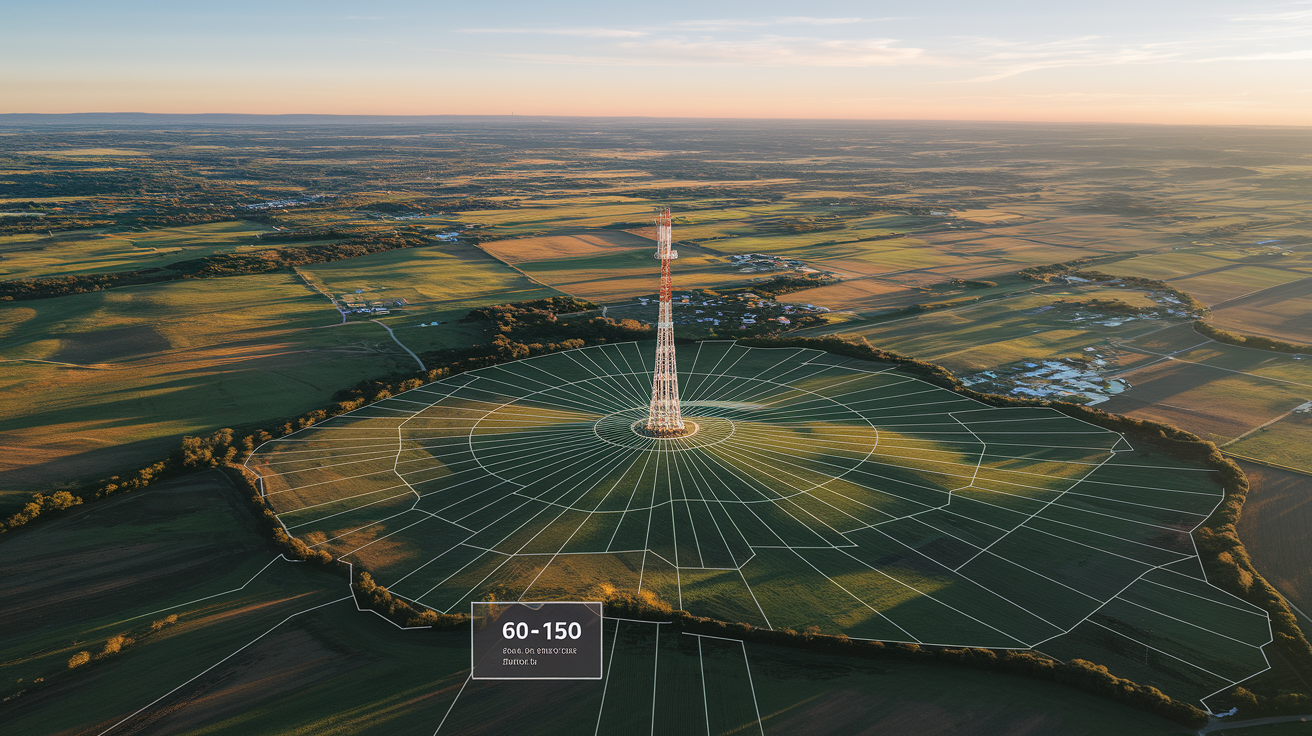
Major U.S. carriers started rolling out low-band 5G in rural markets around 2019 and 2020, using 600 MHz and 850 MHz spectrum. One documented case involved covering entire counties in the Great Plains with only a handful of upgraded towers. Each site served a radius of 10 to 15 miles. Measured download speeds in those deployments commonly fell between 60 and 150 Mbps, well above the 25 Mbps broadband threshold and high enough for multiple simultaneous HD video streams per household.
In the Midwest, several carriers offered fixed wireless access packages using low-band 5G to households that previously relied on DSL (often capped at 10 Mbps or less) or expensive satellite with high latency. Customer reports and independent speed tests showed median download speeds around 80 Mbps and latency between 25 and 35 ms. Performance was enough for remote work, online schooling, and telemedicine. Tower spacing averaged 8 to 12 miles, meaning fewer than a dozen new or upgraded sites could blanket a rural county of several hundred square miles.
State broadband offices and public-private partnerships accelerated these rollouts by funding backhaul fiber buildouts to remote tower sites. In several cases, carriers upgraded existing 4G towers with 5G radios and antennas, cutting deployment time from years to months and keeping per-site costs well below the cost of building entirely new infrastructure. The result was measurable improvement in coverage percentages. Some counties went from under 50 percent broadband availability to over 90 percent within two years.
International Rural Regions
Outside the United States, low-band 5G has worked just as well for closing rural connectivity gaps. In parts of Europe, operators using 700 MHz spectrum deployed 5G across agricultural regions, hitting coverage radii of 8 to 12 miles per site. Reported user speeds ranged from 50 to 200 Mbps, enabling precision agriculture apps like soil-moisture sensors, drone telemetry, and real-time crop monitoring. All of those need reliable, low-latency data links across large fields and farms.
In Australia, where vast distances and low population density create extreme rural broadband challenges, carriers deployed low-band 5G along highways and in remote towns. Coverage maps showed single towers serving areas of more than 100 square miles in flat terrain, with real-world speeds between 70 and 180 Mbps. Latency measurements averaged 30 to 40 ms, comparable to or better than fixed-line DSL and far superior to geostationary satellite.
Asian markets with mountainous rural terrain, like parts of Japan and South Korea, also adopted low-band 5G but required denser site spacing because of hills and valleys. Even so, operators reported that low-band coverage extended two to three times farther than mid-band cells, reducing total site counts and infrastructure costs by roughly 40 percent compared with mid-band-only rural plans.
Practical Advantages for Rural Users
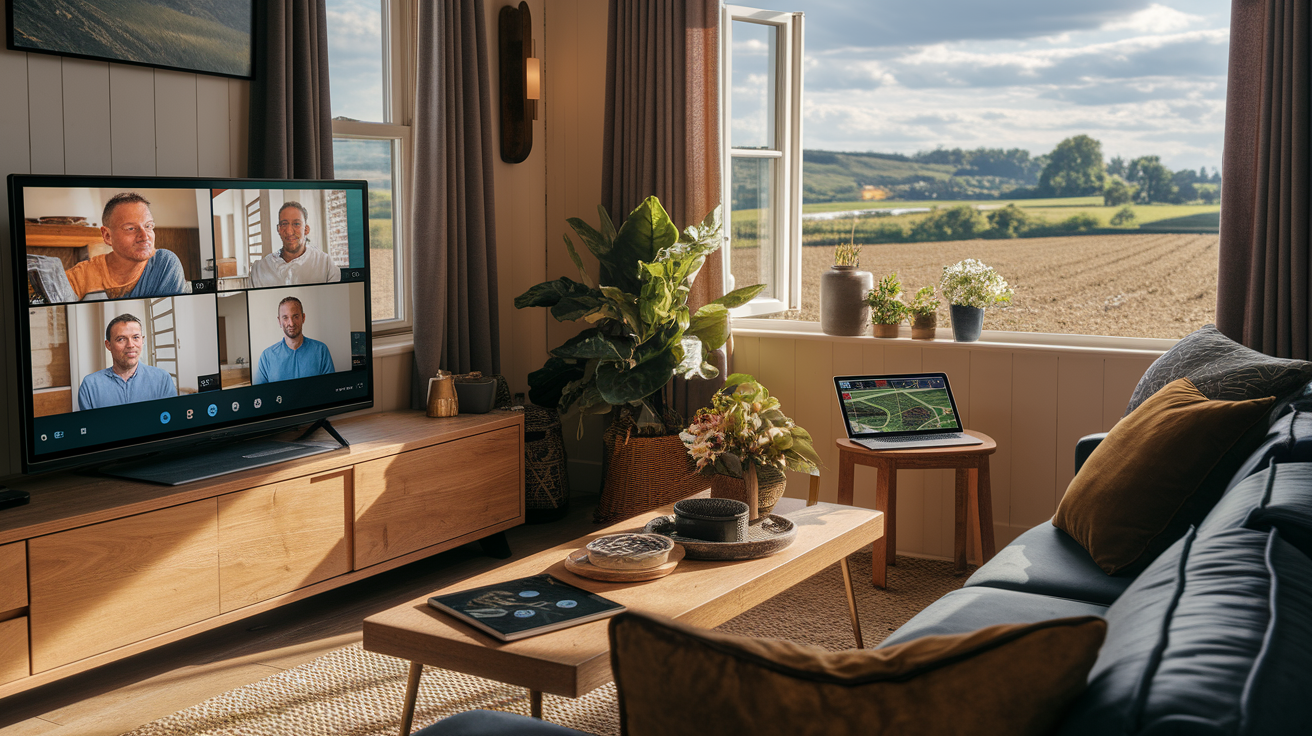
Low-band 5G unlocks capabilities that legacy tech couldn’t deliver. Fixed wireless access using low-band 5G lets households install a simple indoor or outdoor receiver and hit download speeds between 50 and 250 Mbps. That’s enough to stream 4K video on multiple devices, run video conferences without freezing, and upload large files for remote work or school. Installation is typically faster than laying fiber or cable. Many users can self-install a receiver within an hour.
Latency below 30 ms makes interactive stuff work smoothly. Telehealth consultations, which need real-time video and audio, run reliably over low-band 5G. Satellite connections with 500+ ms latency often result in awkward pauses and frozen video. Online education platforms, collaborative work tools, and cloud software all perform noticeably better when round-trip times drop from hundreds of milliseconds to tens of milliseconds.
Precision agriculture benefits directly from wide-area, low-latency connectivity. Farmers use low-band 5G to connect soil sensors, weather stations, irrigation controllers, and GPS-guided equipment across hundreds of acres. The long range means a single tower can cover an entire farm or ranch. The reliable uplink supports real-time data uploads for analysis and automated decisions. Remote monitoring of livestock, grain bins, and equipment also becomes practical without installing separate dedicated networks.
Emergency services and community resilience improve when low-band 5G gets deployed. Rural fire departments, sheriff’s offices, and medical responders can use 5G devices for real-time situational awareness, video streaming from incident scenes, and coordination across large geographic areas. During power outages or natural disasters, low-band 5G towers equipped with battery or solar backup can maintain connectivity even when landlines fail.
Key practical improvements for rural users:
- Fixed wireless home internet delivering 50–250 Mbps without the cost or delay of laying fiber to every home.
- Low latency (20–40 ms) enabling smooth video calls, online gaming, and cloud work apps.
- Wide-area IoT connectivity for precision agriculture, environmental monitoring, and smart-grid telemetry across large farms and ranches.
- Reliable emergency communications and community anchor institution connectivity (schools, clinics, libraries) without needing dense tower networks.
- Faster deployment timelines, months instead of years, compared with fiber-to-the-home projects in sparse areas.
Limitations and Challenges of Low-Band 5G in Rural Areas

Despite its advantages, low-band 5G isn’t a fix-all. Limited bandwidth per cell means that as more users connect and demand grows, per-user speeds can drop. In a small town where hundreds of households share a single low-band cell, peak-hour congestion can reduce speeds from 100+ Mbps to 25 or 30 Mbps. That still meets the broadband threshold but falls below what users might expect from fiber or mid-band 5G. Carriers address this by deploying additional mid-band capacity in town centers or denser pockets, but those upgrades add cost and complexity.
Terrain and vegetation still matter. While low-band signals penetrate better than higher frequencies, deep valleys, dense forests, and mountainous ridges can create coverage shadows where signal strength drops too low for reliable service. In those areas, you might need additional relay sites, directional antennas, or outdoor customer equipment, which increases per-household installation costs and deployment time.
Infrastructure investment remains a barrier. Even though low-band 5G needs fewer towers than mid-band or mmWave, each site still requires robust backhaul, ideally fiber, and continuous power. In remote areas where fiber doesn’t exist, carriers must either fund expensive new fiber builds or rely on microwave or satellite backhaul, which can introduce bottlenecks. Battery or solar backup systems add more capital and maintenance costs. Harsh weather or long distances can delay repairs and increase outage durations.
Core limitations to manage:
- Finite per-cell capacity can lead to congestion and reduced speeds during peak usage in denser rural pockets.
- Terrain and foliage effects require careful site surveys and may need additional infrastructure or customer premises equipment.
- Sparse population economics. Even with reduced tower counts, return on investment stays low in areas with very few households per square mile, slowing commercial rollout without public funding or subsidies.
Final Words
Low-band 5G stretches signals miles farther, gets through buildings, and delivers steady 50–250 Mbps — the practical upgrade rural areas need.
It favors coverage over peak speed, enabling reliable fixed wireless, lower latency, and fewer dead zones compared with DSL or satellite.
Watch 600–700 MHz rollouts. This is a clear example of how 5G low-band improves rural broadband access, giving homes, farms, and small towns real, faster choices.
FAQ
Q: What is low-band 5G and why is it good for rural coverage?
A: Low-band 5G is 5G using sub-1 GHz spectrum (like 600–700 MHz); it’s good for rural coverage because it travels far and penetrates buildings, covering wide areas with fewer towers.
Q: How does low-band 5G improve rural broadband access?
A: Low-band 5G improves rural broadband access by delivering broadband-like speeds (typically 50–250 Mbps), wider per-tower coverage, and better indoor reception than many DSL or satellite options.
Q: What speeds and latency can rural users expect from low-band 5G?
A: Rural users can expect real-world speeds around 50–250 Mbps and latency typically under 30 ms, giving smoother streaming, gaming, and video calls compared with many legacy links.
Q: How far can low-band 5G signals reach in rural terrain?
A: Low-band 5G signals can reach roughly 10–20 miles in favorable terrain, allowing single towers to cover large rural areas and reduce the number of sites needed.
Q: Why do low frequencies travel farther and penetrate buildings better?
A: Low frequencies travel farther and penetrate better because longer wavelengths diffract around obstacles and pass through materials more easily, reducing signal loss over distance and indoors.
Q: What are the tradeoffs between low-band 5G coverage and capacity?
A: The tradeoff is wider coverage but lower peak capacity: low-band serves larger areas reliably, while mid-band or mmWave deliver much higher throughput but much shorter range.
Q: How does low-band 5G compare to 4G LTE, mid-band 5G, and mmWave for rural use?
A: Low-band 5G beats 4G on consistency, latency, and typical speeds; mid-band offers faster throughput but less range; mmWave gives extreme speeds but is impractical for rural coverage.
Q: Can low-band 5G replace fiber or satellite in rural areas?
A: Low-band 5G can replace some fiber or satellite by providing 50–250 Mbps via fixed wireless, but it won’t match fiber’s peak capacity and may face congestion under heavy use.
Q: What are the main limitations and deployment challenges of low-band 5G in rural regions?
A: Main limits are lower peak bandwidth that can cause congestion, higher per-user deployment costs in sparse areas, and reduced performance on hilly or heavily forested terrain.
Q: What practical steps should rural users take to get the best low-band 5G service?
A: Rural users should check carrier coverage maps, test signal strength at their property, consider a 5G fixed wireless gateway with an external antenna, and compare provider plans and speeds.
Q: Are there real-world examples of low-band 5G covering large rural areas?
A: Carriers have rolled out 600–700 MHz 5G across U.S. rural states and abroad, sometimes covering entire counties with few towers and delivering measurable coverage and speed improvements.