


Wonder why new phones land in some countries weeks earlier than others?
It isn’t random.
Brands stagger launches because of regulatory clearances, carrier testing, limited production batches, and market priorities, and those steps can add anywhere from a couple of weeks to several months.
This post breaks the global release timeline down in plain terms: which checks slow rollouts, which markets get priority, and the practical signs to watch (certifications, carrier approvals, stock and color availability) so you know when your phone will actually arrive.
Why Smartphone Launch Dates Differ Across Global Markets

Smartphones don’t show up everywhere at once. Manufacturers juggle regulatory approvals, carrier testing, supply chains, and market priorities. Every phone sold in the US needs FCC certification, usually 2–6 weeks. In India, BIS registration can stretch anywhere from 2 weeks to over 12. Carriers want their own validation cycles (2–12 weeks) to confirm VoLTE, VoWiFi, and network features before they’ll stock a device. And initial production runs? Often 100,000–1,000,000 units. Not nearly enough to launch globally on the same day.
So manufacturers pick their spots. They prioritize markets based on sales history, partnerships, and timing. Some regions get the phone first. Others wait weeks or months.
A flagship launch unfolds in phases. Think announcement, pre-orders, carrier deals, shipping logistics, software localization across dozens of countries. Each step has its own timeline shaped by certification clearances, exclusivity agreements, and production capacity. From announcement to worldwide availability can take anywhere from 30 days to over 120, depending on the phone, the brand, and the destination.
Delays stack up fast. A phone announced early September might ship in the US by mid-September (7–14 days) but won’t reach Southeast Asia or Eastern Europe until late October or early November (30–60 days). Component shortages, rework, or tricky carrier features can tack on another 4–12 weeks. Color variants and special editions? They arrive even later because factories focus on high-demand configurations first.
Main factors slowing down global rollouts:
- Regulatory certification and testing (FCC 2–6 weeks, BIS 2–12+ weeks)
- Carrier network testing and approval (2–12+ weeks for VoLTE and similar features)
- Production batch limits (initial runs of 100,000–1,000,000 units)
- Localized software builds and language packs (2–6 weeks for regional firmware)
- Exclusivity agreements and retail channel setup (30–90 days for carrier deals)
Key Phases in the Smartphone Global Release Timeline
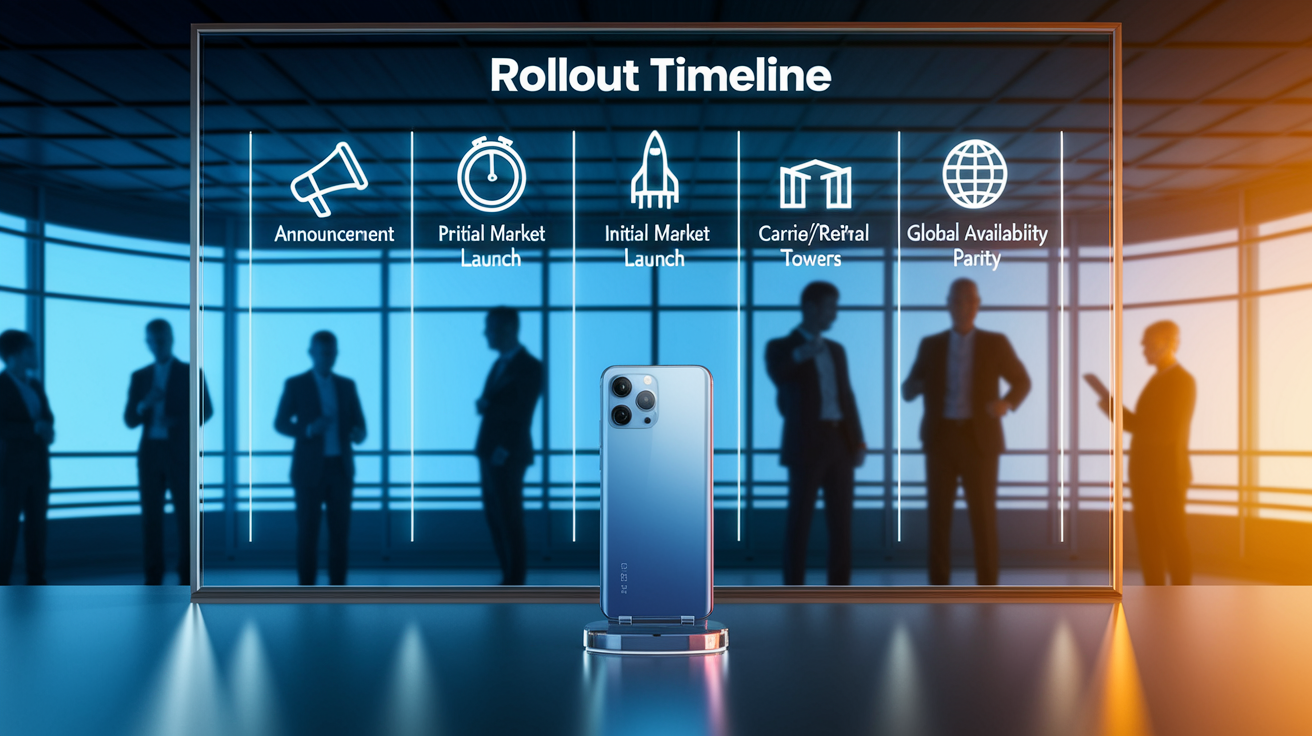
Announcement events kick everything off. Samsung’s Galaxy Unpacked on January 22, 2025 introduced the Galaxy S26 family and set the clock running on regional pre-orders, carrier deals, and regulatory filings. Apple’s September 11, 2025 event unveiled the iPhone 17 lineup and launched a coordinated multi-country rollout designed to reach about 30–40 countries in the first week. These events mark day zero. Brands publish dates weeks ahead to build hype and give carriers and retailers time to prep inventory, marketing, and sales training.
Pre-order windows open within hours or days. Apple usually starts pre-orders the Friday after its September event, giving buyers about 7–10 days before the first units ship. Samsung often runs pre-order campaigns for 10–14 days with trade-in bonuses and early-bird bundles to lock in demand. Popular configurations and colors can sell out during this window, pushing delivery dates back 2–4 weeks. Early adopters who order in the first hour usually get devices on launch day. Wait a few days and shipping estimates slip to 2–3 weeks later.
Initial regional launches focus on North America, Europe, China, and sometimes South Korea or Japan. Apple ships to about 30–40 countries in the first 7–14 days: the US, Canada, the UK, Germany, France, Australia, and China. Samsung follows a similar pattern but often starts with fewer countries, then expands over 2–8 weeks. Chinese OEMs like Xiaomi and OPPO launch in China first, then India 2–4 weeks later, before reaching Europe or Latin America 4–12 weeks after the domestic debut. Carrier certification cycles drive much of this. Carriers in priority markets fast-track testing. Others work through longer queues.
Full global rollout brings the device to remaining markets over the next 30–120 days. Smaller countries, emerging markets, and regions without carrier partnerships join in waves as regulatory approvals close, localized software ships, and production scales up. Component shortages, unexpected demand spikes, or rework delays can push some markets past the 120-day mark. Color variants, storage tiers, and limited editions often arrive 2–8 weeks after the primary SKU because factories prioritize the highest-volume configurations first.
| Phase | Typical Duration | Notes |
|---|---|---|
| Announcement event | Day 0 | Sets timeline; triggers pre-orders and certification |
| Pre-order window | 0–14 days | Popular configs sell out fast; delivery dates slip 2–4 weeks |
| Initial market launch | 7–30 days | Priority markets (US, Europe, China) first; 30–40 countries for Apple |
| Carrier/regional rollouts | 14–90 days | Certification testing, channel setup, and localized firmware |
| Global availability parity | 30–120 days | All markets, all SKUs; can stretch beyond 120 days if shortages occur |
Final Words
Manufacturers juggle regulatory approvals, carrier testing, production limits, and market strategy — that’s why launches shift by region. We covered how FCC/BIS timelines, carrier certification, batch sizes, and marketing priorities create typical 7–120 day delays.
You saw the main phases: announcement, pre-orders, initial market launches, and full rollout. That framework helps you know when a phone will actually land where you live.
This global release timeline for new smartphones explained gives you a clearer buying window; be patient, and you’ll get the device you want as supply and approvals catch up.
FAQ
Q: What is the timeline of cell phones?
A: The timeline of cell phones runs from the first mobile call in 1973 and the 1983 commercial DynaTAC, through 2G–4G eras, the 2007 smartphone shift with the iPhone, to 5G rollouts from 2019 onward.
Q: Which phone is safest from hackers?
A: The phone safest from hackers is one that gets fast security updates; currently iPhone models and Google Pixel devices lead in patches and defaults—still keep software updated and enable strong passcodes and two-factor authentication.
Q: What new cell phones are coming out in 2026?
A: The new cell phones coming out in 2026 will arrive from major brands (Apple, Samsung, Google, OnePlus, Xiaomi); expect updated chips, better cameras, and more AI/5G features—watch official launch dates for specifics.
Q: What is the best month to buy a new phone?
A: The best month to buy a new phone is often September (after Apple announces new models) or November (Black Friday deals); buying right after launches or during holiday sales usually nets the biggest discounts.