


Accessory compatibility is usually decided months before most people see a new phone.
Manufacturers share CAD files, specs, and preproduction units with selected partners under NDAs.
Those partners test mechanical fit (buttons, camera cutouts), electrical behavior (USB‑C Power Delivery), and wireless alignment (Qi coils, magnets) to earn official certification.
This post explains that process, why some chargers or cases fail certification, and what you should check at launch to avoid buying accessories that look right but won’t work as promised.
Core Process Behind Smartphone Launch Accessory Compatibility

Smartphone makers kick off accessory compatibility testing months before anyone outside the company sees the new phone. It all starts with tightly controlled partnerships and thick NDAs. Partners get mechanical CAD drawings, port specs, and electrical requirements that spell out exactly how cases, chargers, cables, and wireless stuff need to work with the device. This early access revolves around three technical pillars: mechanical fit (button alignment, camera bump clearance, port access), electrical behavior (USB-C Power Delivery profiles, charging speeds, current limits), and wireless standards (Qi coil placement, MagSafe magnet alignment, Bluetooth pairing workflows). Manufacturers send prerelease engineering samples to selected partners, who validate their designs in their own labs and at OEM facilities. Google, for instance, invites partners to its Mountain View lab to test accessories against preproduction hardware and reference test equipment.
Testing blends automated robotic systems with hands-on validation. Google uses purpose-built robotic machines to stress cables by repeatedly inserting and removing connectors under precise torque and angle conditions, checking for physical wear and electrical signal degradation. Wireless charging accessories go through coil alignment tests on thermal imaging beds to verify that magnetic registration keeps the phone centered and that heat stays within safe thresholds across continuous charge cycles. USB-C accessories get tested for correct PD negotiation: the accessory and phone must exchange voltage and current requests without triggering overcurrent shutoffs or failing to recognize fast-charge modes. Mechanical tests confirm that a case doesn’t press power or volume buttons when you’re just holding the phone, that microphone and speaker grilles stay clear, and that connector ports remain accessible without requiring you to force anything.
Certification decisions pull together all test data into a pass-or-fail judgment tied to safety, performance, and whether the thing actually works the way users expect. Accessories that meet the full checklist earn official badges like “Made for Google” or similar manufacturer marks, which show up on packaging and compatibility lists published on launch day. Products that fail any critical test (poor thermal performance, inconsistent charging negotiation, interference with wireless radios) get denied certification. They may still physically connect but won’t appear in the OEM’s official accessory catalog or benefit from marketing support. This gate ensures that the ecosystem of approved accessories is ready the moment preorders open, giving users confidence that cases, chargers, and peripherals purchased at launch will work without post-purchase troubleshooting.
Pre‑Launch Engineering and Dimensional Standards for Accessory Fit

Accessory makers receive detailed CAD models and dimensional drawings from the smartphone OEM six to nine months ahead of launch, specifying every critical measurement: display bezel width, camera module protrusion, button locations, connector centerline coordinates, and antenna keep-out zones. These drawings define tolerance stack-ups (the cumulative effect of small manufacturing variances across enclosure, internal components, and accessory layers), so case designers can calculate the maximum and minimum gap between the phone and an accessory without creating button interference or loose fit. Early physical engineering samples, often hand-built prototypes with near-final geometry, get shared under NDA to validate that real-world assembly matches CAD predictions. Accessory partners machine sample tooling and send pre-production units back to the OEM for mechanical verification, iterating on tolerances for features like camera bump surrounds, which must clear lens arrays while maintaining thin aesthetics.
Mechanical fit validation checks five key areas that commonly cause certification failures:
Camera bump clearance and lens protection: Cases must sit flush around camera modules without blocking lenses, flash, or LiDAR windows, and raised edges must exceed lens protrusion to prevent glass contact when the phone’s face-up.
Power and volume button accuracy: Button cutouts or integrated buttons must align within ±0.2 mm to avoid accidental presses or missed inputs. Tactile feedback must match the naked phone’s feel.
Speaker, microphone, and charging port openings: Grille perforations must expose acoustic mesh without obstructing sound paths. USB-C port cutouts must allow full connector insertion depth without binding.
MagSafe and Qi coil alignment: Wireless charging cases require precise magnet ring placement (typically ±0.5 mm radial tolerance) and must not exceed maximum case thickness limits that degrade coupling efficiency.
Drop-test structural integrity: Cases get subjected to multi-axis drop tests from standard heights. The case must absorb impact without cracking, deforming the phone, or dislodging buttons.
Labs evaluate dimensional fit using coordinate measuring machines that probe case geometry against CAD datums, checking for deviations in critical zones. A camera cutout that drifts 0.3 mm off-center may obscure a sensor and trigger a certification failure even if the case otherwise fits perfectly. Thermal simulations model how case materials and air gaps affect heat dissipation during sustained wireless charging or gaming workloads, since poor ventilation can throttle the phone’s processor. Minor deviations that fall outside the tolerance envelope (too tight a fit that stresses the phone’s frame, or too loose a grip that allows the device to shift inside the case) result in rejection, forcing the accessory maker to revise tooling and resubmit samples before launch approval.
Electrical and Power Delivery Verification for Launch-Ready Accessories
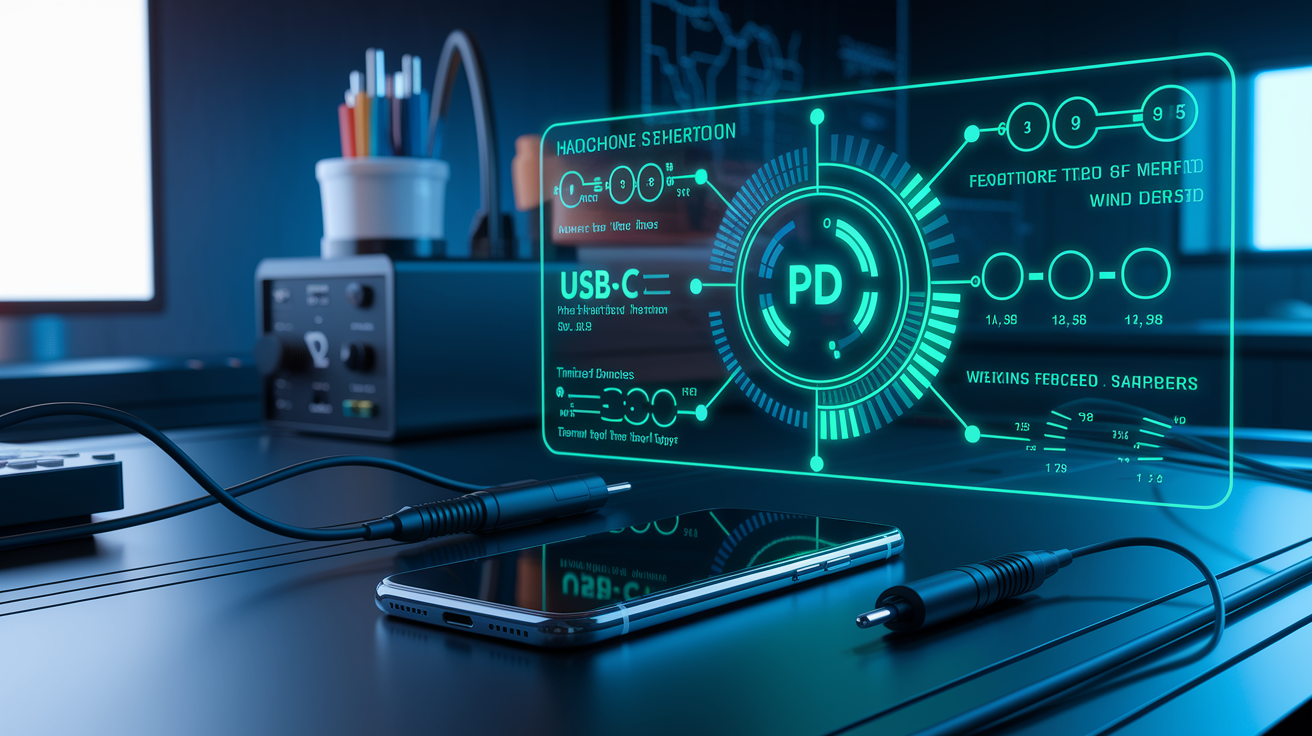
USB-C accessories must correctly implement USB Power Delivery negotiation, a digital handshake protocol in which the phone and accessory exchange their voltage, current, and power capabilities over the Configuration Channel (CC) pins before any substantial current flows. The phone advertises its maximum input power profile (15 W, 30 W, 45 W, or higher), and the charger or cable must respond with compatible voltage steps (5 V, 9 V, 12 V, 15 V, 20 V) and current limits. Certification testing connects the accessory to protocol analyzers that capture every PD message, verifying correct timing (messages must complete within milliseconds), proper role negotiation (source vs. sink), and compliance with USB-IF specifications for voltage ripple and inrush current. Accessories that advertise capabilities they can’t sustain (claiming 45 W output but sagging under load) fail electrical validation because they risk triggering the phone’s thermal or battery protection circuits, leading to inconsistent charging speeds or user complaints.
Fast-charging compatibility depends on precise alignment between the phone’s battery management controller and the accessory’s power controller. A phone designed for 30 W fast charging uses a specific PD profile (for example, 15 V at 2 A) and expects the charger to hold that voltage within ±5 percent while the phone pulses current draw based on battery temperature and state of charge. Generic chargers that lack model-specific tuning often revert to a universal 5 V or 9 V profile, delivering power but missing the fast-charge speed you’d expect. Labs measure end-to-end efficiency by logging input power at the wall and output power at the phone’s battery terminals across a full charge cycle, checking that heat generation stays within safe limits and that the phone’s charge time matches the OEM’s published specs. Overheating during the certification test (detected by thermocouples on the phone’s back glass and internal PCB) triggers a failure and requires the accessory maker to improve thermal design or derate power output.
Certification for chargers and cables follows structured electrical test plans that identify failure modes before accessories reach consumers:
| Test Type | What It Verifies | Typical Failure Point |
|---|---|---|
| PD Negotiation Sequence | Correct voltage request and acknowledgment within protocol timing windows | Accessory sends malformed messages or times out, forcing fallback to 5 V |
| Current Limit and Overcurrent Protection | Accessory safely shuts down or folds back power when load exceeds rated limit | No protection circuit; excessive current damages phone or accessory |
| Cable Resistance and Voltage Drop | End-to-end voltage drop under full load stays below USB-IF limits (typically <500 mV at 3 A) | Thin gauge wire or poor solder joints cause excessive drop, reducing delivered power |
| Connector Durability and Contact Resistance | Mating cycles (10,000+ insertions) do not degrade electrical continuity or mechanical retention | Contacts wear, increasing resistance and causing intermittent disconnects or heat buildup |
Industry standards such as USB-IF’s compliance program and manufacturer-specific authentication (some OEMs require cryptographic chips in cables to unlock full fast-charge modes) provide certification frameworks. Accessories that pass USB-IF testing earn the “USB-C Certified” logo, signaling interoperability across devices. Proprietary authentication, when present, prevents uncertified cables from accessing the highest power tiers. A phone may charge at 15 W with any compliant cable but requires an authenticated cable to unlock 45 W charging. This layered certification structure ensures that launch-day accessories meet both universal interoperability baselines and device-specific performance targets, reducing the risk of slow charging, overheating, or electrical faults in the field.
Wireless Charging and RF Interference Testing for Accessory Compatibility
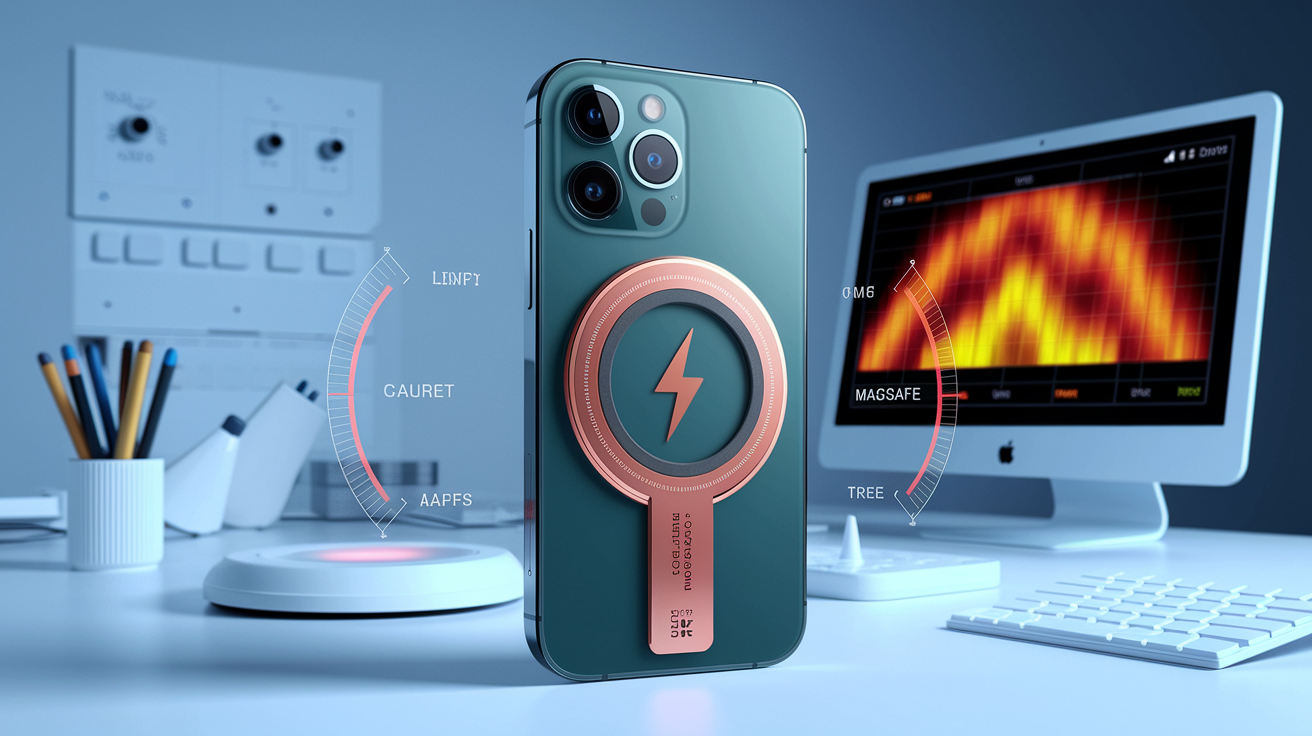
Wireless charging accessories must align their transmit coil with the phone’s receive coil to within millimeters, since lateral misalignment rapidly degrades coupling efficiency and increases heat. Qi-certified chargers and MagSafe-compatible pucks undergo coil alignment tests in which the phone’s placed at various positions and rotation angles on the charging surface while power transfer efficiency and temperature get logged. A Qi charger that allows 5 mm of play may drop efficiency from 75 percent to 50 percent when the phone drifts off-center, causing the battery to charge slowly and both phone and charger to heat beyond comfortable touch temperatures. MagSafe accessories use ring magnets to snap the phone into the correct position. Certification tests measure magnet strength to confirm alignment force is strong enough to hold the phone during vibration yet weak enough to allow easy removal. Case compatibility gets verified by testing wireless charging through the case material. Thick or metal-loaded cases can block magnetic fields, preventing charging entirely or requiring you to remove the case.
Thermal management is a core wireless charging test. Labs use thermal cameras to map heat distribution across the phone’s back glass, internal battery, and charging accessory during a sustained 15 W wireless charge. Hot spots that exceed 45 °C on external surfaces or 60 °C internally indicate poor coil alignment, inadequate heat sinking, or excessive eddy current losses in nearby metal components. Accessories that fail thermal limits must redesign coil geometry, add heat spreaders, or reduce maximum power output before receiving certification. RF interference testing ensures that the high-frequency magnetic field used for power transfer doesn’t disrupt the phone’s Bluetooth, NFC, or cellular radios. Test chambers measure radiated emissions from the charging system while the phone simultaneously attempts Bluetooth audio streaming and NFC transactions. Any degradation in range, throughput, or connection stability triggers a compatibility failure.
Four critical RF interference checks ensure wireless accessories coexist with the phone’s radios:
Bluetooth coexistence: Audio streaming to wireless headphones must maintain stable connection and codec performance (no dropouts or bitrate reduction) while wireless charging’s active at full power.
NFC read range: Payment terminals and tag readers must detect the phone’s NFC antenna at standard distances (up to 4 cm) without interference from charging coil harmonics.
Cellular band sensitivity: Wireless charging operation must not degrade the phone’s ability to maintain LTE or 5G connections, particularly in fringe signal conditions where interference margins are tight.
Accessory EMC limits: The charging accessory itself must meet electromagnetic compatibility regulations (FCC Part 15, CE, etc.) to avoid radiating spurious emissions that could interfere with other consumer electronics.
Cases designed for wireless charging get tested with sample charging pucks to confirm that magnet alignment remains accurate and that case thickness doesn’t reduce charging speed below the OEM’s minimum acceptable rate. A case that allows wireless charging but cuts speed from 15 W to 5 W may still pass certification if the degradation’s disclosed, but cases that prevent charging entirely or cause unsafe heating are rejected. Material selection matters: cases with metal inserts for structural reinforcement must position those elements outside the coil’s magnetic flux path, a design constraint verified through electromagnetic simulation and physical testing during the accessory approval process.
Software, Firmware, and Accessory App Integration at Smartphone Launch

Many modern accessories rely on companion apps, firmware updates, and operating system APIs to expose their full feature set. Wireless earbuds, for example, may offer customizable equalizer profiles, active noise cancellation modes, and battery status indicators only when paired with a brand-specific app that communicates over Bluetooth Low Energy GATT profiles. Smartwatches, fitness trackers, camera gimbals, and wireless charging pads with display screens all depend on software layers to function beyond basic connectivity. Smartphone manufacturers provide accessory partners with software development kits and API documentation under NDA, enabling partners to build apps that request necessary permissions (location for fitness tracking, contacts for call notifications, microphone for voice commands) and integrate with OS-level features like quick settings tiles or lock-screen widgets. Pre-launch testing confirms that the accessory app installs cleanly, requests only justified permissions, and handles edge cases such as Bluetooth re-pairing after the phone reboots or the accessory firmware updates mid-session.
Firmware compatibility gets validated through coordinated over-the-air update workflows. Accessory makers deliver firmware binaries to the OEM’s certification lab, where test phones running prerelease OS builds attempt to update connected accessories via Bluetooth, USB, or NFC. The test verifies that the update completes without bricking the accessory, that version checks prevent downgrades to insecure firmware, and that the phone’s UI correctly displays update progress and error messages. Some accessories require a two-stage update: the phone downloads the firmware package from the internet, then transfers it to the accessory over a local connection. Certification ensures that interrupted transfers (due to Bluetooth disconnection or low battery) are handled gracefully with automatic retry logic rather than leaving the accessory in an unusable state. Brand-name accessories from the same manufacturer as the phone often unlock extra features (such as spatial audio calibration or one-tap pairing) through proprietary APIs not exposed to third-party developers, a compatibility advantage that must still pass the same stability and security tests.
A typical accessory handshake sequence validated during certification follows four steps:
Discovery and enumeration: The phone detects the accessory via USB device descriptor, Bluetooth service UUID, or NFC tag, identifying the accessory type and firmware version.
Authentication and pairing: Cryptographic keys or pairing codes are exchanged to establish a trusted connection. Proprietary accessories may use secure elements to verify authenticity.
Capability negotiation: Accessory and phone exchange supported features (audio codecs, sensor types, power modes) and select the highest common profile both devices can handle.
Firmware and app check: The phone queries the accessory’s firmware version and the companion app’s version, prompting you to update if a newer version enables bug fixes or new features required for full compatibility.
Driver integration for USB accessories (such as external storage, MIDI controllers, or Ethernet adapters) requires that the phone’s OS includes kernel-level support or class drivers that recognize standard USB device classes. Accessories that use custom USB protocols need vendor-supplied drivers or HAL (Hardware Abstraction Layer) modules, which must be submitted to the OEM for security review and performance profiling before launch approval. The certification process confirms that the driver doesn’t cause kernel panics, excessive CPU usage, or battery drain, and that hot-plug events (inserting or removing the accessory while the phone’s on) are handled without data loss or system instability.
Wireless Accessory Protocols: Bluetooth, NFC, and Low‑Energy Interoperability
Bluetooth accessories rely on a layered protocol stack: the physical radio handles frequency hopping and modulation, the Link Layer manages connection timing and retransmissions, and higher-level profiles (A2DP for audio, HID for input devices, GATT for sensors) define how data’s formatted and exchanged. Certification testing verifies that the accessory correctly implements each layer, with particular focus on pairing stability and coexistence with other wireless devices. A Bluetooth headset gets tested by initiating pairing while the phone’s also connected to a Wi-Fi network and a smartwatch, confirming that the new device pairs without forcing disconnection of existing peripherals and that audio playback starts within two seconds of pairing. Reconnection behavior gets tested by simulating walk-away scenarios (moving the accessory out of range until the connection drops, then returning within range) to confirm the phone and accessory automatically reconnect without requiring manual re-pairing.
Audio codec compatibility determines sound quality and latency for wireless headphones and speakers. The phone and accessory negotiate the highest-quality codec both support: AAC is nearly universal and offers good quality at moderate bitrates, aptX and aptX HD provide lower latency and higher fidelity on supported Android devices, LDAC delivers near-lossless quality over Bluetooth when signal conditions allow, and SBC serves as the baseline fallback codec when nothing else is common. Certification tests measure codec negotiation time, audio synchronization with video playback (lip-sync accuracy within ±40 ms), and stability under interference from nearby 2.4 GHz devices like Wi-Fi routers and microwave ovens. Accessories that fail to maintain the negotiated codec under normal conditions (dropping from aptX to SBC mid-song due to marginal radio performance) are flagged for redesign or firmware tuning. Battery life impact also gets measured: Bluetooth audio accessories must achieve the OEM’s minimum playback duration (for example, 20 hours for over-ear headphones, 5 hours for true wireless earbuds per charge) while maintaining stable connectivity.
NFC accessories, such as payment terminals, smart tags, and accessory pairing tokens, require precise antenna alignment and read range. The phone’s NFC antenna, typically located near the top or center back of the device, must couple with the accessory’s antenna when the two are brought within 4 cm of each other. Certification tests use standard NFC test cards and antennas to verify that the phone can read ISO 14443 and ISO 15693 tags across the full range and that the phone’s metal frame or case accessories don’t create RF shadows that block NFC communication. Bluetooth Low Energy peripherals (fitness trackers, smartwatches, wireless sensors) use GATT profiles to expose data characteristics (heart rate, step count, battery level) that the phone reads at regular intervals. Testing confirms that the accessory advertises its services correctly during the Bluetooth scan phase, that the phone can subscribe to notifications for time-critical data (such as incoming call alerts forwarded to a watch), and that low-power modes extend battery life without causing connection dropouts or delayed wake-up when you interact with the accessory.
Certification Programs That Determine Accessory Compatibility

Official certification programs provide standardized test plans and third-party lab validation that accessories meet safety, performance, and interoperability requirements. Apple’s Made for iPhone (MFi) program requires accessory makers to incorporate an authentication chip that cryptographically verifies the accessory to the phone, unlocking full fast-charging speeds and data transfer rates. Accessories without the chip display warning messages or operate at reduced capability. Google’s Made for Google program subjects accessories to mechanical, electrical, and environmental tests at Google’s labs and awards a certification badge for products that pass. USB-IF (USB Implementers Forum) offers compliance testing for USB-C cables, chargers, and hubs, verifying that they meet USB Power Delivery, USB data rate, and connector durability specifications. Passing products earn the “USB-C Certified” logo. Wireless Power Consortium’s Qi certification ensures that wireless chargers meet magnetic alignment, efficiency, and safety standards for interoperable charging across Qi-enabled phones.
Certification checklists define the full scope of tests an accessory must pass before receiving approval. Labs validate six core areas during the certification process:
Mechanical fit and durability: Cases, mounts, and physical accessories must fit the device without obstructing buttons, ports, sensors, or cameras. Drop tests and wear tests confirm the accessory remains functional after typical use cycles.
Electrical safety and performance: Chargers and cables must deliver rated power without exceeding temperature limits, protect against short circuits and overcurrent, and comply with USB-IF or proprietary charging protocols.
Wireless performance: Qi chargers, MagSafe pucks, and Bluetooth peripherals must meet efficiency, alignment, and coexistence standards, with no interference to the phone’s radios or excessive heat generation.
Software and firmware integration: Companion apps must install and update reliably, request only necessary permissions, and handle firmware updates without bricking the accessory or crashing the phone.
Environmental compliance: Accessories must meet regulatory standards for restricted substances (RoHS), electromagnetic emissions (FCC, CE), and energy efficiency (DoE, ErP), with documentation proving compliance.
User experience consistency: Pairing workflows, LED indicators, button feedback, and error messages must follow the OEM’s design guidelines to maintain a cohesive ecosystem feel across all certified accessories.
Proprietary authentication chips used in MFi and similar programs add a hardware layer to certification. The chip contains cryptographic keys and a secure boot sequence that the phone verifies during connection. Counterfeit or uncertified accessories that lack the chip are detected and either refused or operated at limited functionality. This approach reduces the risk of low-quality accessories damaging the phone through electrical faults or poor construction, but it also increases accessory cost and limits the market to manufacturers willing to license the authentication technology. Independent industry certification through USB-IF or Qi provides an alternative path that emphasizes interoperability and safety without requiring proprietary chips, though it doesn’t guarantee optimization for device-specific features like fastest-possible charging or seamless OS integration.
Google’s robotic cable testing machine, referenced in certification workflows, repeatedly inserts and removes USB-C connectors at controlled angles and insertion depths, logging contact resistance and mechanical retention force over 10,000 cycles. Cables that degrade below acceptable thresholds before completing the full cycle count fail certification and must be redesigned with improved strain relief, higher-quality connectors, or better solder joints. This automated testing catches failures that might take months to appear in real-world use, preventing post-launch reliability issues and customer complaints. Accessories that pass all certification tests receive official badging, documentation for retail listings, and inclusion in the OEM’s online compatibility database, providing consumers with confidence that the accessory will work as expected on launch day and beyond.
Coordination With Accessory Makers Before Smartphone Launch

Smartphone manufacturers manage accessory ecosystems through structured partner programs that balance competitive differentiation with broad accessory availability at launch. High-priority partners (major case brands, charger manufacturers, audio companies) are invited into early-access tiers months before the phone’s announced, receiving detailed mechanical drawings, electrical specifications, and prototype hardware under strict nondisclosure agreements. These partners commit to delivering certified accessories in time for launch-day availability, coordinating production schedules and shipping logistics so that retail channels stock compatible products as soon as preorders open. Secondary-tier partners gain access closer to the announcement date, receiving information sufficient to develop accessories but with less lead time to achieve day-one availability. This tiered approach allows the OEM to curate a premium launch accessory lineup while still enabling a broad ecosystem to develop over the weeks following release.
Accessory supply chain timing hinges on four coordination stages that synchronize OEM hardware development with partner accessory design and manufacturing:
Specification release and reference design sharing (6 to 9 months pre-launch): Partners receive CAD files, connector pinouts, wireless charging coil positions, and thermal guidelines. Reference designs for common accessory types (basic case, standard charger) help smaller partners quickly prototype.
Engineering sample distribution and lab access (4 to 6 months pre-launch): Select partners receive pre-production phones and are invited to the OEM’s labs for hands-on testing with certification-grade equipment. Iterative design feedback loops begin.
Certification test submission and revision cycles (2 to 4 months pre-launch): Partners submit accessory samples to OEM labs for formal testing. Failed tests prompt redesigns, tooling changes, and resubmission until certification’s achieved.
Production ramp and channel coordination (1 to 2 months pre-launch): Certified accessories enter mass production. OEMs coordinate with retail partners to ensure inventory arrives at stores and warehouses timed with phone launch. Marketing assets and compatibility matrices are finalized.
Partner lab access at facilities such as Google’s Mountain View lab provides accessory makers with test equipment that most companies can’t afford to own: thermal chambers, anechoic RF test rooms, USB protocol analyzers, and high-precision dimensional measurement tools. A case manufacturer can bring prototype samples to the lab, test them against prerelease hardware, identify a button alignment issue using the lab’s coordinate measuring machine, and refine the CAD design on-site with engineering support from the OEM’s accessory team. This collaborative testing accelerates the development cycle and reduces the risk of expensive tooling mistakes that would require starting over. QA sample exchanges flow in both directions: accessory makers send samples to the OEM for certification testing, and the OEM sends updated phone samples to partners whenever a design change (such as a camera module dimension adjustment) affects accessory fit.
Ecosystem strategy shapes which partners receive preferential access and marketing support. Manufacturers with strong retail presence and brand recognition in key accessory categories (protective cases, wireless chargers, premium audio) are prioritized because their products drive consumer confidence in the new phone and generate high-visibility launch coverage. Smaller or newer accessory brands may gain access through distributor programs or by meeting minimum order commitments that justify the OEM’s engineering support investment. Geographic distribution gets managed to ensure that major markets (North America, Europe, Asia-Pacific) each have locally available certified accessories at launch, avoiding scenarios where consumers in one region can purchase the phone but must import accessories from another region due to distribution gaps.
Launch-Day Validation, Documentation, and Compatibility Statements

Manufacturers publish accessory compatibility matrices on their support websites and in retail materials the moment the phone becomes available for preorder, listing every certified accessory by category, model number, and key specs. These matrices serve as the authoritative reference for consumers, retailers, and support teams, clearly stating which accessories are guaranteed to work and which features require specific accessory models. A compatibility matrix for a flagship phone might list ten certified wireless chargers with notations indicating which support 15 W fast wireless charging versus basic 5 W charging, and which are optimized for use with a case on the phone. Timelines for creating and updating these matrices are compressed by pre-launch secrecy: final testing and documentation must be completed in the weeks immediately before launch, leaving little margin for last-minute accessory failures or changes to the phone’s hardware.
Accessory packaging and spec sheets include compatibility labeling that helps you quickly identify whether a product works with your new phone. Labels follow best practices established by certification programs: “Works with [Phone Model],” “Qi Certified,” “USB-C Certified,” “Made for Google.” Disclaimers clarify limitations (“Fast charging requires compatible power adapter sold separately,” “Wireless charging speed may be reduced when used with non-certified cases,” “Companion app required for firmware updates and advanced features”). These disclaimers manage consumer expectations and reduce return rates by ensuring buyers understand what they’re purchasing and what conditions must be met for full functionality. Retail displays and online product pages incorporate compatibility filters, allowing shoppers to select their phone model and see only accessories certified for that device, reducing confusion in crowded accessory aisles.
The table below summarizes key documentation types published at launch:
| Document Type | Purpose | Typical Contents |
|---|---|---|
| Compatibility Matrix | Authoritative list of certified accessories for the new phone model | Accessory category, brand, model number, supported features, purchase links |
| Technical Specification Sheet | Engineering details for developers and advanced users | USB-C PD profiles, wireless charging power levels, Bluetooth profiles, supported codecs, connector dimensions |
| Retail Labeling Guidelines | Instructions for accessory makers on how to mark packaging and marketing materials | Approved logo usage, required disclaimers, compatibility claim templates, regional regulatory marks |
Software compatibility disclaimers address the reality that accessories may behave differently across OS versions. A Bluetooth headset certified for the phone’s launch OS version might encounter pairing issues after a major OS update if the update changes Bluetooth stack behavior. The OEM and accessory maker coordinate to release firmware or app updates that restore compatibility. Support documentation published at launch includes troubleshooting steps for common accessory issues (how to reset pairing, how to check for firmware updates, how to verify that a charger’s delivering fast-charging power), equipping customer service teams and online help forums with the information needed to resolve post-purchase questions. The combination of comprehensive compatibility matrices, clear labeling, and accessible troubleshooting documentation ensures that the launch-day accessory ecosystem supports a smooth user experience with minimal confusion or returns.
Post‑Launch Compatibility Management and Updates
Software updates released weeks or months after launch frequently address accessory compatibility issues discovered by early adopters. A phone may ship with a Bluetooth firmware bug that causes intermittent disconnections with certain wireless earbuds, and the OEM releases a patch that refines the Bluetooth stack’s timing or power management. Accessory firmware updates flow in the opposite direction: a wireless charger may receive a firmware update that improves coil alignment detection or adds compatibility with a new fast-charging mode introduced in a phone OS update. These post-launch updates are coordinated through the same partner channels used during pre-launch testing, with the OEM providing beta OS builds to accessory makers and accessory makers submitting updated firmware for validation before public release. Users get notified of accessory firmware updates through companion apps or the phone’s settings menu, which scans connected accessories and prompts installation when new versions are available.
Legacy accessory support becomes a strategic decision as new phone models introduce updated standards or physical changes. A phone that switches from micro-USB to USB-C requires adapters or entirely new cables, and the OEM must decide whether to continue certifying micro-USB accessories or push the ecosystem fully to the new standard. Compatibility shims (software layers or adapter hardware that translate between old and new interfaces) can extend the life of legacy accessories, but they add complexity and potential failure points. Manufacturers typically support previous-generation accessories for a defined period (for example, two to three years) through software updates and adapter offerings, then sunset older standards to streamline certification and reduce testing overhead. Firmware rollback strategies are rare but necessary when an update causes widespread compatibility problems. The OEM or accessory maker must provide a mechanism to downgrade firmware to the last known good version while they develop a fixed update.
Four common launch-day compatibility problems frequently require post-launch attention:
Inconsistent fast charging with certified chargers: Some units exhibit slow charging due to manufacturing variations in USB-C port alignment or firmware timing. A patch adjusts negotiation timeouts to improve reliability.
Bluetooth pairing failures or audio dropouts: Interference from nearby Wi-Fi networks or bugs in the Bluetooth stack cause connection instability. Firmware updates improve coexistence algorithms or adjust radio power levels.
Wireless charging overheating or stopping mid-charge: Poor coil alignment, case thickness variations, or thermal management tuning issues cause the phone to pause charging. Updates refine temperature thresholds and alignment tolerance.
Accessory app crashes or missing features: Companion apps may not handle all edge cases (low storage, restrictive permissions, background process limits). App updates add error handling and improve compatibility with the phone’s OS policies.
Customer communication about compatibility issues follows a tiered escalation model: minor issues are documented in support articles and forums, moderate issues trigger push notifications or in-app alerts prompting users to update, and critical issues (such as safety risks or widespread functional failures) result in public advisories and expedited patch releases. Cross-device accessory compatibility (ensuring that a wireless charger works equally well with the current flagship phone and last year’s model) requires regression testing with each software update, confirming that fixes for the new device don’t break compatibility with older devices still receiving updates. This ongoing compatibility management extends well beyond launch day, maintaining the accessory ecosystem’s health and user trust throughout the phone’s lifecycle.
Final Words
in the action we traced the full path from early CAD drawings and NDAed specs to mechanical fit checks, USB‑C and Qi testing, firmware and app integration, and final certification badges. We covered partner coordination, launch‑day docs, and post‑launch fixes.
If you want a simple takeaway on how accessories compatibility is determined at smartphone launch: manufacturers validate physical fit, electrical negotiation, wireless alignment, and software handshakes, then certify and update as needed. Expect most approved accessories to work day one — and fast fixes when they don’t.
FAQ
Q: What is the most bought phone accessory?
A: The most bought phone accessory is the protective case. People choose cases for drop protection, style, and low cost; makers get CAD specs early so cases match ports, buttons, and camera bumps.
Q: What is compatibility in a phone?
A: Compatibility in a phone means whether the device works with accessories, networks, and software—covering mechanical fit, electrical protocols (USB‑C, Qi), wireless standards (Bluetooth, NFC), and OS or firmware support.
Q: What factors do you consider when choosing a smartphone?
A: When choosing a smartphone, consider battery life, performance (processor), camera quality, software update policy, storage, size/comfort, accessory compatibility (cases, chargers, wireless), price, and brand support or warranty.
Q: What are the 7 main parts of a mobile phone?
A: The 7 main parts of a mobile phone are the display, system‑on‑chip (processor), battery, cameras, memory/storage, modem/antenna, and the casing with sensors and buttons—these enable power, processing, connectivity, and input.