


Can you trust the first hands-on reviews, or are they just launch PR in nicer clothes?
In the first 24–72 hours after a product drops, those early takes decide whether you buy, wait, or skip.
Look for a few clear signals: actual time spent with the product, objective numbers (battery hours, weight), specific real-world tests, honest pros and cons, and photos or multiple independent testers backing the claims.
This piece shows the credibility checks and performance signs that matter so you don’t buy on hype.
Key Factors to Examine in First Hands-On Reviews Right After a Product Launch

Early hands-on reviews give you your first real look at how a product performs outside the marketing bubble. In that first 24 to 72 hours after launch, you’re trying to figure out what’s real and what’s just hype. These reviews determine whether you should buy now, hold off for updates, or skip it completely.
The best early reviews include actual numbers instead of generic cheerleading. Look for runtime in hours, weight in grams, temperature readings, charge cycles, miles tracked. Not just “amazing battery” or “premium feel.” Check how long the reviewer actually spent with the product. Minutes? Days? Weeks? Real conditions matter. Daily commutes, cold weather, all-day events, outdoor visibility. A review that says “used for two weeks on daily hikes” beats “unboxed and tested for an hour” every time.
Balanced feedback builds trust. Reviewers who list both strengths and weaknesses are more believable. In fact, 82% of shoppers value negative reviews because they reveal actual drawbacks. Photos and videos matter early on. About 30% of consumers specifically want user-generated images. A photo of muddy trail shoes after 12 miles tells you way more than a stock shot. When you’ve only got a handful of opinions available, consistency across reviews becomes critical. If three separate reviewers mention the same problem, you’re looking at a pattern.
7 critical evaluation points for early hands-on reviews:
- Testing duration — Days or weeks of use, not just first impressions.
- Real-use scenarios — Specific tasks, environments, actual conditions.
- Objective measurements — Battery runtime, dimensions, weight, speed, temperature, decibel levels.
- Balanced pros and cons — Clear documentation of both strengths and weaknesses.
- Visual proof — Customer photos or videos showing the product in real use.
- Early-use conditions — Weather, device compatibility, user profiles like age or experience level.
- Cross-review consistency — Key claims backed up across multiple independent testers.
Evaluating Reviewer Credibility and Testing Methods in Early Hands-On Reviews

Expert reviewers bring domain knowledge and testing frameworks that casual users don’t have. Look for credentials or experience markers. An emergency responder reviewing safety gear carries weight. So does a long-distance hiker testing boots or a photographer evaluating camera systems. Verified purchase labels help. So does a review history showing multiple consistent reviews over time. Single-review accounts with no background? Low signal.
Transparent testing separates useful reviews from surface reactions. Strong reviewers document their process. How many days or weeks they used it. What tasks they performed. What conditions they tested under. Check for repeat-use timestamps like “tested daily for 10 days” or “used across three camping trips.” That indicates depth. Reviews describing testing environments (cold mornings, bright sunlight, noisy gyms, long flights) help you map their results to your own situation.
Sample bias and incomplete methods weaken early reviews. If someone only tested one feature or skipped key use cases (reviewing wireless earbuds but never making a phone call), the review’s incomplete. Watch for undisclosed sponsorships or free review units without transparency. Lack of disclosure is a major red flag. Identical phrasing across multiple reviews suggests coordinated content, not independent testing. Prefer reviewers who state whether they bought it, got it as a sample, or were sponsored, and who explain their testing scope and what they didn’t test.
Real-World Usage Signals to Look For in First Hands-On Reviews

Real-world performance beats lab benchmarks during early testing because it shows how the product behaves under daily stress, not perfect conditions. Benchmarks measure potential. Real-world reviews measure actual behavior when you’re commuting, multitasking, switching between apps. Early adopters surface issues that controlled tests miss. Battery drain during video calls. Sluggish performance after a dozen apps are open. Connectivity drops in crowded areas.
Key real-life metrics include battery variation under different workloads, camera consistency across lighting situations, connectivity reliability when moving between networks, display usability outdoors or in dim rooms. A phone that scores high in lab tests but drains 40% battery during two hours of navigation is less useful than one with lower benchmark scores and stable all-day performance. Look for notes on heat buildup during sustained use, audio quality during calls (not just music), responsiveness during everyday multitasking.
Environmental context, task type, and usage duration shape whether early impressions hold up. A reviewer who used a laptop for three hours in an air-conditioned room will report different thermal behavior than someone who ran video encoding for eight hours in a warm office. Same with a fitness tracker tested during casual walks versus one worn during interval training or sleep tracking over multiple nights. You want reviews that specify the full range of tasks attempted and note any performance variation across those tasks.
5 specific real-world tests to expect reviewers to document:
- Battery drain across different tasks (streaming, browsing, idle standby, GPS) with time-to-empty measurements.
- Camera performance in mixed lighting (indoor, bright sunlight, low light, night mode) with sample photos or video.
- Connectivity stability during movement (switching Wi-Fi networks, cellular handoffs, Bluetooth pairing and dropout frequency).
- Display readability and color accuracy outdoors, in direct sunlight, at minimum and maximum brightness.
- Thermal behavior and performance throttling during sustained workloads (gaming, video editing, long calls, extended screen time).
Hardware and Build Quality Insights to Prioritize in Early Hands-On Reviews

Early hands-on reviews often catch manufacturing defects, materials weaknesses, assembly variance before widespread reports emerge. Look for mentions of weak seams, loose components, uneven panel gaps, sharp edges. Reviewers handling multiple units sometimes note variance between samples. One unit with a solid hinge, another with wobble. If two or three independent reviews cite the same failure mode (fragile charging port or scratch-prone coating), treat it as a probable design or production issue.
Drop tests, scratch resistance, water exposure, wear-after-use photos reveal durability early. A reviewer showing scuffs after one week of pocket carry or documenting a cracked screen after a waist-high drop provides actionable data. Heat and thermal behavior under load surface quickly too. Phones that get uncomfortably hot during charging or laptops with loud fans during light tasks are early warning signs. Pay attention to recurring complaints about specific components. Charging cables that fray. Buttons that stick. Ports that loosen after repeated use.
| Issue Type | What Early Reviews Reveal |
|---|---|
| Component failures | Charging port wobble, hinge creaking, button sticking, speaker distortion, battery swelling, connector looseness |
| Materials issues | Scratch-prone finishes, coating wear, discoloration, fabric pilling, adhesive failures, paint chipping |
| Assembly variance | Uneven panel gaps, screen backlight bleed, misaligned ports, inconsistent button travel, rattling internals |
Software, Stability, and Performance Consistency in First Hands-On Reviews

Synthetic benchmarks measure peak performance under controlled, repeatable conditions. Sustained-use behavior reveals what happens during real multitasking. How a phone performs after an hour of navigation and music streaming. How a laptop handles a dozen browser tabs plus a video call. Early hands-on reviews catch the gap between benchmark scores and everyday responsiveness, especially throttling, thermal limits, memory management under extended load.
Firmware differences across review units can cause conflicting reports. One reviewer might test a day-one retail unit, another a pre-release sample with older firmware, a third a unit updated to the latest patch. Software bugs, feature availability, performance can vary significantly across firmware versions. Strong reviewers document their firmware version and update timeline. If you see conflicting impressions (one tester reports smooth performance, another complains of lag), check whether they’re running the same software build.
Reproducible issues across multiple independent reviews signal systemic problems rather than isolated bugs. If three reviewers report app crashes when switching between specific tasks, or stuttering during video playback, the issue’s likely widespread. Early software instability is common but fixable. What matters is whether the manufacturer acknowledges and patches issues quickly, or leaves them unresolved for weeks.
4 recurring early software and stability issues to watch for:
- App crashes or freezes during specific tasks (camera switching, multitasking, background updates).
- Performance throttling after 10 to 15 minutes of sustained workload, with frame drops or slowdowns.
- Heat buildup triggering performance cuts or uncomfortable surface temperatures during normal use.
- Connectivity bugs (Wi-Fi dropout, Bluetooth pairing failures, GPS inaccuracy) that persist across reboots and firmware versions.
Transparency, Disclosure, and Red Flags in First Hands-On Reviews
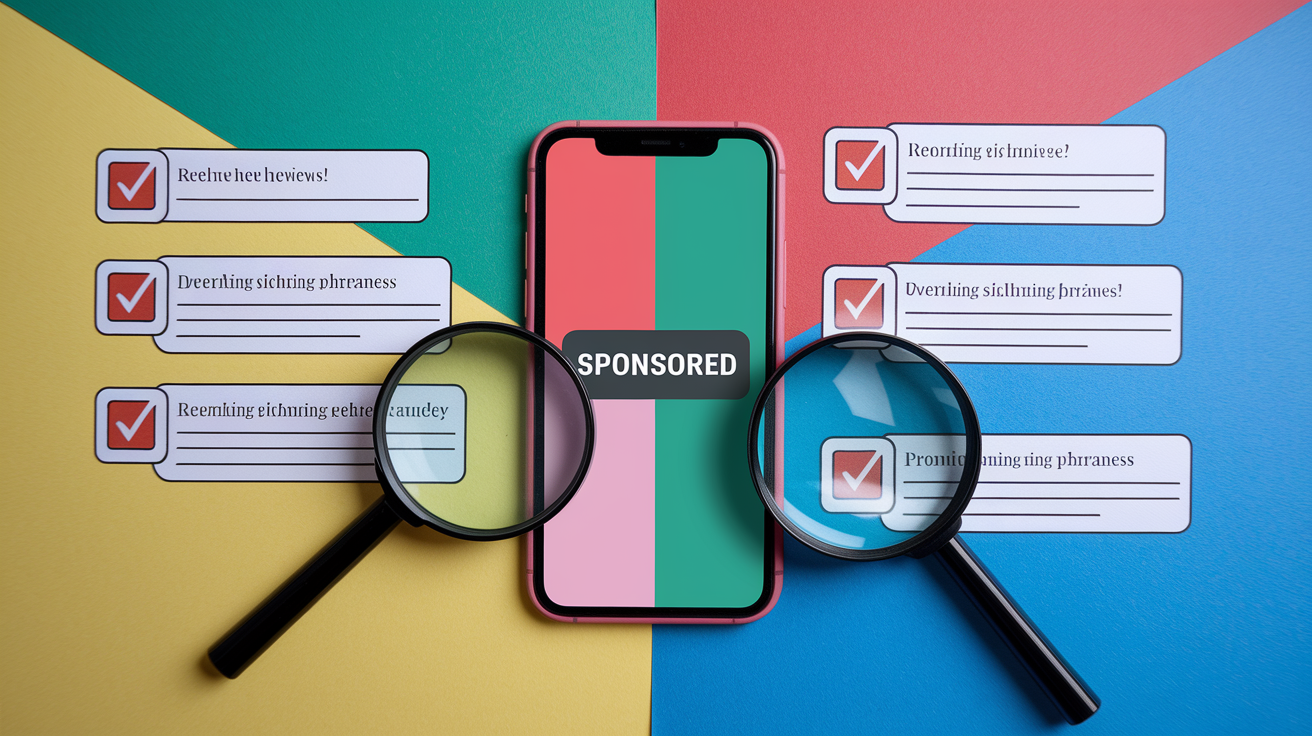
Trust collapses when you suspect fake or manipulated reviews. 97% of consumers lose trust if they detect dishonest content. Early post-launch periods are prime time for coordinated review campaigns, both positive (seeded by brands) and negative (from competitors or trolls). Identical phrasing across multiple reviews is the clearest red flag. If five reviews use the same sentence structure or buzzwords, they’re likely scripted.
Other warning signs include reviews with no photos or videos, especially for visually oriented products. Extremely short one-sentence praise with no detail. Clusters of 5-star reviews appearing within hours of launch. Missing sponsorship or sample-unit disclosures. Many shoppers are skeptical of influencer content. 81% doubt influencer expertise. So reviews that read like ad copy or focus on aesthetics over function should be weighted lower. Reviewers with no profile history, stock images only, or accounts created the same day as the review are low-credibility.
6 red flags indicating unreliable early hands-on reviews:
- Identical or nearly identical phrasing across multiple reviews posted within a short time window.
- No user-generated photos or videos, only stock product images.
- Missing disclosure about whether the reviewer purchased, received a sample, or was sponsored.
- Extremely short reviews (one sentence) with vague praise and no specifics.
- Review accounts with no history, created recently, or with only one review posted.
- Clusters of perfect 5-star reviews immediately after launch with no mention of any drawbacks or tradeoffs.
Comparing Early Hands-On Reviews to Competing Products

Strong early reviews place the new product in competitive context. How it stacks up against the previous generation, direct rivals, alternative solutions at similar price points. For high-ticket items like $300 trail runners or premium headphones, expect reviewers to compare build quality, durability, measurable performance (weight, battery life, noise cancellation specs) against known competitors. For lower-cost consumables like a $30 serum, ingredient comparisons, skin-type fit, value-per-use matter more than raw specs.
Price-to-value assessments help determine whether the product justifies its cost early on. A reviewer who notes “similar performance to the $200 model but $100 cheaper” or “costs twice as much but battery life is only 10% better” gives you decision-making context. Target-audience suitability also surfaces in comparative reviews. Whether a product works better for beginners or advanced users, casual or professional use, specific body types, particular environments. Reviews that say “great for daily commutes but overkill for occasional use” or “best for experienced users who need manual controls” help you self-select.
Building a Practical Decision Framework Based on First Hands-On Reviews
Most consumers read at least 11 reviews and spend roughly 20 minutes researching before buying. For early post-launch decisions, aim for a minimum of 10 detailed reviews if you’re buying within the first week, or 25+ if you want higher confidence and can wait a few weeks. Prioritize reviews posted within the last three months. 84% of shoppers consider older reviews less relevant. Filter for verified purchases when possible.
Know when to wait for more data. If early reviews reveal firmware bugs, inconsistent build quality, or missing features that are “coming in an update,” waiting two to four weeks lets you see whether patches actually arrive and fix the issues. For products where long-term durability matters (footwear, bags, charging cables), wait for at least a few reviews documenting multi-week or multi-month use before trusting longevity claims. If you see conflicting reports on core features (battery life, camera quality, connectivity), wait until the sample size grows and patterns emerge.
Weigh mixed feedback by looking for consistency in specifics. If one reviewer complains about poor low-light camera performance but three others praise it with sample photos, the outlier may reflect user error or a defective unit. If multiple reviewers mention the same flaw (overheating, short battery life, fragile hinge), treat it as credible even if some reviews don’t mention it. Reviewer consistency across use cases and conditions increases reliability. A tester who documents the same issue across multiple days or scenarios is more trustworthy than one citing a single isolated incident.
5-step framework for making buying decisions from first hands-on reviews:
- Set a review threshold — Read at least 10 detailed reviews for early purchases. Wait for 25+ if you can delay by a few weeks.
- Filter by recency and verification — Prioritize reviews from the last 3 months with verified purchase labels and user photos or videos.
- Identify deal-breakers and must-haves — List your non-negotiables (battery life, durability, specific features) and check whether early reviews confirm or contradict them.
- Look for reproducible issues — If 2 to 3 independent reviews cite the same flaw, treat it as a likely persistent problem. Isolated mentions may be outliers.
- Decide whether to wait — If early reviews mention firmware bugs, missing features, or inconsistent quality, wait 2 to 4 weeks for updates and additional long-term testing before committing.
Final Words
We opened with a tight checklist: look for specific measurements, real-use durations, testing conditions, clear visuals, balanced pros/cons, and agreement across reviewers.
Early credibility checks, reviewer transparency, sample size, and repeatable tests matter as much as the numbers. They tell you whether a problem is one-off or likely widespread.
For a fast buy-or-wait call, keep this checklist handy when deciding what to look for in first hands-on reviews after a launch. You’ll make smarter choices and skip the hype.
FAQ
Q: What is the 3-3-3 rule in sales?
A: The 3-3-3 rule in sales is a simple follow-up cadence: contact a prospect three times, across three channels, within three weeks to increase response without being pushy.
Q: What are some good 5 star review examples?
A: Good 5-star review examples are brief, specific praise that names features, measurable outcomes, and use context—e.g., “Battery lasted 12 hours on travel, screen readable outdoors, setup took 10 minutes; highly recommend.”
Q: What does a postlaunch review help determine?
A: A postlaunch review helps determine real-world performance, early bugs, build quality, user value versus expectations, and whether firmware or hardware issues need fixes before broader purchase decisions.
Q: Is 4.7 out of 5 a good rating?
A: A 4.7 out of 5 rating is generally excellent, signalling strong satisfaction; check sample size, recent reviews, verified purchases, and presence of detailed negatives to confirm reliability.