


Is 2024 the year tech stopped improving and started rewriting entire industries?
Companies now use AI that writes code, quantum and photonic chips that speed up simulations, gene editing that treats disease, and fusion plus solid-state batteries that cut energy costs—all in deployed systems.
That matters to business leaders, workers, and patients because early adopters get lasting advantages and laggards face costly disruption.
This post maps six breakthrough areas reshaping markets, what to watch next, and practical steps teams must take to keep up.
Core Breakthrough Tech Innovations Shaping Today’s Technology Landscape
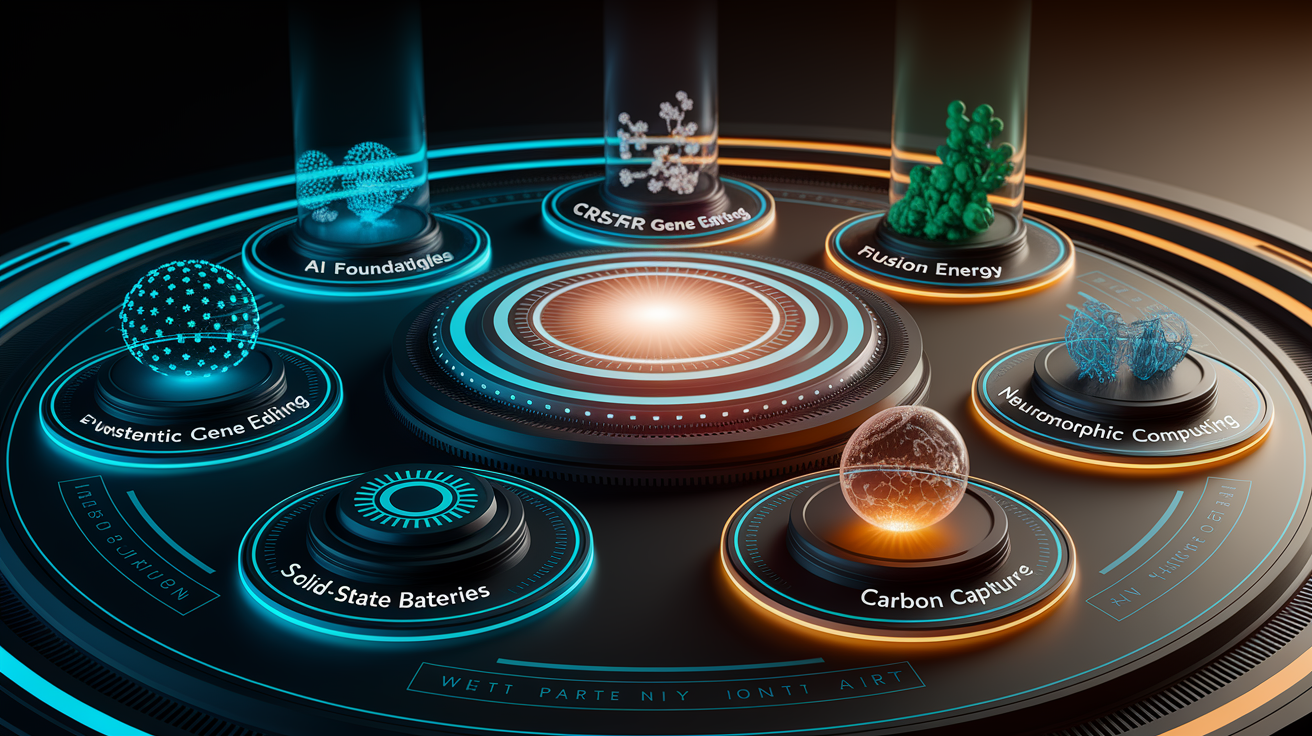
Breakthrough tech isn’t just changing industries. It’s rewriting the rules faster than anyone expected. AI systems now write code, catch diseases in scans, and predict when factory equipment will fail before it happens. Quantum computers are solving optimization problems that used to be impossible. CRISPR gene editing lets scientists fix genetic mutations with a precision that seemed like science fiction a decade ago. And renewable energy systems? Fusion research and solid-state batteries are hitting price points that compete directly with fossil fuels, pushing the global energy transition into high gear.
These aren’t concepts. They’re shipping products. Deployed infrastructure. Operational systems that are already reshaping how companies compete and how societies function.
The pace is brutal. Industries are scrambling to rethink talent pipelines entirely. Programs like Break Through Tech AI exist because there’s real demand: 18-month curricula that teach undergrads how to analyze datasets, build machine learning models, and solve actual industry problems using production-grade tools. These programs connect academic theory to the hands-on skills you need to deploy breakthrough tech in live environments.
Six technologies are driving the biggest disruptions right now:
- Foundation models in AI (large language models, multimodal systems, generative platforms)
- Gene editing and synthetic biology (CRISPR applications, mRNA therapies, metabolic engineering)
- Fusion energy research (ITER, Commonwealth Fusion, National Ignition Facility milestones)
- Next-generation battery technology (solid-state batteries, lithium-metal anodes, fast-charging architectures)
- Neuromorphic and photonic computing (brain-inspired chips, optical processors, analog compute)
- Carbon capture and utilization (direct air capture, mineralization, CO₂-to-fuel pathways)
Each one represents a fundamental leap. Not incremental improvement, but a shift in what’s possible at scale, cost, or speed. Companies that integrate these technologies early get structural advantages. Workers trained in the tools behind them become more valuable as adoption accelerates.
Breakthrough Tech in Artificial Intelligence and Computing

AI breakthroughs today center on systems that generalize across tasks, run at the edge, and scale to exascale computing. Foundation models trained on trillions of tokens generate code, synthesize research, and guide robotics in real time. Edge AI chips bring inference directly to devices, cutting latency and bandwidth costs. Neuromorphic processors copy brain architecture to hit energy efficiency gains of 100x over traditional GPUs.
Photonic chips use light instead of electrons for computation. Faster signal propagation, less heat. Early prototypes from companies like Lightmatter and Ayar Labs are already processing AI workloads in pilot deployments.
Five concrete breakthroughs define where AI and computing stand right now:
- Exascale supercomputers – Frontier at Oak Ridge crossed the exaflop barrier. That enables climate modeling and materials science at resolution levels we couldn’t touch before.
- Transformer architectures for multimodal understanding – Models like GPT-4, Gemini, and Claude process text, images, and code in a single framework.
- Optical computing prototypes – Photonic processors showed 10x speed improvements in matrix operations critical to AI training.
- Hardware-software co-design in AI accelerators – Google’s TPU v5, NVIDIA’s Hopper, and AMD’s MI300 tightly integrate chip architecture with software frameworks to cut training time and energy use.
- On-device AI inference – Apple’s Neural Engine, Qualcomm’s AI Engine, and MediaTek’s APU bring large-model inference to smartphones and IoT devices without cloud dependency.
Programs like Break Through Tech AI at MIT, UCLA, and Cornell Tech show how industry is responding to skill demand. Students complete hands-on machine learning challenges, work with open-source datasets on platforms like Kaggle, and meet monthly in person with industry advisors. Each participant builds a portfolio of resume-ready AI projects that mirror the same workflows used in production ML systems. It’s structured like modern AI development: iterative experimentation, team collaboration, continuous feedback from practitioners.
Breakthrough Tech Transforming Energy and Sustainability

Fusion energy hit a historic milestone when the National Ignition Facility achieved net energy gain in December 2022. That proved controlled fusion can release more energy than it consumes. Solid-state batteries using ceramic electrolytes are entering pilot production, offering double the energy density of lithium-ion cells while eliminating fire risk. Green hydrogen production costs dropped below $3 per kilogram in regions with abundant renewable electricity, making it competitive with natural gas for industrial heating and chemical feedstocks.
Four big sustainability breakthroughs are speeding up deployment timelines:
- Perovskite solar cells – Lab efficiencies now top 26%, with commercial production targeting 2025 at costs below traditional silicon.
- Long-duration energy storage – Iron-air batteries and gravity-based systems deliver 100+ hour storage at one-tenth the cost of lithium-ion.
- Direct air capture scaling – Climeworks and Carbon Engineering facilities capture thousands of tons of CO₂ annually, with costs dropping toward $100 per ton.
- Advanced geothermal drilling – Enhanced geothermal systems use directional drilling to tap heat in non-volcanic regions, expanding viable sites globally.
| Technology | Potential Impact |
|---|---|
| Fusion energy | Unlimited baseload power with zero carbon emissions and minimal radioactive waste |
| Solid-state batteries | Electric vehicles with 800+ mile range and 10-minute fast charging |
| Green hydrogen | Decarbonization of steel, cement, shipping, and aviation sectors |
The shift from pilot projects to scaled deployment depends on workforce training and practical demonstration programs. Break Through Tech initiatives emphasize rapid upskilling through structured bootcamps and industry-sponsored challenges. Energy-sector innovators are adopting that model to speed up commercialization. Talent pipelines that teach data analysis, systems modeling, and project-based problem solving enable faster iteration from lab prototype to production. The same skills used to analyze machine learning datasets apply to optimizing battery chemistries, modeling fusion plasma behavior, and forecasting renewable energy output across grid systems.
Breakthrough Tech Driving Advances in Biotechnology and Synthetic Biology
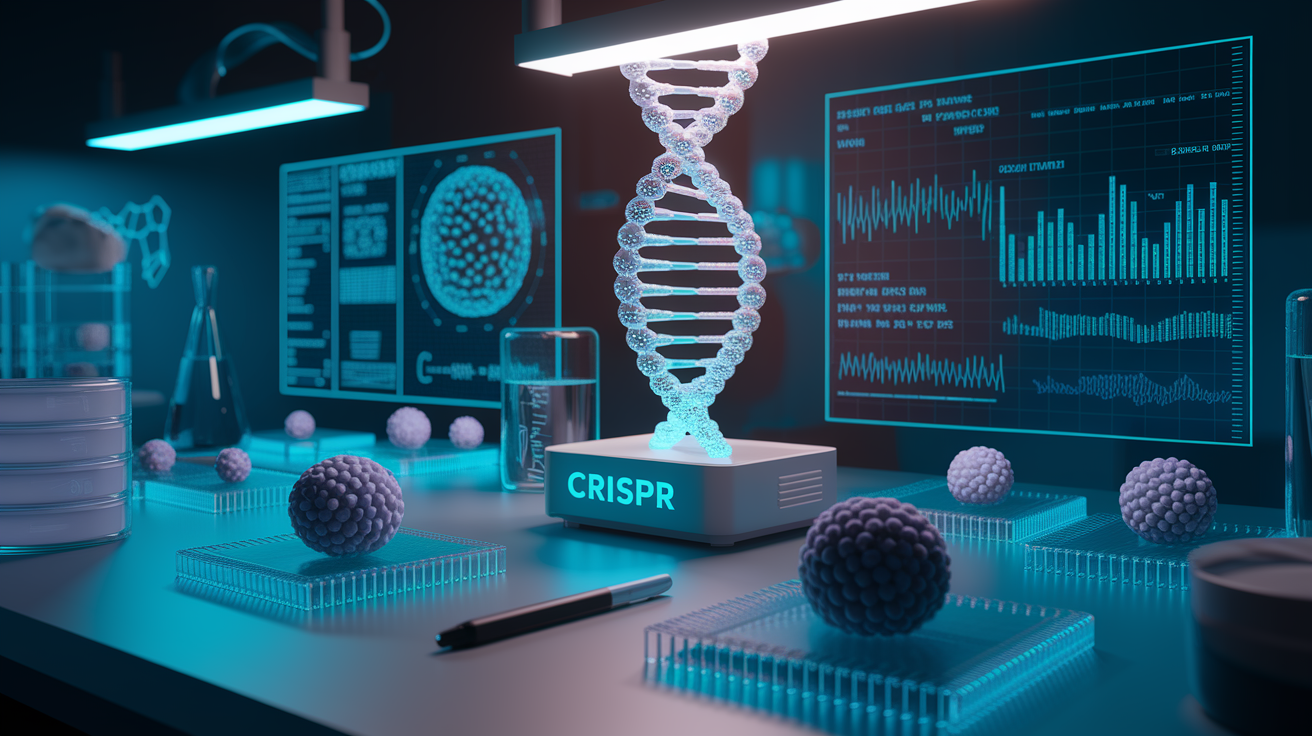
CRISPR gene editing now targets specific DNA sequences with single-nucleotide precision. Clinical trials are underway for CRISPR-based treatments of sickle cell disease, beta-thalassemia, and certain cancers. Synthetic biology platforms let scientists engineer microbes that produce insulin, spider silk proteins, and sustainable jet fuel. Precision medicine uses genomic data to tailor cancer therapies to individual patients, boosting response rates and reducing side effects.
mRNA vaccine platforms, validated at scale during COVID-19, are being adapted to target malaria, HIV, and personalized cancer antigens. Organoid technology lets researchers grow miniature human organs in vitro, speeding up drug testing and reducing reliance on animal models.
Five biotech breakthroughs are reshaping healthcare and life sciences:
- Base editing and prime editing – Next-gen CRISPR tools that rewrite DNA without double-strand breaks, cutting off-target effects.
- AI-guided protein design – AlphaFold and RoseTTAFold predict protein structures, enabling rapid enzyme engineering and antibody discovery.
- Cell-free synthetic biology – In vitro systems that produce proteins and metabolites without living cells, simplifying manufacturing.
- Liquid biopsies for early cancer detection – Blood tests that detect tumor DNA fragments before symptoms appear, improving survival rates.
- Xenotransplantation advances – Genetically modified pig organs transplanted into humans, addressing donor shortages.
Data science and machine learning are foundational to modern biotech research. Break Through Tech AI programs train students to analyze large datasets, build predictive models, and implement ML libraries. Skills that directly apply to genomic analysis, drug discovery pipelines, and clinical trial optimization. As biotech companies integrate AI into research workflows, graduates of these programs enter roles that combine biological knowledge with computational expertise, speeding up the translation of breakthrough technologies into approved therapies.
Breakthrough Tech Expanding Connectivity, Automation, and Robotics

Autonomous vehicle systems are moving past controlled environments into urban deployments. Waymo runs fully driverless taxis in San Francisco and Phoenix. Advanced robotics platforms now handle warehouse picking, surgical assistance, and hazardous material inspection with minimal human oversight. Industrial automation systems use sensor fusion and real-time machine learning to optimize manufacturing lines, cutting defect rates and energy consumption.
Wireless infrastructure is evolving fast. 6G research programs aim to deliver terabit-per-second speeds and sub-millisecond latency by 2030. Satellite internet constellations from Starlink, OneWeb, and Amazon’s Project Kuiper are bringing broadband to remote regions, connecting 500,000+ previously unserved households monthly.
- 6G research and terahertz communication – Universities and telecom labs are testing frequencies above 100 GHz for ultra-high-speed wireless links.
- Sensor fusion for autonomous systems – Combining lidar, radar, camera, and ultrasonic data improves object detection accuracy in complex environments.
- Low-Earth orbit satellite internet – Constellations with thousands of satellites provide global coverage with latencies approaching terrestrial fiber.
- Collaborative industrial robots (cobots) – Robots work alongside humans on assembly lines, adapting to variable tasks without reprogramming.
- Swarm robotics for logistics – Coordinated fleets of drones and ground robots optimize warehouse operations and last-mile delivery.
- Humanoid robots entering production – Companies like Boston Dynamics and Tesla are scaling manufacturing of bipedal robots for industrial and service roles.
These innovations rely on multidisciplinary teams trained in software, hardware, and systems integration. Break Through Tech AI programs use team-based industry challenges that mirror the collaborative structure of modern automation and robotics development. Students work on month-long projects guided by industry mentors, learning to integrate datasets, deploy models, and iterate based on real-world constraints. This hands-on approach reflects how robotics companies develop products: rapid prototyping, cross-functional collaboration, and continuous testing in realistic conditions.
Breakthrough Tech Accelerating Manufacturing, Materials, and Infrastructure

Additive manufacturing moved past prototyping into production tooling and end-use parts. Metal 3D printing lets aerospace companies fabricate lightweight turbine blades with internal cooling channels that are impossible to machine conventionally. Metamaterials with engineered microstructures exhibit properties not found in nature, like negative refractive indices and tunable acoustic absorption. Nanotechnology applications in coatings, catalysts, and electronics are improving performance and reducing material waste.
| Breakthrough | Sector Benefiting | Key Advantage |
|---|---|---|
| Multi-material 3D printing | Aerospace, medical devices | Single-step fabrication of complex assemblies with varied material properties |
| Graphene-enhanced composites | Automotive, construction | Lighter, stronger materials with improved thermal and electrical conductivity |
| Self-healing concrete | Infrastructure | Extended lifespan and reduced maintenance costs for roads and buildings |
Semiconductor advances are enabling the next generation of computing devices. Four key breakthroughs are driving chip performance and efficiency:
- Extreme ultraviolet (EUV) lithography – ASML’s High-NA EUV tools pattern features below 3 nanometers, increasing transistor density.
- Chiplet architecture – Modular chip designs combine specialized dies on a single package, improving yields and reducing development costs.
- Gate-all-around transistors – Samsung and TSMC’s 3nm nodes use vertically stacked nanosheets to improve power efficiency.
- Heterogeneous integration – 3D stacking of logic, memory, and analog components shortens signal paths and boosts bandwidth.
These breakthroughs depend on collaborative R&D ecosystems that unite materials scientists, process engineers, and software developers. Break Through Tech programs emphasize project-based learning and industry collaboration, reflecting the cross-functional teamwork required to advance manufacturing and materials innovation. Pilot manufacturing facilities, university-industry partnerships, and workforce training initiatives accelerate the path from research discovery to scaled production.
Breakthrough Tech Workforce, Talent Pipelines, and Innovation Ecosystems

Breakthrough technologies create new job categories faster than traditional education systems can respond. AI engineers, synthetic biologists, and fusion physicists are in high demand, but university degree programs take years to update curricula. Industry-led training pipelines offer a faster path to workforce readiness.
AI and ML Upskilling Models
Break Through Tech AI runs as an 18-month structured program that combines intensive skill-building with real-world project experience. The curriculum starts with an eight-week summer bootcamp covering dataset analysis, machine learning model development, and industry-standard ML libraries. Students learn Python, TensorFlow, scikit-learn, and pandas through hands-on exercises.
During the academic year, participants get matched to team-based industry challenge projects. Teams meet monthly in person to work with company advisors and mentors. Each student builds a portfolio of resume-quality AI/ML projects demonstrating proficiency in data preprocessing, model training, evaluation, and deployment. The program provides a stipend to reduce financial barriers. UCLA’s cohort receives $2,000 per student to cover basic expenses during the bootcamp phase. This model mirrors professional workflows: iterative development, peer collaboration, and continuous feedback from practitioners who understand production requirements.
Impact Metrics and National Expansion
UCLA launched Break Through Tech AI in summer 2022 with an inaugural cohort of 23 students from 12 institutions. Demographics reflect intentional outreach to underrepresented groups: 92% identify as women, 4% as transgender, 4% as non-binary. Most are first-generation college students and Pell-eligible. Outcomes have been strong. By March 2023, 48% of students had accepted internship or full-time offers at companies including JP Morgan, PWC, Bank of America, Microsoft, Google, Siemens, and Accenture. UCLA is scaling the program to 100 students for summer 2023, with applications reviewed on a rolling basis through a final deadline of April 21, 2023 at 11:59 p.m.
Cornell Tech’s program, which first launched in 2016, reports that 80% of fellows secure summer internships or full-time roles. The initiative expanded nationally, with new programs in Miami and other cities. In 2022, Cornell Tech received a $2 million grant to grow talent pipelines and support more students. The program now serves students across the Greater Boston area, Southern California, and New York City, with plans to add more regions. At MIT, the program includes monthly in-person convenings on the Cambridge campus at 51 Vassar Street (Building 45), reinforcing the importance of face-to-face collaboration even within a hybrid curriculum.
Learn more about the MIT program at Break Through Tech MIT, the UCLA initiative at Break Through Tech UCLA, and the national expansion at Break Through Tech Cornell Tech.
Workforce, Startups, and Commercialization
Talent pipelines enable faster commercialization of breakthrough tech. Startups need engineers who can prototype quickly, iterate on customer feedback, and deploy products at scale. Break Through Tech alumni are entering roles at Runway Startup Postdocs, alumni-founded companies, and corporate innovation labs. Cornell Tech’s campus resources include state-of-the-art facilities designed for collaboration and rapid prototyping, supporting the translation of research into market-ready products.
Commercialization strategies depend more and more on cross-functional teams that combine domain expertise with technical skills. A biotech startup needs ML engineers to analyze genomic data. A fusion energy company needs software developers to model plasma behavior. An additive manufacturing firm needs data scientists to optimize production parameters. Training programs that teach students to work on real industry challenges prepare them for these hybrid roles better than traditional coursework alone. Workforce reskilling at scale will determine which regions lead in breakthrough tech deployment and which fall behind.
Final Words
In the action: AI, biotech, energy, computing, and manufacturing are moving fast. Foundation models, gene editing, fusion breakthroughs, next‑gen batteries, and chip innovations are reshaping industries.
This article showed how practical programs like Break Through Tech AI turn training into real projects, hires, and pilot deployments.
Watch talent pipelines, fund pilots, and build hands‑on skills. Do one project this month and you’ll be ready to use breakthrough tech to solve real problems.
FAQ
Q: Is breakthrough tech worth it?
A: Breakthrough tech is worth it when it delivers clear ROI—new products, cost savings, or faster research. Expect upfront investment, pilot testing, and skill development before benefits scale for teams or businesses.
Q: What does breakthrough technology mean?
A: Breakthrough technology means a major advance that changes how things are done—new capabilities like foundation models, gene editing, fusion, or next‑gen batteries that open markets or cut costs.
Q: Is the Break Through Tech AI program paid? What is Break Through Tech AI?
A: The Break Through Tech AI program is free and structured as an 18‑month upskilling pathway, with an eight‑week ML bootcamp, industry projects, and mentoring to build portfolio-ready AI skills and hiring outcomes.