

Think all cyberattacks are about money?
Think again.
Some hackers work for governments and play a decades-long game of espionage and disruption.
Others are criminals chasing fast payouts through ransomware and stolen data.
They differ in motives, funding, tools, timelines, and risk tolerance, and that changes how you should defend.
This post lays out the core differences between nation-state and cybercriminal threat actors, explains what each wants and can do, and gives clear, practical takeaways to help you prioritize defenses.
Core Differences Between Nation-State and Cybercriminal Threat Actors
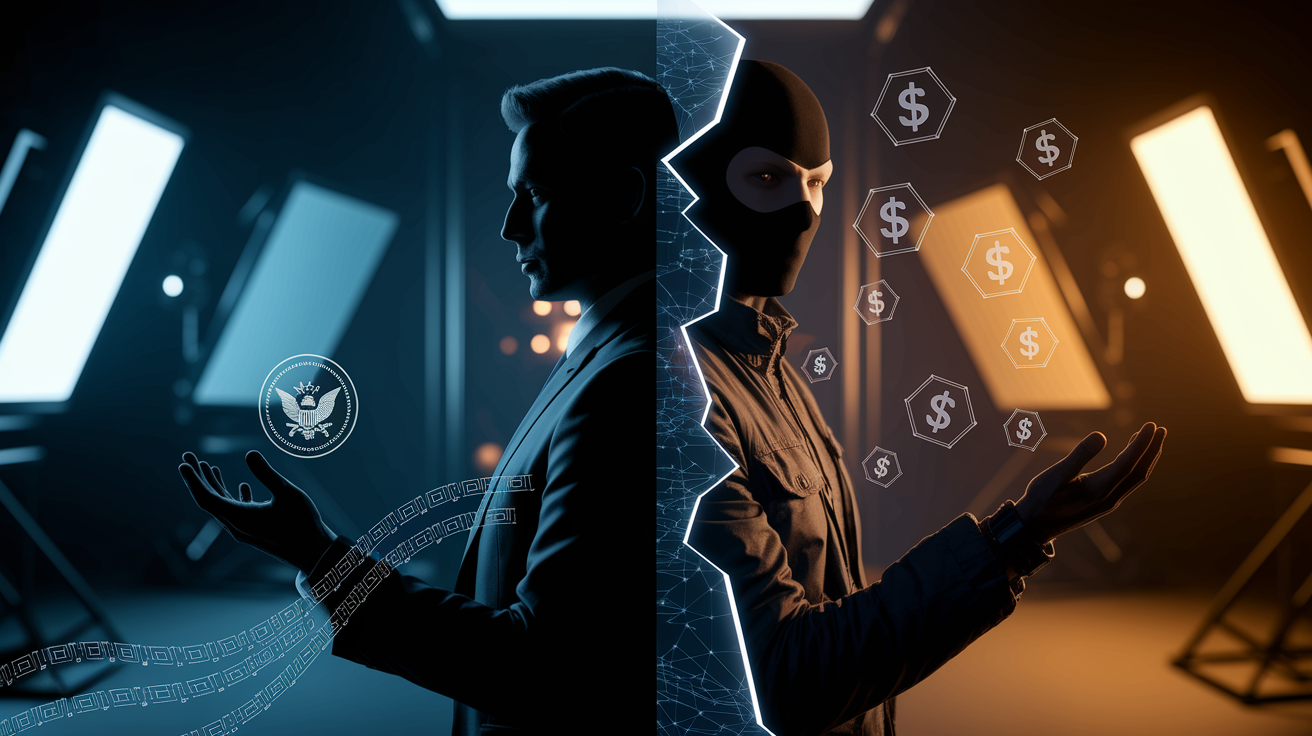
Nation-state threat actors and cybercriminals are fundamentally different animals. State-backed groups work for governments, chasing geopolitical wins like espionage, messing with elections, or setting up long-term intelligence pipelines. Cybercriminals? They’re just after money. Ransomware, phishing scams, data theft, whatever pays. Both can wreck your organization, but their reasons for doing it couldn’t be more different.
Nation-state actors run on what’s basically unlimited funding. Custom malware, massive engineering teams, the whole nine yards. One major supply-chain attack probably needed more than 1,000 engineers. These groups play the long game, staying hidden for years while they hoover up strategic intel or get into position for future disruption. Cybercriminals work with what they’ve got. Ransomware-as-a-service, black-market tools, whatever gets them paid fastest. Money’s tight, so they go for volume over patience.
Here’s what separates them:
Motives: States want political leverage and trade secrets. Criminals want your money, right now.
Funding: State actors tap government budgets and intelligence infrastructure. Criminals fund operations from previous scores and RaaS marketplaces.
Sophistication: States build zero-days, custom toolkits, and pull off supply-chain nightmares. Criminals grab commodity malware and phishing kits off the shelf.
Timelines: State campaigns can run for months or years. Criminal ops move from breach to payout in days.
Targets: States hit governments, defense contractors, critical infrastructure. Criminals hit anyone who can pay, especially banks, hospitals, and small businesses.
Risk tolerance: State actors hide behind safe-harbor protections. Criminals face real prison time if they get caught.
Knowing the difference helps you defend smarter. A defense contractor facing state actors needs supply-chain security and top-tier threat intel. A regional bank dealing with ransomware gangs needs fast patching, anti-phishing controls, and offline backups.
Motivations, Objectives, and Strategic Drivers

Nation-state actors think in decades. They’re running espionage ops to steal military plans or diplomatic cables, spreading disinformation to swing elections, sabotaging infrastructure, or just positioning for conflicts that haven’t happened yet. Cyberspace is statecraft for them. The intel they steal today might drive military decisions years down the road. Election interference in 2016 and 2020 wasn’t about quick cash. It was pure geopolitical chess.
Cybercriminals measure success quarterly. Sometimes weekly. Ransomware extortion, phishing for credentials, business email compromise targeting wire transfers, selling stolen access to the next crew up the food chain. The money’s staggering. Cybercrime cost over $1 trillion globally in 2019, up 50 percent from the year before. One U.S. healthcare provider lost $67 million to a single ransomware hit in 2020. Criminal groups care about ransom payments, stolen funds, and how much they can flip your data for.
There’s some bleed between the categories. Some criminal groups align with nation-state goals, and some governments look the other way at domestic cybercrime as long as the victims are foreign. RaaS platforms sometimes serve state-aligned operators. These gray zones make attribution messy, but the core split holds. Strategic influence versus immediate profit.
Resources, Funding, and Operational Capabilities

Nation-state actors have resources that feel bottomless. Huge engineering teams, custom malware pipelines, zero-day research labs. The supply-chain operation mentioned earlier? Estimates put it at over 1,000 developers. They’ve got intelligence-grade tools, secure comms, and legal protections that mean prosecution’s not even on the table. Plus institutional memory, multi-year planning, and the ability to shift resources when geopolitical priorities change.
Cybercriminals hustle. Black-market tools, stolen malware, whatever scales fast enough to make money. Maybe 250 to 400 organized criminal groups are active worldwide, and they specialize. Some run phishing, others deploy ransomware, some just broker access. Lower-tier actors sell compromised credentials to higher-tier gangs. It’s a whole ecosystem. Top ransomware crews might have budgets in the millions, but they’re still missing the institutional backing and legal immunity states enjoy.
Here’s how resources break down:
Funding: States pull from national budgets. Criminals reinvest proceeds or run RaaS subscriptions.
Technology: States develop custom malware and zero-days. Criminals buy exploits, use leaked NSA tools, or grab open-source frameworks.
Safe-harbor environments: States operate with legal protection. Criminals hide in jurisdictions with weak extradition or friendly governments.
Training: States recruit from intelligence agencies and cyber military units. Criminals learn on underground forums and through trial and error.
Infrastructure: States use government servers and covert networks. Criminals rent bulletproof hosting and proxy chains.
Tactics, Techniques, and Procedures (TTPs)

Nation-state TTPs are all about staying hidden. Supply-chain compromises let them hit thousands of downstream victims in one move. One documented breach hit up to 250 agencies and businesses directly, with potential reach to 18,000 orgs using the compromised product. State groups build custom malware that dodges detection, hang around for months or years, and quietly exfiltrate data the whole time. They invest in recon, social-engineer your execs, and burn zero-days before patches even exist.
Cybercriminal TTPs favor speed and volume. Ransomware campaigns encrypt your files in hours, demand crypto payments, and threaten to leak your data if you don’t pay up. Phishing goes out in mass blasts or targeted spears, and now they’re using AI to make the bait more convincing. They brute-force RDP endpoints, exploit unpatched servers, use fileless malware to sneak past endpoint tools. Average cost of a malware attack sits around $2.4 million when you count ransom plus business disruption.
Some hybrid approaches are starting to blur the lines. Ransomware gangs now do recon and lateral movement like APTs before they drop encryption, mixing criminal speed with state-level stealth. Access brokers sell to both criminal gangs and state-aligned groups. Some nation-state ops deploy destructive malware disguised as ransomware to mess with attribution. But the core tactical split still holds. State actors optimize for long-term access and intelligence. Criminals optimize for fast payout and getting out.
Target Selection and Sector Impact
Nation-state actors pick targets based on strategic value. Government agencies, defense contractors, critical infrastructure operators running energy grids or water systems, telecom providers, healthcare orgs managing sensitive research. One server-software exploit hit at least 30,000 on-premises enterprise servers, with potential global exposure reaching 250,000 victims. States also go after think tanks, academic institutions, and supply-chain vendors whose products land at high-value customers.
Cybercriminals target profit, period. Banks, hospitals (holding financial and medical records), small businesses with weak defenses, individuals who fall for phishing. They pick victims based on ability to pay ransoms, black-market value of stolen data, and whether you’re keeping inadequate backups or running outdated systems. RaaS platforms have democratized attack infrastructure. Even low-skill actors can launch campaigns against thousands of targets at once.
Here’s how target types shake out:
Critical infrastructure: nation-state priority for disruption and espionage. Occasionally criminal-targeted for ransom, though less common because of regulatory heat.
Financial services: primary cybercriminal target for theft and fraud. Secondary nation-state target for economic intelligence.
Healthcare: nation-state interest in research and patient data. Criminal interest in ransom payments and insurance fraud.
Defense and government: exclusive nation-state focus for strategic intelligence and pre-positioning for conflict.
Persistence, Operational Timelines, and Long-Term Presence

Nation-state actors build for the long haul. They stay undetected for months or years, using living-off-the-land binaries, encrypted command-and-control channels, going dormant periodically to dodge detection. Long dwell times let them collect intelligence continuously, track shifting strategic priorities, and position for future ops without setting off alarms. APT groups treat compromised networks like renewable assets, revisiting them across multiple campaigns instead of burning them once.
Cybercriminals work short cycles. A typical ransomware campaign runs days or weeks. Initial compromise, lateral movement, data exfiltration, encryption deployment, ransom negotiation, exit. They minimize dwell time to cut detection risk and maximize attacks per quarter. Access brokers keep persistent access only long enough to verify value before selling credentials to higher-tier operators. Some sophisticated criminal groups go APT-style on high-value targets, but the dominant model’s still rapid exploitation, monetization, and abandonment.
Attribution Challenges and Legal Implications

Attributing cyberattacks to specific nation-states is brutal. Obfuscation techniques, false-flag ops, proxy groups. State actors route traffic through compromised third-party infrastructure, reuse leaked malware from other groups, plant misleading forensic artifacts to frame rival nations. Some governments give safe harbor to domestic criminals who only hit foreign victims, blurring state and criminal lines. Multi-source forensic correlation can boost confidence, but definitive attribution usually requires intel sources the public never sees.
Cybercriminals also hide. Anonymity networks, crypto tumblers, operations spanning jurisdictions with weak extradition. But financial trails, opsec mistakes, and international law enforcement cooperation have led to real busts. Criminals face consequences. Criminal charges, asset seizure, extradition when identified. That creates deterrent pressure state actors just don’t feel.
Legal recourse is wildly different. Nation-state actors get immunity, operate under government protection, and face at most diplomatic sanctions or indictments with zero enforcement teeth. Cybercriminals risk arrest, trial, imprisonment. This shapes behavior. State actors tolerate higher-visibility ops because legal consequences are minimal. Criminals constantly adjust tactics to dodge law enforcement.
Real-World Case Studies of Both Actor Types
The SolarWinds supply-chain compromise shows state-actor methodology at scale. Attackers infiltrated a widely used IT management platform, dropped malicious code into legit software updates, and gained access to thousands of downstream customers including U.S. government agencies and Fortune 500 companies. The op stayed hidden for months, enabling long-term intel collection across multiple high-value targets through one supply-chain vector. Forensics estimated over 1,000 engineers were involved.
Another nation-state op exploited a vulnerability in on-premises email server software, hitting at least 30,000 enterprises globally with potential exposure to 250,000 orgs. Attackers dropped web shells for persistent access, exfiltrated email archives, maintained long-term footholds for espionage. Targets included government agencies, defense contractors, think tanks, NGOs. Entities with strategic intel value, not financial assets.
On the cybercriminal side, ransomware campaigns like Conti and Ryuk show profit-driven ops at scale. Conti ran as a RaaS platform, targeting healthcare providers and municipal governments, demanding ransoms from hundreds of thousands to millions. One U.S. healthcare provider disclosed $67 million in losses tied to a 2020 ransomware incident. These groups deploy automated encryption tools, threaten to publish stolen data, move from compromise to payout in a week.
Access brokers are another criminal model. They compromise RDP endpoints through brute-force attacks, then resell credentials to higher-tier ransomware operators. This multi-tier setup lets low-skill actors make money from opportunistic compromises while sophisticated gangs scale ops without investing in initial access. The ecosystem mirrors legit SaaS, complete with customer support and affiliate programs.
Consolidated Comparison Table
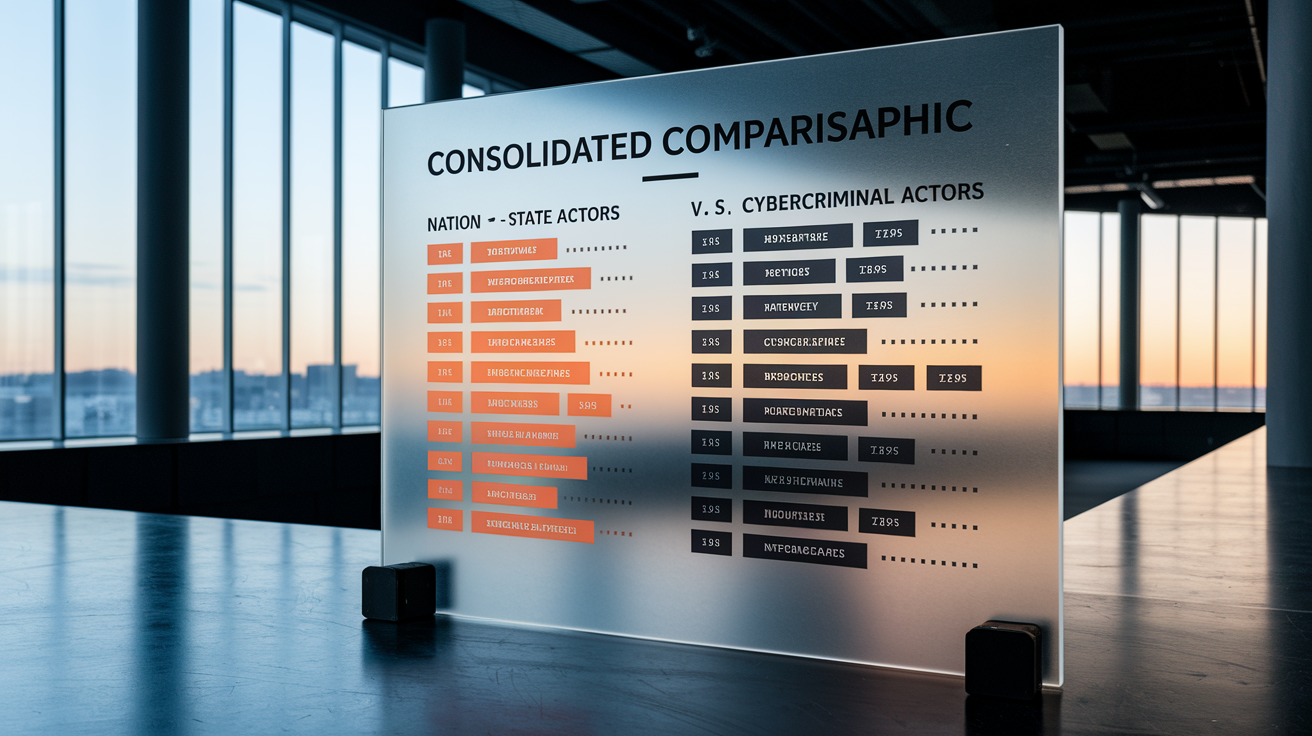
| Attribute | Nation-State Actors | Cybercriminal Actors |
|---|---|---|
| Primary Motivation | Geopolitical objectives, espionage, disinformation, sabotage | Financial gain through ransomware, phishing, fraud, data theft |
| Funding and Resources | Virtually unlimited government budgets; large engineering teams (1,000+ on major operations) | Variable budgets from prior attacks; organized groups estimated at 250–400 worldwide |
| Sophistication | Custom malware, zero-day exploits, supply-chain compromises, advanced obfuscation | Commodity malware, purchased exploits, RaaS platforms, phishing kits, automation |
| Operational Persistence | Months to years; long dwell times, continuous intelligence collection | Days to weeks; rapid monetization and exit post-attack |
| Target Types | Governments, defense contractors, critical infrastructure, strategic research institutions | Any profitable target: financial services, healthcare, SMBs, individuals |
| Attribution Difficulty | Very high due to obfuscation, false flags, proxy groups, state deniability | Medium; financial trails and operational mistakes aid identification, but anonymity networks complicate tracking |
| Legal Consequences | Minimal; state immunity, diplomatic sanctions only | High risk of criminal prosecution, asset seizure, extradition when identified |
This table distills the core differences for quick reference when you’re assessing threat profiles, prioritizing defenses, or figuring out where to spend your security budget. If you’re dealing with nation-state threats, invest in advanced threat intel, supply-chain security, and long-term forensic capabilities. If you’re mainly fighting cybercriminals, focus on rapid patching, anti-phishing controls, endpoint protection, and offline backup strategies.
We compared how nation‑state groups and cybercriminals differ in motive, tools, targets, and timelines.
The article walked through motivations, resources, tactics, persistence, attribution challenges, and real cases so you know what to watch for.
Remember: the differences between nation-state and cybercriminal threat actors change how you defend — long hunts need detection and resilience, quick smash‑and‑grab attacks need backups and fast response. Use the comparison to set priorities, tighten controls, and run drills. Small steps now cut future risk.
FAQ
Q: What is a nation-state threat actor in cyber security, and how do they differ from other cyber threat actors in terms of capabilities?
A: A nation-state threat actor in cyber security is a government-backed group that uses state funding, intelligence-grade tools, and long-term stealth to pursue political or military goals, while others usually aim for quick financial gain.
Q: What is the primary difference between a nation-state actor and an unskilled attacker, and how do state-sponsored attackers typically differ from cybercriminals?
A: The primary difference between a nation-state actor and an unskilled attacker is skill and intent: nation-states use trained teams, zero-days, and long campaigns; cybercriminals favor fast, profit-driven attacks with off‑the‑shelf tools.