


Would you trust strangers to unlock your company files after they stole them?
Ransomware negotiations are a messy mix of threats, proof, bargaining, and legal risk.
In an active attack, teams move fast: detect and contain, preserve forensics, confirm whether data was stolen, open a secure line to the attackers, demand proof, then start bargaining while checking backups and laws.
This guide walks the full attack timeline and gives clear response tactics—what to ask attackers, how to verify their claims, when backups let you refuse payment, and what risks to expect.
Immediate Breakdown of the Ransomware Negotiation Process During an Active Attack

You know something’s wrong when systems lock up, files won’t open, and a ransom note pops up on every screen. The note usually asks for cryptocurrency, sets a deadline, and tells you how to reach them through Tor chat portals, ProtonMail, or some other encrypted channel. Everything stops. Leadership scrambles to figure out what’s salvageable, what evidence needs protecting, and whether paying actually makes sense or if you can just restore from backups.
The whole thing unfolds in stages. First comes containment. You isolate affected systems so the attack doesn’t spread and lock down forensic evidence. Then you make initial contact through whatever channel the attackers provided. But don’t jump in too fast. Next step is verification: ask them to decrypt a sample file or show you screenshots of stolen data. Once they prove they’ve got something real, you start profiling the threat actor. Figure out which group it is, check if they’re known for actually delivering decryption keys, see if they’ve honored deals before. Then comes bargaining. You send controlled messages, try to lower the ransom, push deadlines, nail down concrete terms. The whole time you’re weighing whether paying is worth it or if rebuilding from backups is faster, safer, and legally smarter.
Attacker behavior? All over the place. Some groups respond like it’s a business transaction and get back to you in hours. Others vanish for days. “One attacker paused for nearly a week” and then came back saying they were “on vacation.” They’ll threaten to dump your data on leak sites, jack up the ransom after the deadline, claim they destroyed your backups. Timelines swing from 48 hours to weeks of back and forth. Be ready for radio silence, arbitrary deadline shifts, and demands that change without warning.
Here’s how it goes, step by step:
Detection and isolation: lock down systems, confirm what’s compromised, save logs and forensics.
Containment verification: figure out which systems are encrypted, which backups survived, and whether data got stolen.
Attacker contact and proof request: open secure communication, ask for sample decryption or proof they have your data.
Threat intelligence and profiling: ID the group, review their track record, assess if they’re credible and likely to deliver.
Bargaining and deadline management: negotiate price, timeline, and terms. Request extensions if you need them.
Payment or restoration decision: weigh financial, legal, and operational factors. Pay if that’s the call, or start restoring from backups.
Structured Operational Timeline After Initial Containment and Attacker Contact
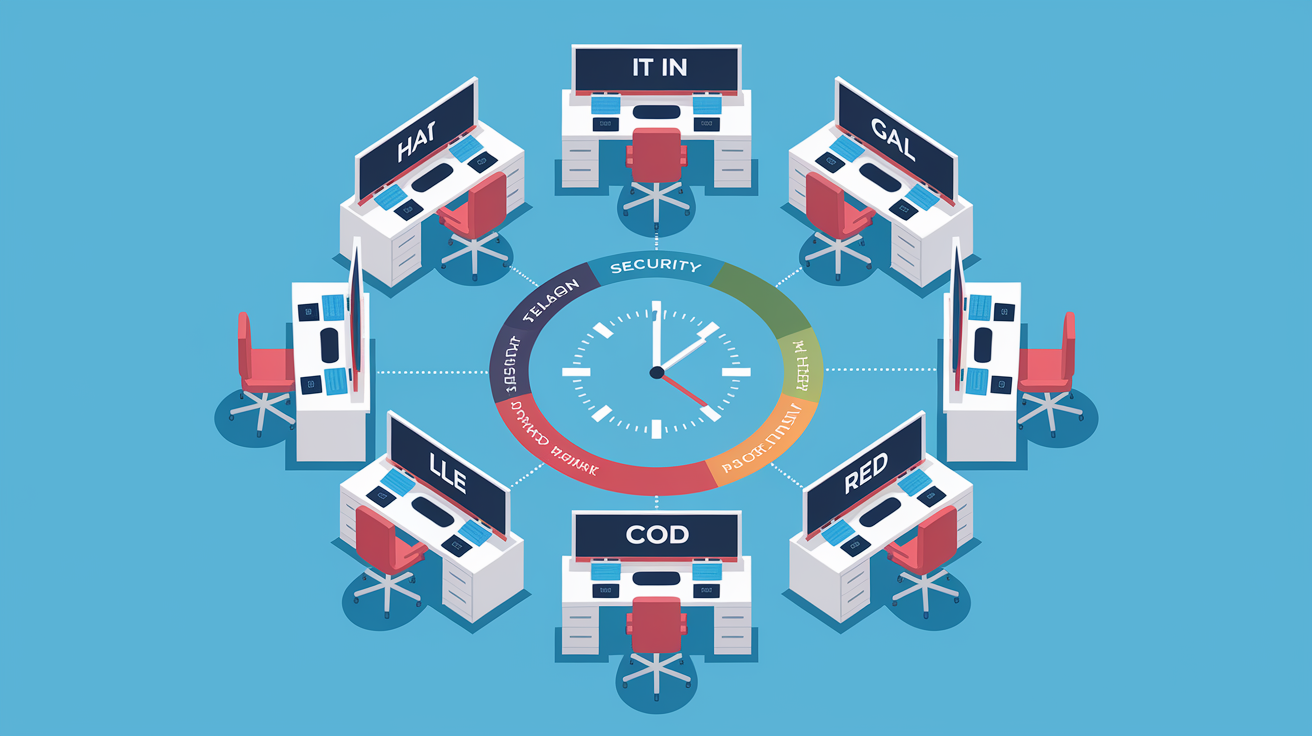
Once containment’s locked in and you’ve got a line to the attackers, the chaos shifts into structured crisis mode. The first few hours are about calming panicked staff, forming a leadership team (IT, legal, finance, outside responders), confirming how bad it really is, and checking if your backups are even usable. Responders who’ve handled “hundreds” of these cases see the same early patterns: attackers encrypt backups to kill your restore option, and early forensic work is critical for law enforcement and insurance claims. Leadership assigns clear roles, updates stakeholders, and starts documenting every single decision and message for legal and regulatory reasons.
Early forensic preservation means keeping the chain of custody intact for logs, network traffic, disk images from affected systems. This evidence supports post-incident investigations, potential prosecutions, and insurance claims. At the same time, IT teams are checking backups: which ones are accessible, which are corrupted or encrypted, how recent is the last clean snapshot. Attackers regularly encrypt backup repos or delete shadow copies to eliminate your recovery path. Finding intact offline or immutable backups can completely flip negotiation strategy. When backups work, the question shifts from whether to pay to whether the time it takes to restore is acceptable compared to losing business.
Timeline usually breaks down like this:
0–6 hours post-containment: stabilize people, set up incident command, preserve volatile evidence, start backup verification.
6–24 hours: finish forensic imaging of critical systems, confirm encryption and data theft scope, bring in legal and cyber insurance, begin profiling the threat actor.
Day 2–3: establish secure comms with attackers, request proof of decryption, assess legal and sanctions risks, finalize recovery plan (backups or negotiation).
Day 3+: execute negotiation or restoration, coordinate parallel remediation (patching, credential resets), prep stakeholder and regulatory notifications.
Evaluating Backup Viability and Recovery Options Before Negotiating

The first technical question is whether you even need to negotiate. If you’ve got reliable, offline, immutable backups, you can often restore without talking to the attackers at all. No ransom, no risk. IT teams verify backup integrity by checking for corruption, testing restore procedures on isolated systems, confirming the most recent backup happened before the attack. Attackers frequently encrypt or delete backups to force you into negotiation. Common tactics: hitting backup software admin consoles, encrypting network storage used for backups, wiping Windows Volume Shadow Copies. If offline backups on tape or air-gapped systems are still good, recovery becomes the obvious choice. Organizations with tested disaster recovery plans and redundant infrastructure can restore critical systems in days, avoiding both the ransom and the legal and reputational mess of negotiating with criminals.
But identifying whether attackers stole data before encrypting introduces the double extortion problem. Even if backups let you restore everything, attackers may threaten to publicly release stolen customer records, intellectual property, financial data, or regulated information unless you pay separately. Early confirmation of data theft means analyzing network logs, reviewing attacker claims and proof samples, checking if stolen data’s already showing up on leak sites or dark web forums. Double extortion changes everything. Restoration solves the encryption part but doesn’t eliminate the threat of data exposure. You’re weighing the reputational, legal, and competitive damage of data disclosure against the cost and uncertainty of paying to keep it quiet. Industry data shows “60% of organizations that made the first ransom payment regained access to their systems,” but that doesn’t account for cases where attackers published data anyway or sold it to third parties.
Backup integrity directly shapes negotiation strategy and ransom decisions. When backups are verified and restoration works, you’ve got leverage. You can credibly refuse payment and pursue restoration, using the threat of non-payment to lower ransom demands or buy more time. When backups are destroyed or outdated, negotiation becomes urgent and attackers hold the cards. In those cases, you’re comparing the ransom to the combined cost of downtime, lost revenue, regulatory fines, and reputational damage. For example, the Kaseya attack hit about 1,500 organizations with a $70,000,000 universal decryption demand, but a decryptor key was obtained and distributed 19 days later. Even huge attacks can resolve through means other than paying.
Understanding Ransom Demands, Cryptocurrency Mechanics, and Payment Risks

Ransom demands can hit tens of millions depending on the victim’s size, revenue, and perceived ability to pay. Attackers research targets before deploying ransomware, using publicly available financial data, employee counts, and industry sector to set demands. Large enterprises and critical infrastructure get hit hardest. “Colonial Pipeline paid $4,400,000 in cryptocurrency” and “JBS Foods paid $11,000,000” after attackers encrypted systems and threatened operational disruptions. Smaller organizations might see demands in the tens or hundreds of thousands. Attackers typically ask for Bitcoin or Monero and provide wallet addresses and payment instructions in the ransom note or through secure channels. Payment mechanics require you to buy cryptocurrency through exchanges, transfer funds to the attacker wallet, and then wait for them to deliver decryption tools. That process can take hours to days and offers zero legal recourse if they don’t deliver.
Paying carries serious risks beyond the dollar amount. Attackers may not provide working decryption keys, may deliver tools that only partially decrypt files, or may just disappear after receiving payment. Government agencies including the FBI and CISA publicly discourage ransom payments because “payment encourages further targeting” and funds criminal enterprises that plow proceeds back into more attacks. Cryptocurrency payments get laundered through mixing services, privacy coins, and international exchanges, making recovery or tracing nearly impossible. Double extortion adds another layer: even after paying for decryption, attackers may still publish stolen data, demand more money to suppress disclosure, or sell data to competitors or other criminals. Legal and ethical considerations weigh heavily. Paying may violate financial sanctions if the attacker is a designated entity, and some jurisdictions penalize organizations that fund criminal groups.
Common payment risks:
Non-delivery or partial delivery of decryption tools after payment.
Continued extortion demands for stolen data suppression even after systems are decrypted.
Legal exposure from violating sanctions, anti-money-laundering laws, or regulatory reporting.
Reputational damage from public disclosure of ransom payment, which signals vulnerability to future attackers.
No guarantee attackers delete exfiltrated data after payment. Copies may stick around for sale or future leverage.
Verification and Proof Steps Used in Ransomware Negotiations
You need to verify attacker claims before making payment decisions. First verification step is confirming the attacker’s identity and affiliation. Figuring out which criminal organization or affiliate is responsible helps predict their behavior, reliability, and whether they actually honor agreements. Check threat intel databases, consult with incident responders, review leak sites to see if the group has a track record of providing working decryption tools or if they’re known for scams and non-delivery. Request proof of data possession by asking attackers to decrypt a small sample of encrypted files or provide screenshots of exfiltrated documents that aren’t publicly accessible. Sample decryption requests should specify file types, directories, or file names to ensure attackers have genuine access and aren’t bluffing.
Once proof of possession is established, you test decryption samples in isolated, air-gapped environments to confirm decryption works and doesn’t introduce malware or backdoors. Testing happens on non-production systems to avoid further compromise. Attackers are also asked to provide evidence of prior successful decryptions: references from other victims, public acknowledgments, verifiable case histories. When attackers claim they’ll delete exfiltrated data after payment, you request proof of destruction, though this is rarely reliable because digital copies can be kept indefinitely without detection. Verification is managed by professional negotiators and forensic investigators who understand common attacker deception tactics and can interpret technical evidence accurately.
| Verification Step | Purpose |
|---|---|
| Request sample file decryption | Confirm attackers possess working decryption keys and can restore access |
| Verify attacker group identity | Assess reputation, reliability, and likelihood of honoring payment agreements |
| Review proof of data exfiltration | Determine scope and sensitivity of stolen data to evaluate double extortion risk |
| Test decryption tool in isolated environment | Validate that decryption works and does not introduce malware or persistence mechanisms |
| Request evidence of data deletion | Attempt to confirm data destruction after payment, though verification is difficult |
Attacker Tactics and Communication Behavior During Negotiations

Attackers use different communication strategies to maximize pressure and ransom payments. Some groups operate professionally, respond quickly, provide technical support during decryption, and maintain consistent communication. Others are all over the place. Messages arrive sporadically, demands shift without explanation, contact stops for days. One documented case had an attacker who “went silent for nearly a week and then resumed claiming they were ‘on vacation.'” Communication channels typically include Tor-based chat portals accessible through .onion links, encrypted email services like ProtonMail, and occasionally direct messages on underground forums. Attackers avoid traceable platforms and use pseudonyms to protect identities.
Social engineering tactics are common. Attackers may claim deadlines are firm and that ransom amounts will double if not met, creating artificial urgency to force quick decisions. They threaten to publish stolen data on leak sites, dedicated websites where ransomware groups post victim names, exfiltrated files, and countdown timers to ramp up public pressure. Monitoring these leak sites is a key part of threat intelligence during active negotiations. Double extortion threats are standard now: attackers encrypt systems and steal data simultaneously, then demand payment for both decryption and data suppression. Victims who restore from backups may still face extortion over stolen information.
Rogue affiliates within ransomware-as-a-service operations introduce more unpredictability. In one documented case, a rogue actor “sold stolen data via ProtonMail to resell data, and the primary group later apologized and offered the decryption tool free.” This reflects the affiliate model many ransomware operations use, where independent operators deploy malware developed by a central group in exchange for a share of ransom payments. Internal disputes, miscommunication, and competition among affiliates can lead to contradictory demands, sabotage of negotiations, or unexpected offers. Some ransomware groups have cultivated reputations for “ethical” behavior: providing functional decryption tools, apologizing for targeting hospitals or critical infrastructure, maintaining support channels for victims. Others are known for scams, non-delivery, and continued extortion after payment.
Negotiation Tactics, Bargaining Strategies, and Leveraging Position

If you choose to negotiate, there are tactics to reduce ransom amounts and improve outcomes. Controlled, slow messaging helps manage attacker expectations and prevents impulsive decisions. Responding immediately to every demand signals desperation and weakens your position. Pace communication, consult with advisors between messages, use delays strategically to gather intelligence or explore alternative recovery options. Request proof of decryption early to establish leverage. You can credibly refuse payment until attackers demonstrate they possess working keys and can restore access. This requirement also filters out scammers who claim to have encrypted systems but can’t actually decrypt.
Financial constraint arguments are common bargaining tools. Cite limited cash reserves, insurance coverage caps, or operational budgets to justify lower payment offers. Attackers often adjust demands when faced with credible financial limitations, though they may request proof of financial status or try to verify claims through public records. Deadlines set by attackers are frequently flexible despite claims otherwise. While attackers impose countdowns to create urgency, many will extend deadlines rather than lose the chance for payment. You can request extensions to complete forensic investigations, consult legal counsel, or secure cryptocurrency, and attackers often grant them to keep negotiations active.
Five common negotiation levers:
Request and validate proof of decryption before discussing payment amounts, establishing that attackers can deliver.
Cite financial constraints and insurance coverage limits to justify lower payment offers and encourage flexibility.
Extend timelines by requesting more time for board approval, legal review, or cryptocurrency acquisition, reducing pressure.
Leverage backup viability by signaling credible restoration alternatives, which reduces attacker leverage and may lower demands.
Engage professional negotiators who control communication tone, manage deadlines, and apply experience from hundreds of prior cases.
Legal, Regulatory, and Insurance Impacts on Ransom Decisions

Paying ransoms introduces serious legal and regulatory risks. The U.S. Treasury Department’s Office of Foreign Assets Control (OFAC) warns that payments to sanctioned entities or individuals may violate federal law, resulting in civil penalties or criminal prosecution. Before making any payment, you need to screen the attacker or recipient wallet address against sanctions lists maintained by OFAC, the European Union, and other jurisdictions. This screening requires coordination with legal counsel and often involves third-party compliance services. The FBI publicly advises against paying ransoms because “payment encourages further targeting” and funds criminal organizations that pose ongoing threats to national security and public safety. Law enforcement recommends engaging federal or local cybercrime units early to preserve evidence, coordinate response, and support potential investigations or prosecutions.
Cyber insurance policies may cover ransom payments, forensic investigation costs, legal fees, regulatory fines, and business interruption losses. Insurers typically require prompt notification of incidents, cooperation with assigned breach coaches and incident responders, and compliance with policy terms around ransom negotiations. Coverage for ransom payments isn’t universal. Some policies exclude payments to sanctioned entities, impose caps on ransom reimbursement, or require pre-approval before payment. Review policy language early in the incident and involve insurers in decision-making to avoid coverage disputes. Insurers often provide access to preferred incident response firms and negotiators, streamlining coordination and ensuring response actions align with coverage requirements.
Regulatory disclosure obligations vary by jurisdiction and industry. Organizations subject to GDPR, HIPAA, state breach notification laws, or financial services regulations may be required to report ransomware incidents to regulators, customers, or the public within specific timeframes. Reporting triggers typically include unauthorized access to personal data, exfiltration of sensitive information, or disruption of critical services. Legal counsel and compliance teams evaluate whether the attack meets reporting thresholds and coordinate notifications to avoid penalties. Public disclosure of ransom payments can trigger reputational damage and invite scrutiny from regulators, shareholders, and advocacy groups, making communication strategy critical.
Regulatory triggers that may require disclosure or reporting:
Unauthorized access to or exfiltration of personal data, protected health information, or financial records.
Disruption of critical infrastructure or services that impacts public safety or economic stability.
Ransom payment to entities on sanctions lists, requiring self-disclosure to OFAC or equivalent authorities.
Material impact to business operations or financial condition requiring disclosure to investors or regulators under securities laws.
Role of Professional Negotiators, Incident Responders, and Forensics Teams

Professional ransomware negotiators bring specialized experience that significantly improves outcomes and reduces risk. Responders with “hundreds” of negotiation cases understand attacker behavior, common tactics, and how to manage communication without escalation. Their first job is stabilizing stakeholders (leadership, employees, external partners) by “settling everyone down” to enable rational decisions instead of panic-driven choices. Negotiators control all communication with attackers, ensuring messaging is deliberate, professional, and strategically timed. They profile threat actors by identifying the group, reviewing past cases, and assessing reliability, which informs predictions about decryption success and data handling.
Forensic investigators work alongside negotiators to preserve evidence, determine the attack’s scope and timeline, and identify vulnerabilities that enabled the breach. Chain-of-custody procedures ensure logs, disk images, and network captures are admissible in legal proceedings or insurance claims. Forensics teams assess whether backups were destroyed, whether data was exfiltrated, and what systems were compromised. They also test decryption tools provided by attackers in isolated environments to confirm functionality and detect malware. Threat intelligence analysts monitor attacker chatter on dark web forums, leak sites, and underground markets to track stolen data, identify attacker infrastructure, and anticipate next steps.
Professional negotiators and incident responders coordinate legal, technical, public relations, and financial workstreams, ensuring response actions align across teams. They manage communication with insurers, law enforcement, regulators, and external counsel. They also advise on payment logistics: screening recipients against sanctions lists, acquiring cryptocurrency through compliant channels, and documenting transactions for audit and insurance purposes. Organizations that engage experienced responders early report faster containment, lower ransom payments, and fewer legal or compliance missteps.
| Expert Role | Key Responsibilities |
|---|---|
| Professional Negotiator | Manage attacker communication, control messaging tone and timing, reduce ransom amounts, verify decryption proof, coordinate payment logistics |
| Forensic Investigator | Preserve evidence with chain of custody, determine attack timeline and scope, assess backup integrity, identify entry points and vulnerabilities |
| Threat Intelligence Analyst | Profile attacker group, monitor leak sites and dark web activity, track stolen data, predict attacker behavior and reliability |
| Incident Response Coordinator | Align legal, technical, PR, and financial teams; manage insurer and law enforcement engagement; oversee restoration and remediation workflows |
Business Continuity, Stakeholder Communication, and Public Messaging

Keeping business running during an active ransomware negotiation requires parallel planning for both restoration and communication. Leadership establishes clear command structures, assigns ownership of critical workstreams, and provides regular status updates to employees, customers, partners, and investors. Internal stakeholders need accurate, timely information to manage operational disruptions, adjust workflows, and maintain confidence. External stakeholders require transparency about service availability, data security, and remediation timelines. Professional responders help “calm stakeholders” by providing structured updates, managing expectations, and preventing misinformation. Crisis communication plans should outline who delivers messages, what information is disclosed, and when updates occur.
Public statements must disclose only necessary information to comply with legal and regulatory obligations while protecting investigative efforts and competitive interests. Transparency about remediation steps in plain language helps rebuild trust. For example, “we have engaged leading cybersecurity experts, confirmed no customer payment information was accessed, and are restoring systems from verified backups” provides concrete reassurance without jargon. Disclosing attacker identity and methodologies is appropriate when it supports public awareness or law enforcement efforts, but should be coordinated with legal counsel and investigators to avoid compromising active cases. Reputational impact from ransomware attacks can exceed the direct cost of ransom payments, making communication strategy critical.
Timeline transparency helps stakeholders plan around disruptions and demonstrates organizational competence. Providing realistic estimates for restoration milestones, even if those estimates stretch over days or weeks, is more effective than vague promises of imminent recovery. When timelines shift due to unforeseen complications, proactive updates maintain credibility. For example, “initial restoration timelines have been extended by 48 hours due to additional forensic analysis required to ensure system integrity” is better than silence followed by delayed delivery.
Critical stakeholder groups requiring tailored communication:
Employees: operational guidance, safety of personal data, payroll and benefits continuity, return-to-work timelines.
Customers: service availability, data security status, alternative access methods, expected restoration timelines.
Partners and suppliers: transaction processing status, contractual obligation impacts, collaboration on continuity plans.
Investors and board: financial impact, legal and regulatory exposure, management response effectiveness, strategic implications.
Post-Negotiation Recovery, Restoration, and Post-Mortem Expectations
Once negotiations conclude (whether through ransom payment, restoration from backups, or a hybrid approach), the focus shifts to recovery, validation, and learning. Organizations that paid ransoms must validate decryption tools before deploying them across production systems. Testing occurs in isolated environments to confirm decryption is complete, files are intact, and no malware or persistence mechanisms are embedded in the tools. For example, the “Kaseya case saw a decryptor delivered 19 days later” and distributed to affected victims, showing that even large-scale attacks can resolve through third-party intervention or law enforcement action. Recovery timelines vary widely depending on environment size, decryption tool quality, and availability of technical resources.
Restoration requires more than just decrypting files. Vulnerabilities that enabled the initial compromise must be identified and patched. Credential resets, security configuration hardening, and network segmentation changes are implemented to prevent reinfection. Forensic post-mortems determine “what happened, how, when, and why” by analyzing logs, attacker behavior, and system weaknesses. These reviews identify gaps in detection, response capabilities, and security controls, feeding lessons learned into updated incident response plans, security training, and technology investments. Even when systems are restored and operations resume, stolen data may still pose long-term risk. Victims must monitor for data exposure on leak sites, dark web markets, and public forums, and prepare contingency plans for potential disclosure.
Comprehensive post-incident reviews involve all response teams (IT, legal, communications, finance, external partners) to document decisions, timelines, costs, and outcomes. Findings are shared with leadership, insurers, and regulators as appropriate. Organizations update disaster recovery plans, test backup procedures more rigorously, and invest in proactive security measures like endpoint detection, network monitoring, and employee training. The goal is reducing the likelihood and impact of future attacks by applying lessons learned from the current incident.
Post-payment workflow in four steps:
Validate decryption tools in isolated test environment: confirm file integrity, check for malware, test on representative sample systems before production deployment.
Deploy decryption across production systems: prioritize critical systems, monitor progress, document issues or partial failures for follow-up investigation.
Conduct forensic post-mortem and vulnerability remediation: identify attack entry points, patch systems, reset credentials, harden configurations, remove persistence mechanisms.
Complete regulatory notifications and stakeholder updates: finalize public statements, submit required reports to regulators, brief leadership and board, update incident response and continuity plans.
Final Words
in the action: systems get encrypted, a ransom note appears with contact links, and urgency spikes. First moves are isolation, evidence preservation, and stabilizing stakeholders; next comes verification (test decryptions) and bargaining while tracking backups and legal risk.
Expect stop-and-start communication from attackers, shifting deadlines, and unpredictable timelines. Know your recovery options, involve experts, and use the checklist above. This piece explained how ransomware negotiations work and what to expect during an attack so you can act faster and get systems back on track.
FAQ
Q: What is the 3 2 1 rule for ransomware?
A: The 3-2-1 rule for ransomware is keeping 3 total copies of your data, on 2 different media, with 1 copy offsite or offline so backups survive encryption or deletion by attackers.
Q: What are the 5 C’s of negotiation?
A: The 5 C’s of negotiation are Calm, Control, Clear communication, Compromise, and Closing — used in ransomware talks to manage emotion, verify claims, seek concessions, and finalize terms.
Q: What is ransomware negotiation?
A: Ransomware negotiation is the process where victims and attackers communicate after a ransom note appears, using verification (test decryptions), bargaining on price and deadlines, while responders isolate systems and preserve evidence.
Q: What are the 5 stages of ransomware attack?
A: The five stages are initial intrusion, reconnaissance and lateral movement, data exfiltration, encryption (system lockout), and ransom demand/negotiation, which halts operations and forces containment measures.